5 Major Causes of Stablecoin Depegging: Will USDT Be Next? A Comprehensive Analysis of Risks and Hedging Strategies
In the highly volatile cryptocurrency market, stablecoins have long been seen as a safe haven for capital. Their value is pegged to fiat currencies such as the US dollar, providing traders with a temporary safe harbor for their assets. However, the catastrophic collapse of UST (TerraUSD) completely shattered the myth that “stablecoins are absolutely stable”, triggering widespread concern over stablecoin depegging risk. Many investors have since become deeply worried: Could USDT (Tether), the market’s largest stablecoin leader, also be hiding a depegging crisis? If it happens, how severe would the impact of USDT depegging on exchange rates be?
This article starts from the fundamentals, offering an in-depth breakdown of the causes of stablecoin depegging, revisiting major historical depegging events, and providing a practical set of risk assessment and hedging strategies to help you identify risks more clearly and protect every part of your assets in the complex crypto world. Understanding risk is the first step to managing it.
What Is Stablecoin Depegging? Why Does It Matter So Much?
To understand depegging risk, you must first understand why stablecoins are supposed to be “stable”. It all comes down to their core “peg” mechanism.
Explanation of the “Pegging” Mechanism of Stablecoins
Stablecoins were originally designed to create a price-stable cryptocurrency whose value is tightly “pegged” to a real-world asset, most commonly the US dollar. In theory, for every stablecoin issued with a value of $1, the issuer should hold an equivalent amount of real assets in reserve. These reserves may include:
- Fiat currency: Cash deposits such as US dollars or euros.
- Cash equivalents: Short-term, highly liquid government bonds such as US Treasury bills.
- Other assets: Some stablecoins may also include commercial paper, corporate bonds, or even other cryptocurrencies.
This reserve pool functions like a vault, ensuring that every stablecoin circulating in the market has real value backing it, allowing users to redeem their stablecoins for US dollars at close to a 1:1 ratio at any time.
The Definition of Depegging: When $1 No Longer Equals $1
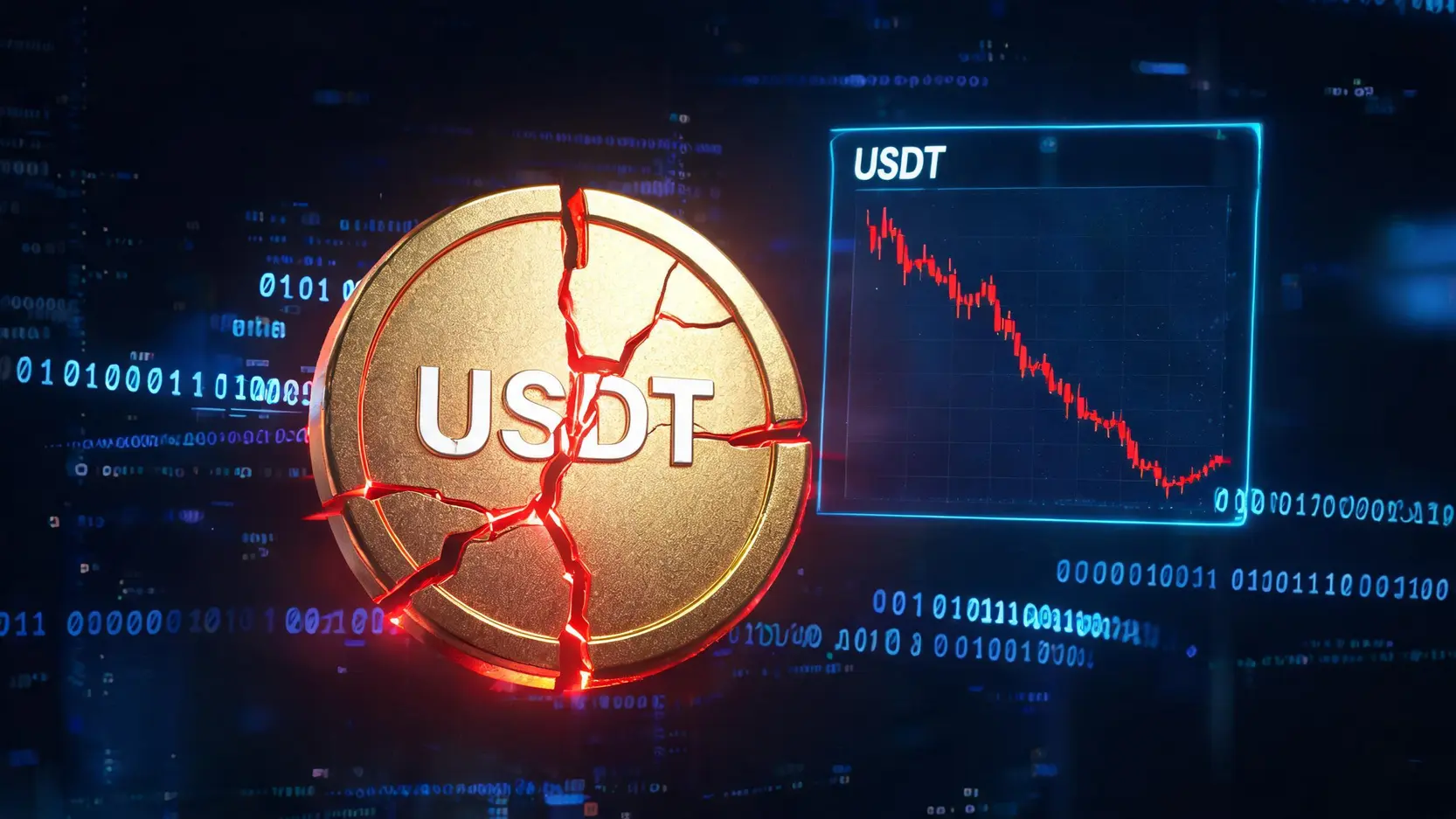
So-called “depegging” refers to a stablecoin’s market price deviating from its pegged value, (such as $1). When one USDT trades at $0.98 or rises to $1.02, it means depegging has occurred.
Minor, short-term price fluctuations (such as between $0.999 and $1.001) are normal market behavior and are usually corrected quickly by arbitrage traders. However, if the price significantly and persistently deviates from its peg, such as falling below $0.95 without recovering, this becomes a serious depegging event. This not only means holders suffer asset losses, but more importantly, it can shake confidence in that stablecoin and even the entire stablecoin system, triggering catastrophic chain reactions.
Analyzing the 5 Core Causes of Stablecoin Depegging
Stablecoins are not naturally immune to risk. Multiple factors are often intertwined behind depegging events. Understanding these causes is critical for identifying high-risk projects.
Cause 1: Insufficient or Non-Transparent Reserve Assets
This is the most fundamental risk. If the issuer does not maintain sufficient, high-quality reserves for every circulating stablecoin, then its peg promise is meaningless. Key risk factors include:
- Insufficient reserves: The issuer may overissue tokens, leaving reserves unable to fully cover all circulating stablecoins.
- Poor asset quality: Reserves may contain illiquid or high-risk assets (such as junk bonds or volatile cryptocurrencies). If these assets lose value, the reserve pool shrinks.
- Low transparency: The issuer may refuse or fail to provide detailed, regular reserve audits from credible third-party institutions, creating serious doubts about its true financial condition. USDT itself has long faced criticism over reserve transparency concerns.
Cause 2: Bank Run Risk Triggered by Market Panic
Confidence is the foundation of all financial systems, including stablecoins. When negative news emerges about a stablecoin (whether true or false), such as rumors of insufficient reserves or regulatory investigations, it can trigger panic selling. Investors rush to exchange their stablecoins for fiat or other assets, creating a “bank run”.
During a bank run, even if reserves were originally sufficient, the issuer may be forced to sell less liquid assets at a discount to meet massive short-term redemption pressure. This can create reserve losses, eventually making it impossible to maintain the peg and pushing the stablecoin into a death spiral. Effective investment risk management becomes especially critical here, as panic spreads quickly.
Cause 3: Structural Flaws in Algorithmic Design
Unlike asset-backed stablecoins, algorithmic stablecoins do not rely on real asset reserves. Instead, they depend on a sophisticated algorithm to regulate market supply and demand automatically. UST was the most iconic example.
UST maintained its dollar peg through an arbitrage mechanism involving its sister token, LUNA. However, this design proved extremely fragile under extreme market conditions. Once UST’s price began falling, the system needed to mint astronomical amounts of LUNA to absorb selling pressure, causing LUNA’s price to collapse and completely destroying market confidence that UST could ever return to $1. Ultimately, both crashed to near zero.
Cause 4: Counterparty and Custodian Risk
Stablecoin issuers typically store reserve assets within traditional financial institutions (such as banks). This introduces another layer of risk: if these banking partners or financial institutions encounter problems themselves, the security of the stablecoin’s reserves is directly threatened. Even if the stablecoin’s own design is sound, it can still be dragged down by its “partners”.
Historical Depegging Events: What Can We Learn?
History is the best teacher. Reviewing major stablecoin depegging events can provide deeper insight into these risks.
Case Study 1: The UST/LUNA Death Spiral
The collapse of UST in May 2022 remains one of the most painful lessons in crypto history. Its core problem was the inherent flaw in its algorithmic design. When massive selling pressure hit, the UST-LUNA arbitrage mechanism failed to stabilize the price and instead triggered a “death spiral”:
- UST price falls ➔ Market confidence weakens, leading to more UST selling.
- Arbitrage traders buy discounted UST and redeem it for $1 worth of LUNA ➔ The system mints huge amounts of LUNA.
- LUNA supply surges ➔ LUNA price collapses.
- LUNA crashes ➔ Confidence in UST deteriorates further, accelerating more selling.
This cycle repeated until a multi-billion-dollar ecosystem was destroyed within days.
Case Study 2: USDC’s Temporary Depegging During a Banking Crisis
In March 2023, USDC, widely considered one of the “safest” stablecoins, also experienced a dramatic depegging event. The cause was not its own reserves, but counterparty risk. At the time, Silicon Valley Bank suddenly collapsed, and Circle, USDC’s issuer, held approximately $3.3 billion of cash reserves there.
Once the news broke, the market feared Circle might lose access to those funds, creating a reserve shortfall. Panic spread rapidly, and USDC’s price briefly fell to $0.87. Fortunately, the US government later guaranteed all depositors, resolving Circle’s exposure, and USDC quickly returned to $1. This event served as a major warning: even well-reserved, transparent stablecoins are not fully immune to risk transmission from the traditional financial system.
Further Reading (Highly Recommended)
2026 Hong Kong Cryptocurrency Beginner’s Guide: Start From Zero and Safely Enter the Virtual Asset World!
Tether Scam Tactics Fully Exposed: 5 Common USDT Scams and a Detailed Breakdown of Hidden Risks
The Potential Impact of USDT Depegging on the Overall Market and Exchange Rates
As the most widely used stablecoin with the largest circulation in the market, USDT holds a pivotal position. If it were to experience a severe depegging, the impact would be on a nuclear-level, far exceeding the UST event. This is precisely why the market pays close attention to the “potential impact of a USDT depegging on exchange rates”.
Impact on Major Cryptocurrency Prices
USDT is a core source of liquidity in the crypto world. Countless trading pairs (such as BTC/USDT and ETH/USDT), use it as their primary pricing unit. If USDT depegs, it could trigger massive chain-liquidation effects:
- Panic selling: Holders may frantically dump USDT in exchange for Bitcoin, Ethereum, and other major cryptocurrencies, or convert into alternative stablecoins.
- Price system distortion: Asset prices denominated in USDT would become severely distorted. In the short term, Bitcoin’s price against USDT may surge sharply, but this would not reflect Bitcoin appreciating, rather USDT depreciating.
- Decentralized finance (DeFi) collapse: Hundreds of billions of dollars in USDT are locked across DeFi protocols. Depegging could trigger massive loan liquidations, causing protocol failures and enormous asset losses.
Exchange Rate Imbalance Crisis Among Stablecoins
When investors flee from USDT, they are likely to rush into what they perceive as safer stablecoins, such as USDC or DAI. This could lead to:
- Premium pricing for USDC and similar stablecoins: As safe-haven demand surges, USDC may temporarily trade above $1.
- Extreme exchange rate volatility: Exchange rates between stablecoins would no longer remain at 1:1, causing violent fluctuations and widespread pricing disorder across the stablecoin market.
- Contagion of bank run pressure: Large-scale capital migration from one stablecoin to another could create massive liquidity strain on the receiving stablecoin system, potentially triggering new systemic risks.
How Can Investors Assess and Hedge Against Stablecoin Depegging Risk?
When facing potential stablecoin depegging risk, investors are not powerless. Proactive evaluation and hedging measures can significantly reduce potential losses.
Step 1: Learn How to Read Reserve Transparency Reports
This is the core of evaluating a stablecoin’s safety. Do not rely solely on marketing claims from the issuer’s website. Instead, actively locate and review its public reserve reports or audit attestations. Focus on the following:
- Auditing institution: Was the report verified by a top-tier accounting firm such as the “Big Four” or by an obscure small company? The difference in credibility is enormous.
- Asset composition: How much of the reserve is held in cash and short-term US Treasury bills, and how much is in commercial paper, corporate bonds, or other higher-risk assets? Generally, the higher the proportion of cash and Treasuries, the safer it is.
- Reporting frequency: Is the report updated monthly, quarterly, or annually? More frequent updates usually indicate better transparency.
Step 2: Diversify Allocation to Avoid a Single Point of Failure
“Do not put all your eggs in one basket” is a golden rule of investing, and it applies equally to stablecoin allocation. Even if you have strong confidence in one particular stablecoin, you should still consider diversifying your capital across 2-3 different top-tier stablecoins.
For example, funds could be distributed among USDT, USDC, and DAI. This way, even if one encounters problems, your overall portfolio is less likely to suffer catastrophic damage. This is a simple yet highly effective risk diversification strategy.
Step 3: Monitor Regulatory Developments and Market Sentiment
Stablecoins are a major focus for regulators worldwide. Regulatory policies from key economies such as the US and Europe will directly impact the compliance and future development of stablecoins. Closely following relevant news can help you anticipate risks in advance.
At the same time, pay attention to sentiment across social media and crypto communities. While market sentiment can sometimes overreact, it also serves as a critical risk indicator. If negative discussions surrounding a particular stablecoin continue to rise, it is wise to remain alert and reassess your holdings.
Frequently Asked Questions (FAQ) on Stablecoin Depegging Risk
Q: Is USDT safe? Has it ever depegged before?
A: USDT is currently the largest and most liquid stablecoin in the market, and it has been tested by the market for many years, demonstrating a certain level of resilience. However, it has also long faced criticism regarding the transparency of its reserve assets. Historically, USDT has experienced several brief and mild depegging events, usually during extreme market panic when it dropped to around $0.97 to $0.99, but in most cases it has managed to restore its peg in a relatively short period of time. Saying it is absolutely safe would be inaccurate, but its systemic importance also gives it a certain degree of risk resistance.
Q: If the stablecoin I hold depegs, will my assets go to zero?
A: Not necessarily. The outcome of depegging depends on its cause and severity. In cases like USDC, where temporary depegging is triggered by external factors, the price usually returns to its peg once market confidence is restored. However, in cases like UST, where depegging is caused by an internal mechanism failure, the asset can indeed approach zero. The key is to determine whether the depegging is a temporary liquidity issue or a permanent collapse of trust.
Q: Which stablecoins currently have lower risk in the market?
A: Generally, fiat-backed stablecoins issued by regulated entities, with a high proportion of cash and US Treasury bills as reserves, and regularly audited by top-tier accounting firms, are considered lower risk. USDC (issued by Circle) and BUSD (issued by Paxos, under Binance branding) are often regarded as having relatively high transparency and compliance in this regard. However, no stablecoin is completely risk-free.
Q: What is a “death spiral”?
A: A “death spiral” refers specifically to the collapse cycle of algorithmic stablecoins under extreme pressure. Using UST/LUNA as an example, when selling pressure causes UST to depeg, the system mints more LUNA to restore the peg, which leads to a sharp decline in LUNA’s price. The collapse of LUNA further erodes confidence in UST, triggering more selling of UST, which in turn requires even more LUNA to be minted. This vicious cycle ultimately drives both tokens toward zero.
Conclusion
In summary, stablecoins are not absolutely “stable”. From the transparency of asset reserves, to fluctuations in market confidence, to the inherent fragility of algorithmic mechanisms, each element can become a trigger for stablecoin depegging risk. The collapse of UST and the temporary crisis of USDC serve as clear warnings.
Understanding the underlying causes and potential impacts of depegging is a must for every crypto investor. This is not about creating panic, but about building rational risk awareness. By continuously monitoring reserve conditions, learning to diversify asset allocation, and maintaining sharp market awareness, investors can better manage potential stablecoin depegging risks and move more steadily through the volatile crypto market. Start reviewing your stablecoin allocation today!