Intraday Short Selling Guide: 5 Day Trade Strategies

Updated: 2026/03/04  |  CashbackIsland

即日鮮沽空教學:「先賣後買」操作終極指南,5大Day Trade技巧與風險規避

Can you only sit and wait helplessly when the market declines? In fact, you can profit in a falling market through “intraday short selling”. Many novice investors feel confused about “sell first, buy later” operations, and may even fear the potential risks involved. This article will provide you with a complete Day Trade short selling tutorial, from fundamental concepts to specific operational steps, enabling you to master strategies that allow you to profit when stock prices fall, and learn how to effectively control risk to achieve gains against the trend.


What Is Intraday Short Selling? Understanding the Core Concept of “Sell First, Buy Later”

To master intraday short selling, you must first understand the three core elements behind it: “Day Trade”, “short selling”, and “intraday position closing”. This is a trading strategy based on the expectation that the price of an asset will decline in the short term, whereby you “sell first, buy later”, and all transactions are completed within the same trading day.


Definition Breakdown: Day Trade, Short Selling, Intraday Position Closing

  • Day Trade (Intraday Trading): Refers to short-term trading completed within the same trading day, without holding positions into the next trading day (no overnight positions). The goal is to capture small price fluctuations within the day.
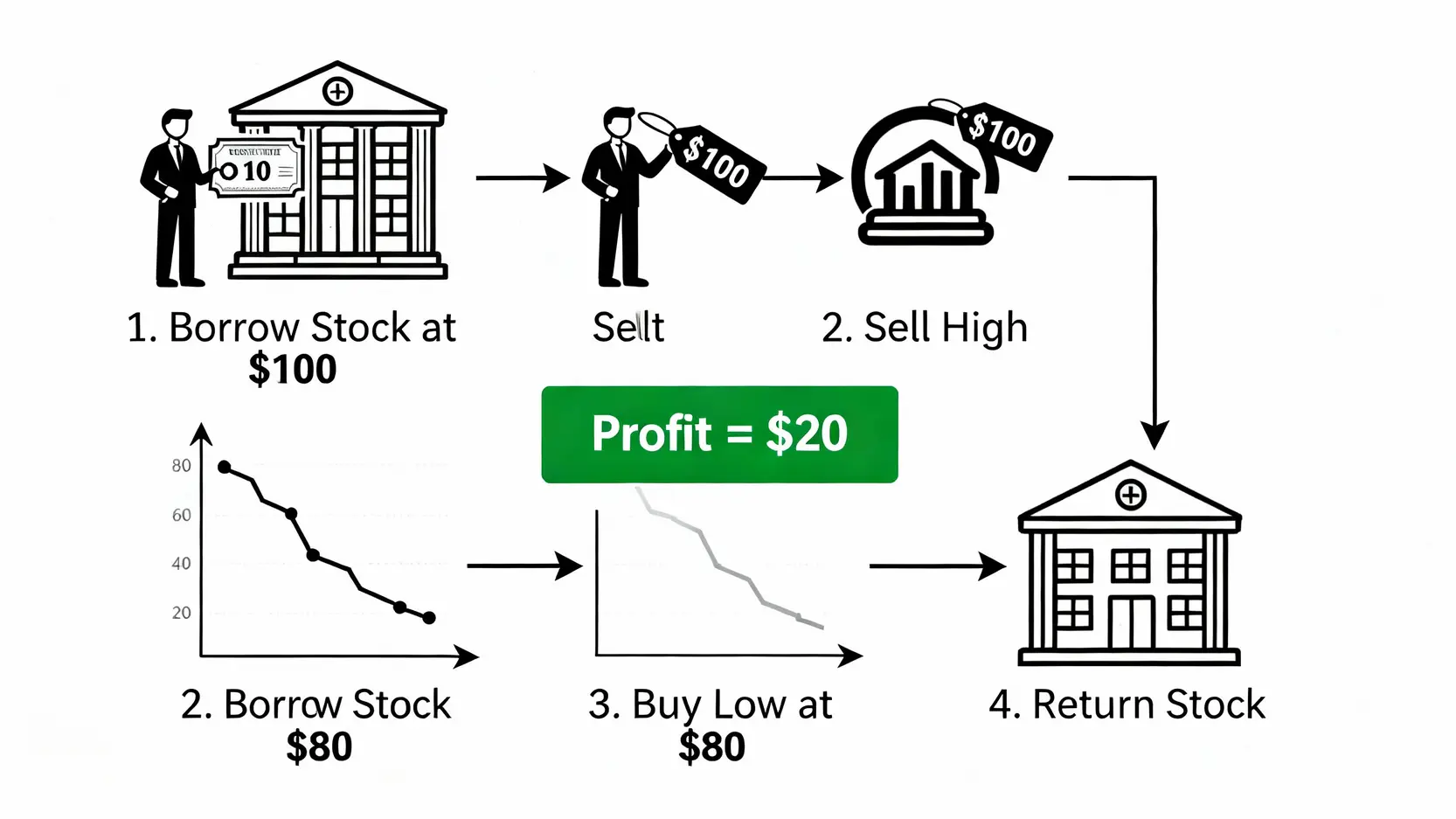
  • Short Selling: Also known as selling short. When you expect a stock’s price to decline, you may first borrow the stock from your broker and sell it on the market. After the price falls, you then buy back the same number of shares at a lower price and return them to the broker, profiting from the price difference.
  • Intraday Position Closing: This is the key to “intraday”. All short positions must be closed before the market closes on the same day through a “buy” operation (cover), which means buying back the shares to return them to the broker.

In simple terms, intraday short selling is an ultra short-term short selling strategy with no overnight positions, aimed at capturing profits from intraday downward movements.

沽空操作流程圖,展示投資者如何透過借入股票、高價賣出、低價買回並歸還來賺取差價。

Illustration: The Profit Process of Short Selling “Sell First, Buy Later”


Why Engage in Intraday Short Selling? Capturing Profit Opportunities in a Declining Market

The traditional investment strategy is “buy low, sell high”, which only allows profit when the market rises. However, markets fluctuate. When encountering a bear market or when a stock faces negative news, most investors can only choose to hold their positions or cut losses and exit. The greatest advantages of intraday short selling are:

  • Creating additional sources of profit: Even when overall market sentiment is weak or individual stocks are trending downward, you can still seek profit opportunities through short selling.
  • Hedging position risk: If you hold certain stocks for the long term but expect a short-term pullback, you can hedge risk by short selling related indices or other stocks to reduce short-term unrealized losses.
  • High capital efficiency: As this is intraday trading, capital is not locked up for extended periods, allowing more flexibility in responding to market changes.


A Complete Guide to the Day Trade Short Selling “Sell First, Buy Later” Process

While the theory may seem complex, the actual operational process is quite straightforward. Below are the standard steps for executing a complete intraday “sell first, buy later” operation.


Step One: Open a Securities Account That Supports Short Selling (Margin Account)

To conduct short selling, you cannot use a regular cash account (Cash Account). You must open a margin account, commonly known as a “margin account”. This is because short selling essentially involves “borrowing shares” from the broker to sell. A margin account provides this margin financing and securities lending function. When opening the account, be sure to confirm that the broker supports short selling and understand its margin requirements and interest calculation methods. 

Step Two: How to Place an Order? Illustration of the “Sell” Instruction

After selecting your target stock and deciding to short sell, the operation is similar to a normal purchase, but in the opposite direction. On the trading platform’s order placement interface, you need to:

  1. Enter the stock code.
  2. Select the trading instruction as “Sell”.
  3. Enter the number of shares you wish to short sell and the price (market order or limit order).
  4. Confirm and submit the order.

Once executed successfully, your position interface will display a negative position, for example “-1000 shares”, indicating that you have borrowed and sold 1000 shares.


Step Three: The Critical Step: How to Cover Before Market Close (Buy to Close)

This is the most crucial part of intraday short selling. You must execute a “Buy” instruction at any time before market close on the same day to close your short position. For example, if you previously short sold 1000 shares, you now need to buy back 1000 shares. This action is called “buy to cover”.

Once you successfully buy back the shares, the broker’s system will automatically return them. Your profit or loss is the difference between the original “sell” price and the current “buy to cover” price, minus transaction costs.


Further Reading (Highly Recommended)

The Ultimate Guide to MT4 Settings: From Chart Tutorials to Technical Indicator Parameter Setup in One Article

VIX ETF Hong Kong Investment Guide: How to Buy the VIX Index? Popular ETFs, Account Opening Tutorials and Risks


5 Major Day Trade Short Selling Techniques to Improve Your Win Rate

After understanding the process, what matters more is mastering effective trading techniques. The following five practical techniques are strategies frequently applied by many short-term traders when executing Day Trade short selling.

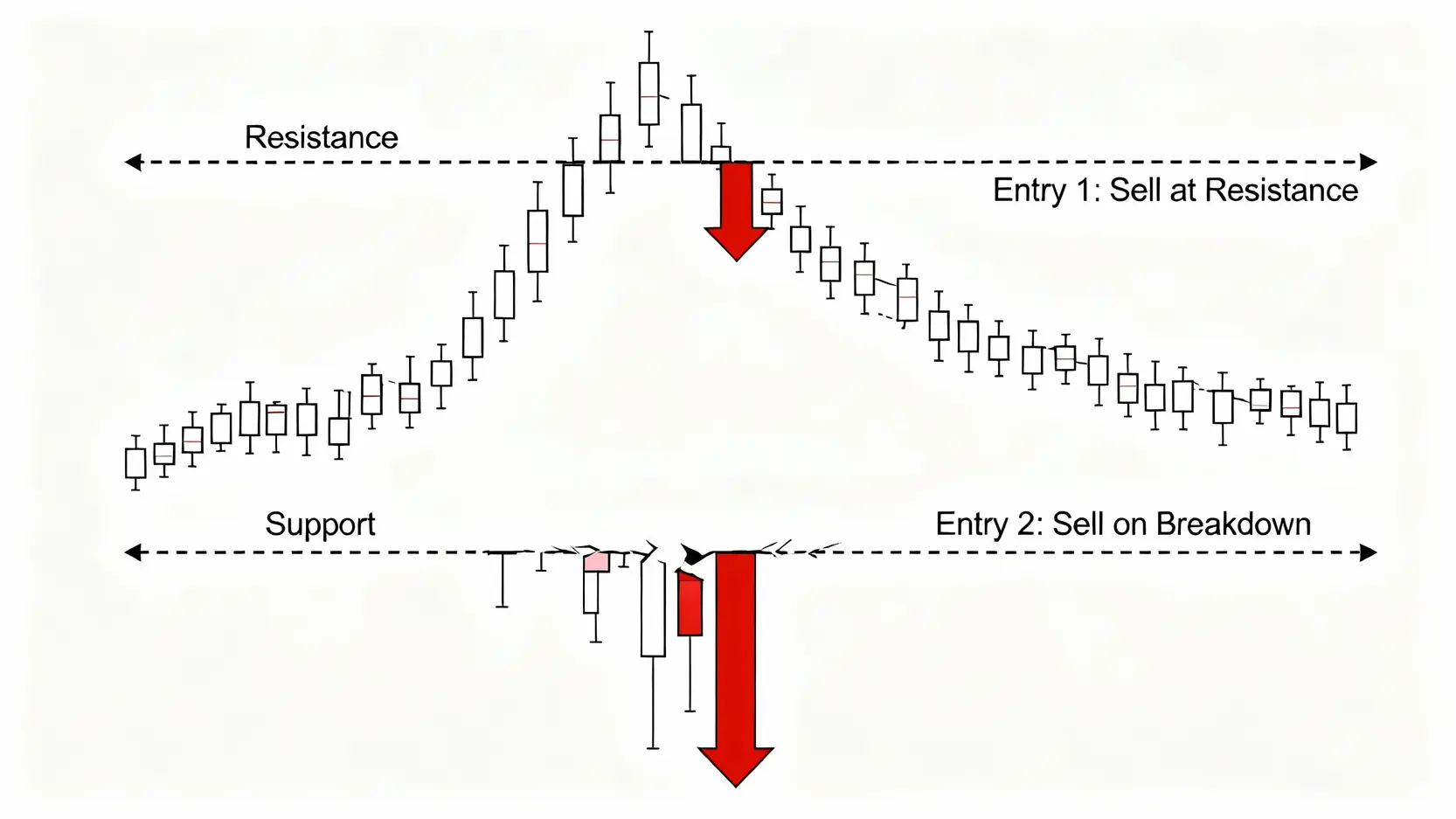
技術分析圖解,展示在阻力位和跌穿支撐位時的兩個沽空交易入場點。

Practical Technique: Using Support and Resistance Levels to Identify Short Selling Opportunities

Technique 1: Follow the Trend, Trade With the Intraday Downtrend

The most basic and effective technique. In intraday trading, the saying “the trend is your friend” applies equally. When a stock shows a clear downward trend during the day (for example continuously making new lows), short selling in line with that momentum often presents a higher probability of profit. Avoid looking for short selling opportunities in strongly rising stocks, as that is no different from “using a mantis’ arm to stop a chariot”.


Technique 2: Identify Resistance Levels, Short at Key Price Levels

A resistance level refers to a price area where a stock repeatedly encounters strong selling pressure, halting its upward movement or even reversing downward. You can determine resistance levels by observing previous highs, moving averages, or trendlines. When the price rebounds to these key resistance levels but fails to break through effectively, it is often an excellent entry point for short selling.


Technique 3: Breakout Trading, Short on a Break Below Support

In contrast to resistance, a support level is a price area where the stock tends to find buying support during declines. If the price breaks below an important support level with significant trading volume (such as a daily chart bottom or a key round number), this usually indicates that the downward trend may accelerate. Following the trend and “shorting on the breakdown” is a high momentum trading strategy at this stage.


Technique 4: Utilize Technical Indicators (Such as VWAP, RSI) to Identify Short Selling Points

Technical indicators provide objective data support for your trading decisions. In Day Trade short selling, commonly used indicators include:

  • VWAP (Volume Weighted Average Price): When the price falls below the VWAP line, it is generally regarded as a signal of market weakness and may present a short selling opportunity.
  • RSI (Relative Strength Index): When the price rebounds but the RSI fails to make a new high, forming a “bearish divergence”, it suggests weakening upward momentum and may signal a potential short selling opportunity.

Learning more about stock technical indicator tutorials will enable you to assess market conditions with greater precision. 

Technique 5: Maintain Strict Discipline, Set Clear Stop Loss and Take Profit Levels

This is the most important of all trading techniques. Since the theoretical loss of short selling is unlimited (as stock prices can rise indefinitely), setting a Stop Loss is absolutely essential. At the moment you open a position, you must determine in advance at what price level you will exit unconditionally if the price rises instead of falls. Similarly, set a Take Profit level to lock in gains once your target profit is reached, preventing missed opportunities due to greed.


The Greatest Risks of Intraday Short Selling: A Guide to Avoiding Pitfalls

High return potential is often accompanied by high risk. Although intraday short selling is attractive, you must clearly understand the following major risks.


Risk 1: Short Squeeze, The Nightmare of Prices Rising Instead of Falling

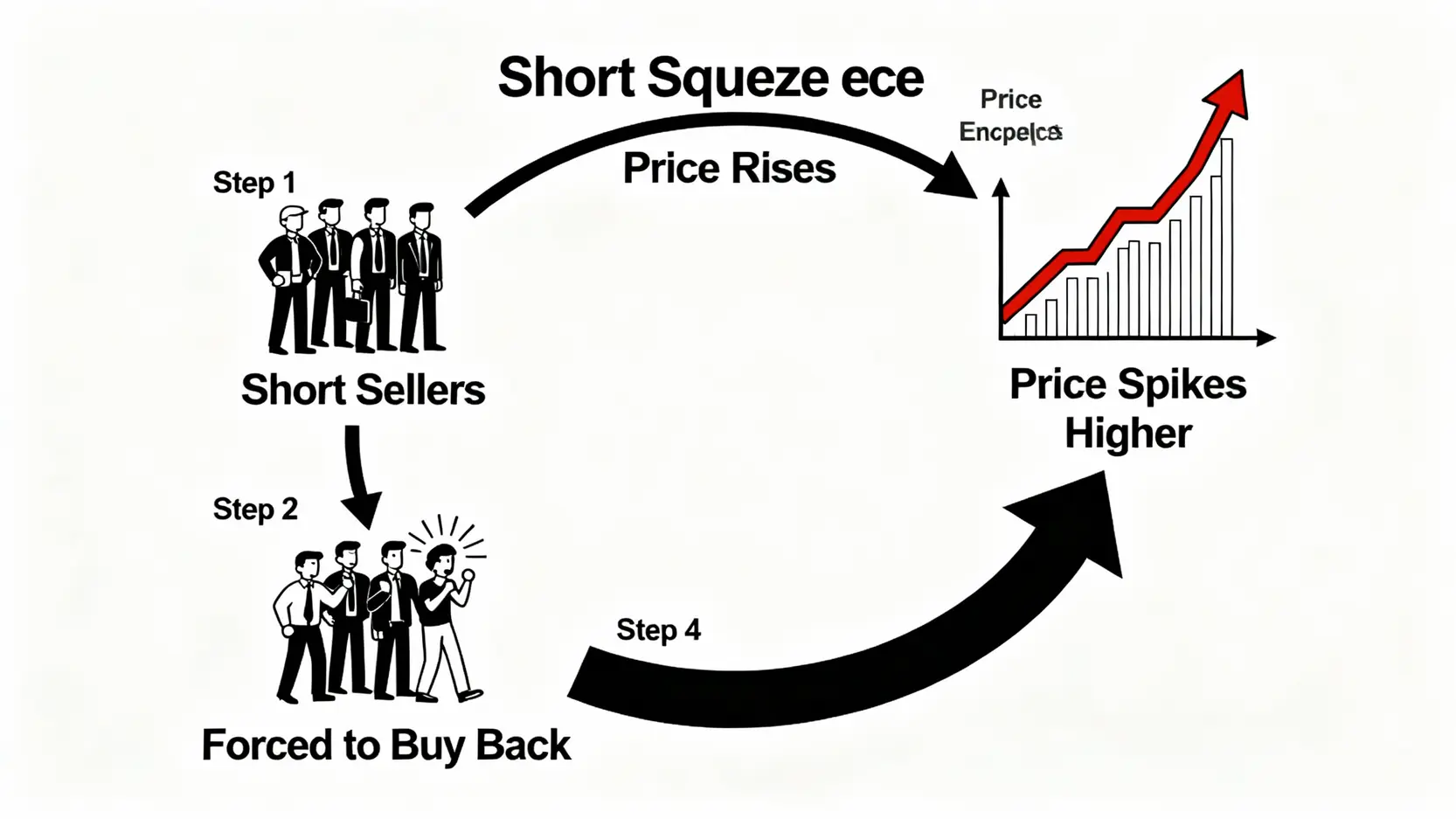
This is the greatest nightmare for short sellers. When a heavily shorted stock suddenly rises instead of falls, short sellers are forced to buy back shares to cover their positions and stop losses. This collective covering creates additional buying pressure, which further drives up the stock price and forms a vicious cycle. As a result, the stock price may surge explosively within a short period, causing massive losses for short sellers. The authoritative financial website Investopedia provides a detailed explanation of Short Squeeze, which is worth reading in depth.

挾淡倉(Short Squeeze)概念圖,展示股價意外上漲迫使沽空者回補,從而形成買盤推高股價的惡性循環。

Risk Analysis: The Formation Process of a Short Squeeze


Risk 2: Inability to Cover, What If You Cannot Buy Back Shares Before Market Close?

Although rare, this is a serious technical risk. If, when attempting to cover your position before market close, there is insufficient selling liquidity in the market for you to buy back shares (for example if trading is halted due to excessive volatility) or if you forget to close your position, it may lead to settlement failure. The broker may forcibly close your position or impose substantial penalties and interest charges. 

Risk 3: Trading Costs, Calculation of Commissions, Interest and Other Fees

Intraday short selling involves “borrowing shares”, and therefore incurs additional costs:

  • Borrowing interest: Calculated daily, even if you borrow for only one day, interest still applies.
  • Trading commission: Commissions must be paid for both the sell and the buy transactions.
  • Stock borrowing fee: For certain popular or hard to borrow stocks, brokers may charge additional borrowing fees.

These costs will erode your profits and must be fully considered when calculating gains and losses.


Conclusion

In summary, intraday short selling (Day Trade Short Selling) is a powerful tool for short-term traders to generate profits in a declining market. Mastering the “sell first, buy later” process, effectively applying the trading techniques introduced in this article, and remaining vigilant against risks such as short squeezes are the keys to successfully executing this strategy. Always remember that any investment with high return potential is accompanied by high risk. Continuous learning and strict adherence to trading discipline are essential to achieving steady progress in the market. You may consider starting with simulated trading and planning your first Day Trade short selling transaction!

FAQ Frequently Asked Questions

Q: Must Day Trade short selling be covered before the market closes?

A: Yes. This is precisely the definition of “intraday (Day Trade)”. All positions must be closed before the end of the same trading session, otherwise they will become regular short positions held overnight, exposing you to overnight risk and higher interest costs.

Q: Can all stocks be used for “sell first, buy later” operations?

A: No. First, only stocks listed on the broker’s “shortable list” can be short sold. Second, even if short selling is permitted, the broker must have sufficient shares available for borrowing. Some illiquid stocks or those with concentrated ownership may not be eligible for short selling.

Q: What is the main difference between intraday short selling and traditional short selling?

A: The primary difference lies in the holding period. Intraday short selling emphasizes completing all transactions within the same day without holding positions overnight, aiming to capture intraday fluctuations. Traditional short selling may involve holding positions for several days, weeks, or even longer to capture medium to long term downward trends, but it also entails greater overnight risk and interest costs.

Q: How much margin is required for short selling in a Day Trade?

A: The required margin varies by broker and individual stock. Generally, brokers set an initial margin ratio based on the stock’s market value, volatility, and risk level. For example, to short sell stocks worth 10,000 yuan, you may need to deposit 5,000 yuan or more as margin in your account as collateral.

If you liked this article, please share it!

Related Articles

  • Volatility Surface Guide: Skew Trading Strategies
    Practical Applications of Volatility Surfaces: From Options Modeling to Advanced Skew Trading Strategies In options markets, implied volatility is never a flat line. Instead, it forms complex "smile" or "skew" surfaces. For advanced traders, mastering the practical applications of volatility surfaces is equivalent to possessing a lens that reveals market...
    2026 年 6 月 3 日
  • Foreign Capital Flow Model: Track Institutional Money
    Building a Foreign Capital Flow Copy Trading Model: A Stock Market Indicator for Accurately Tracking Institutional Positioning In Asia-Pacific stock markets, foreign capital inflows and outflows often determine the direction of the index. However, simply looking at daily net buy and sell data is no longer enough. Only by building...
    2026 年 6 月 3 日
  • Options Buying Strategies for Extreme Market Risks
    Options Buyer Strategies During Extreme Market Conditions: Black Swan Hedging and Cross-Market Arbitrage During Volatility Surges The most terrifying aspect of financial markets is not a gradual decline, but overnight flash crashes and cross-market capital withdrawals accompanied by volatility surges. In the highly unpredictable global macroeconomic environment of 2026, geopolitical...
    2026 年 6 月 3 日
返回顶部