Bull Market Strategies: 5 Ways to Profit Safely

Bull Market Investment Strategies: 5 Bull Market Deployment Techniques to Avoid Chasing Highs and Earn Stable Profits
When a bull market arrives, the market outlook becomes highly positive. It is both a golden period for wealth growth and a time filled with the fear and risks of “chasing highs”. Many investors want to seize the opportunity but worry about buying at the peak and becoming trapped in positions. A well planned bull market investment strategy can not only help you capture upward momentum, but also help you avoid potential traps. This article provides a complete bull market investment strategy, showing you how to deploy clearly during a major bull market, calmly handle the volatility of making money at stock bull market points, and truly achieve profits while effectively managing the risks of chasing highs in a bull market.
How to Deploy in a Major Bull Market? 3 Core Investment Strategies
When facing intense market enthusiasm, maintaining a clear mind and strict discipline is crucial. The following three core strategies serve as your anchor for steady progress during a major bull market.
Strategy 1: Buy in Batches and Maintain Discipline to Lower Costs
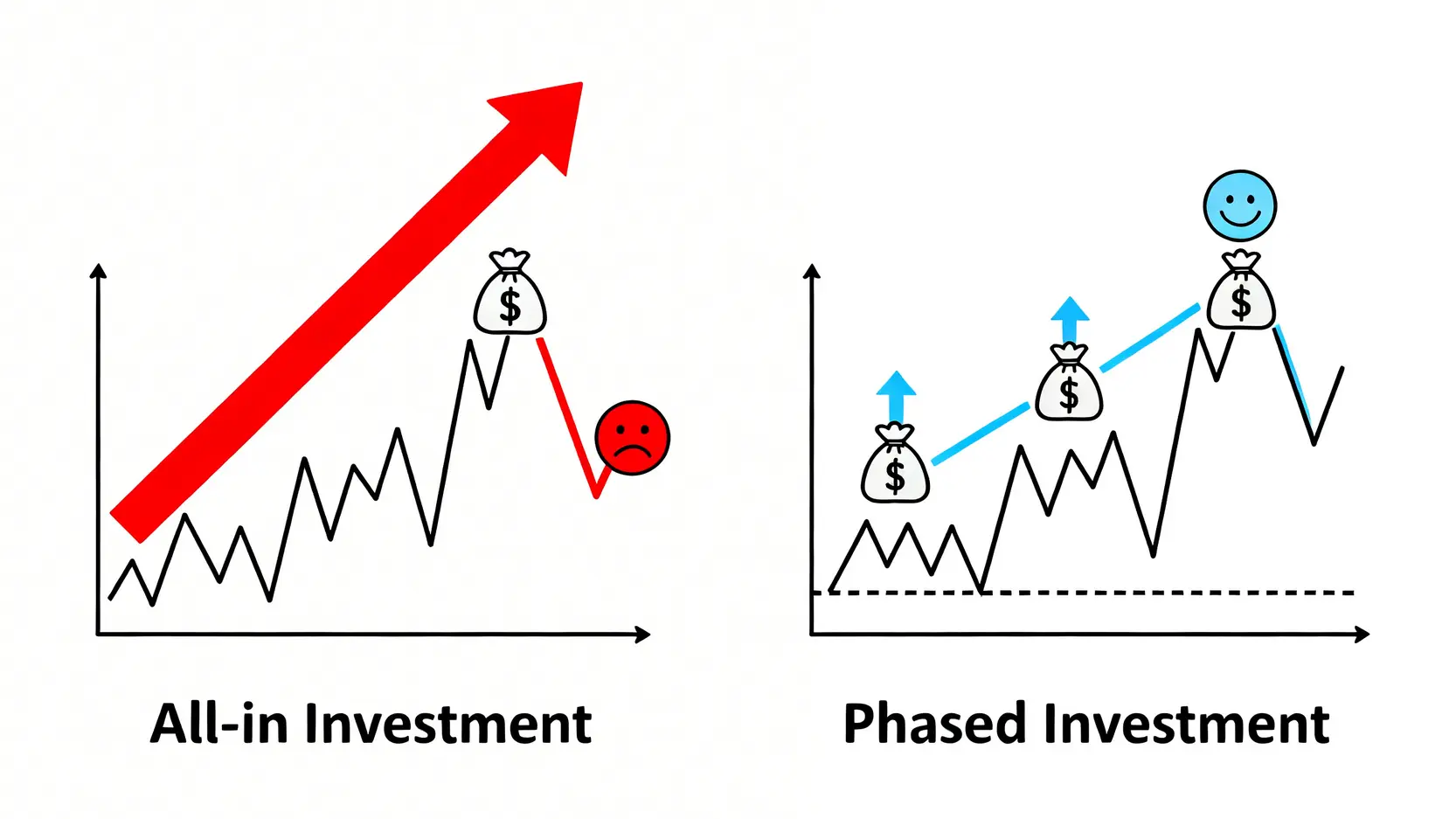
In a bull market, the biggest mistake is allowing “FOMO” (Fear of Missing Out) emotions to take over and putting all capital “All-in” at once. A more rational approach is to adopt a batch buying strategy and gradually build positions with discipline. This not only effectively averages down your cost, but also reduces the risk of being trapped due to short term market pullbacks.
- Dollar Cost Averaging: Regardless of market movements, consistently invest a fixed amount at regular intervals. This method is most suitable for index ETFs or large blue chip stocks, allowing you to accumulate assets while avoiding the need to time the market.
- Value Averaging: Set a target portfolio value growth rate. When the asset value falls below expectations, invest more capital. When it exceeds expectations, reduce the investment amount. This method is more aggressive but requires more frequent review and adjustment.
Regardless of which method you adopt, the key lies in “discipline”. Set your buying plan in advance and execute it strictly. Do not allow short term market excitement to disrupt your strategy.

Strategy 2: Select Leading Stocks or Index ETFs to Capture Market Growth
Although a bull market may appear as if “everything rises together”, the magnitude of gains and resilience to declines can vary greatly between stocks. Instead of trying to capture unknown “speculative stocks”, focusing on assets with strong fundamentals allows you to steadily benefit from overall market growth.
- Leading Stocks: Choose companies with industry leadership, strong profitability, and solid competitive advantages. These companies typically perform more steadily during bull markets, and even when the market adjusts, their recovery ability is usually stronger.
- Index ETFs: For investors who do not want to spend time researching individual stocks, directly investing in index ETFs that track the overall market (such as S&P 500 ETFs or Nasdaq 100 ETFs) is an excellent option. Through a single transaction, you can buy a basket of quality stocks, achieve high diversification, and closely follow the overall performance of the broader market.
Strategy 3: Set Clear Take Profit and Stop Loss Levels to Lock in Gains and Control Losses
“Knowing how to buy makes you an apprentice, knowing how to sell makes you a master.” In a bull market, knowing when to lock in profits is far more important than knowing when to enter. Greed is the enemy of investing. Without a clear exit mechanism, the profits on paper can easily disappear when the market reverses.
- Set Take Profit Levels: Before buying, determine one or more take profit targets based on your expected return. For example, sell one third after the stock price rises by 20%, and sell another third after it rises by 40%. This locks in part of the profit while allowing the remaining position to continue pursuing higher returns.
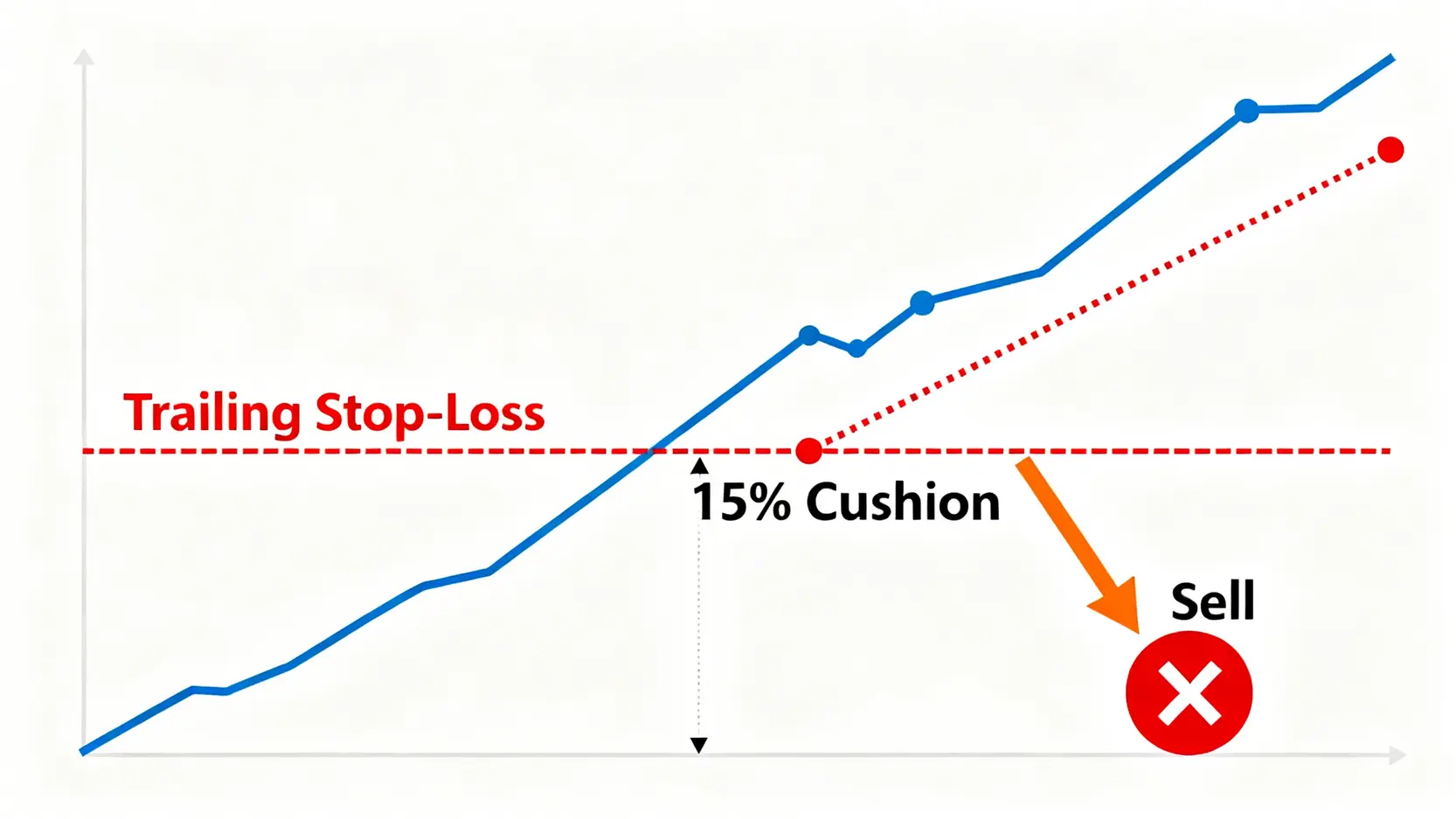
- Trailing Stop: As the stock price rises, you can gradually raise your stop loss level. For example, set a 15% trailing stop. As long as the price does not fall more than 15% from its highest level, continue holding the position. This protects most of your profits while avoiding being prematurely stopped out due to minor pullbacks.

How to Manage the Risk of Chasing Highs in a Bull Market? 2 Essential Mindsets
The biggest psychological challenge during a bull market is the temptation and fear of “chasing highs”. As stock prices continue to hit new highs, investors fear missing further gains but also fear becoming the last buyer. The following two mindsets can help you remain rational and respond calmly.
Mindset 1: Understand Market Sentiment Indicators and Maintain Rational Judgment
When “stock experts” seem to appear everywhere and even market vendors are discussing stocks, it is often a warning signal that market sentiment has become extremely euphoric. Learning to use objective data to measure market sentiment can help you remain calm during periods of intense excitement.
One widely known indicator is the “CNN Fear & Greed Index”. This index combines multiple indicators including market momentum, stock price breadth, and options trading to evaluate market sentiment on a scale from 0 to 100. When the index enters the “Extreme Greed” zone, it usually indicates that the risk of a short term market correction is increasing. At such times, investors should remain cautious rather than blindly chasing prices.

Mindset 2: Maintain Diversified Asset Allocation and Avoid Going All-in on a Single Asset
“Do not put all your eggs in one basket”. This classic investment principle also applies during bull markets. Even if you are optimistic about a particular sector or stock, you should avoid placing all your capital on it. One characteristic of bull markets is “sector rotation”, where capital constantly flows between different industries. Today’s popular sector could become tomorrow’s hardest hit area.
A healthy investment portfolio should span multiple industries (such as technology, finance, consumer goods, and healthcare). It may even include different asset classes (such as stocks, bonds, and gold). In this way, even if one sector experiences a significant correction, other assets can provide a buffer and reduce overall portfolio volatility. Proper global asset allocation forms the foundation for resisting unknown risks and achieving long term growth.
Common Questions About Bull Market Investment Strategies
Q: How long does a bull market usually last?
A: The duration of a bull market has no fixed rule and can range from several months to several years. Historically, the average bull market in US stocks has lasted about 2.7 years, but this is only an average. Many factors influence the length of a bull market, including macroeconomic conditions, corporate earnings growth, monetary policy, and market sentiment. Rather than trying to predict when the bull market will end, it is better to focus on executing your established investment strategy and risk management plan.
Q: Should investors borrow money to invest during a bull market?
A: Absolutely not recommended! Using leverage (which means borrowing money to invest), magnifies both risk and returns simultaneously. Although leverage may appear to generate faster profits during a bull market, losses will also be magnified if the market reverses, and it could even result in losing all your capital. Investments should always be made within your financial capacity, using only idle funds, ensuring that even the worst market scenario will not affect your normal life.
Q: If I missed the early stage of the bull market, is it still possible to enter now?
A: This is a common concern. If you realize you missed the initial strong rally, do not chase popular stocks out of impatience. Instead, return to fundamentals and look for quality companies or sectors with relatively reasonable valuations and growth potential. By adopting a batch buying strategy and gradually building positions, you may still participate in the later stage gains of the bull market. Remember, the market never lacks opportunities. What is often lacking is patience and discipline.
Q: How can investors determine whether a bull market has reached its peak?
A: Accurately predicting the market top is almost impossible. However, several warning signs are worth monitoring, such as extremely greedy market sentiment, a surge of low quality company IPOs, extensive media coverage of stock market mania, and central banks beginning to tighten monetary policy (such as raising interest rates or reducing asset purchases). When these signals appear frequently, investors should increase caution, moderately reduce positions, or tighten stop loss levels.
Q: What are the common investment traps during a bull market?
A: In addition to chasing highs and using leverage, common traps include: 1) Frequent trading in an attempt to capture every market movement, which often leads to losses due to fees and incorrect judgments; 2) Blindly following “tips” or insider rumors and abandoning independent thinking; 3) Concentrating investments excessively in a single stock or industry while ignoring diversification; 4) Selling quality assets during market pullbacks due to panic.
Conclusion
In summary, successfully making profits in a major bull market depends on combining effective bull market investment strategies with strict risk management. By deploying capital in batches, selecting quality assets, and setting clear exit mechanisms, you can significantly reduce the risk of chasing highs during a bull market. Remember, sound investing is always a combination of rational thinking and discipline, not blind herd behavior. While enjoying the gains brought by rising markets, always maintain respect for risk so that you can become the investor who ultimately comes out ahead.
Related Articles
-
Practical Applications of Volatility Surfaces: From Options Modeling to Advanced Skew Trading Strategies In options markets, implied volatility is never a flat line. Instead, it forms complex "smile" or "skew" surfaces. For advanced traders, mastering the practical applications of volatility surfaces is equivalent to possessing a lens that reveals market...2026 年 6 月 3 日
-
Building a Foreign Capital Flow Copy Trading Model: A Stock Market Indicator for Accurately Tracking Institutional Positioning In Asia-Pacific stock markets, foreign capital inflows and outflows often determine the direction of the index. However, simply looking at daily net buy and sell data is no longer enough. Only by building...2026 年 6 月 3 日
-
Options Buyer Strategies During Extreme Market Conditions: Black Swan Hedging and Cross-Market Arbitrage During Volatility Surges The most terrifying aspect of financial markets is not a gradual decline, but overnight flash crashes and cross-market capital withdrawals accompanied by volatility surges. In the highly unpredictable global macroeconomic environment of 2026, geopolitical...2026 年 6 月 3 日