Best Time to Buy TWD: 3 Indicators to Save on FX

[TWD Buying Timing] When Is the Best Time to Buy TWD? Analyze Exchange Rate Lows With Three Key Indicators and Save Money on Currency Exchange in One Article!
Planning a trip to Taiwan or considering making a small investment in the TWD market, but feeling hesitant when looking at constantly fluctuating exchange rate charts? Often worried about exchanging at a poor rate, wasting your hard earned money, and missing the best timing to buy TWD. To know when it is most cost effective to exchange TWD, you need to learn some basic techniques for analyzing low TWD exchange rate. This article will clearly break down the three key indicators that influence the TWD exchange rate, from macroeconomic data to practical exchange methods, teaching you how to analyze TWD trends. Whether you are shopping at night markets or planning long term, you can easily master the key to “when is the most cost effective” and ensure every dollar is spent wisely!
Why Should You Care About TWD Buying Timing? The Impact of Highs and Lows
Even slight fluctuations in exchange rates can have a significant impact on large investors or cost conscious travelers. Different exchange timings can mean the cost of a meal at a night market or even the price of a round trip flight ticket. Understanding the impact of exchange rate highs and lows is the first step toward making smart decisions.
Case Study: The Practical Impact of Exchange Rate Levels on Travel Budgets
Suppose you prepare HKD 10,000 for a trip to Taiwan. How much difference can different buying timings make in the amount of TWD you receive? Let us illustrate with a simple example:
| Scenario | Exchange Rate (TWD/HKD) | HKD 10,000 Exchangeable TWD | Difference Amount |
| High Exchange Rate (Strong TWD) | 3.9 | TWD $39,000 | TWD $2,000
(Approximately equivalent to the price of a one night stay at a three star hotel) |
| Low Exchange Rate (Weak TWD) | 4.1 | TWD $41,000 |
From the table above, a difference of just 0.2 in the exchange rate can already result in a TWD $2,000 gap in your travel budget! This amount is enough for you to indulge at night markets or upgrade to a better hotel for one night. Therefore, spending a bit of time analyzing lower levels in the TWD exchange rate is definitely worth it.
From an investment perspective: how buying TWD at lower exchange rate levels can increase asset value
For investors, exchange rates represent the price of assets. Buying TWD-denominated assets (such as stocks, funds, or real estate) at lower levels means that when TWD appreciates, the value of your assets converted back to HKD will increase accordingly, achieving both “exchange rate gains” and “asset appreciation”. On the other hand, if you enter at higher levels and TWD depreciates, even if your investment grows, the gains may be offset by exchange rate losses. Therefore, identifying a good timing to buy TWD is a crucial part of investment success.
Further reading (highly recommended)
“2026 Hong Kong Crypto Card Comparison” 5 Cryptocurrency Credit/Debit Cards Recommended
3 Key Indicators to Identify Lower Levels in the TWD Exchange Rate
Accurately predicting exchange rate movements is impossible, but by observing several key economic indicators, you can significantly improve your ability to identify lower levels in the TWD exchange rate.

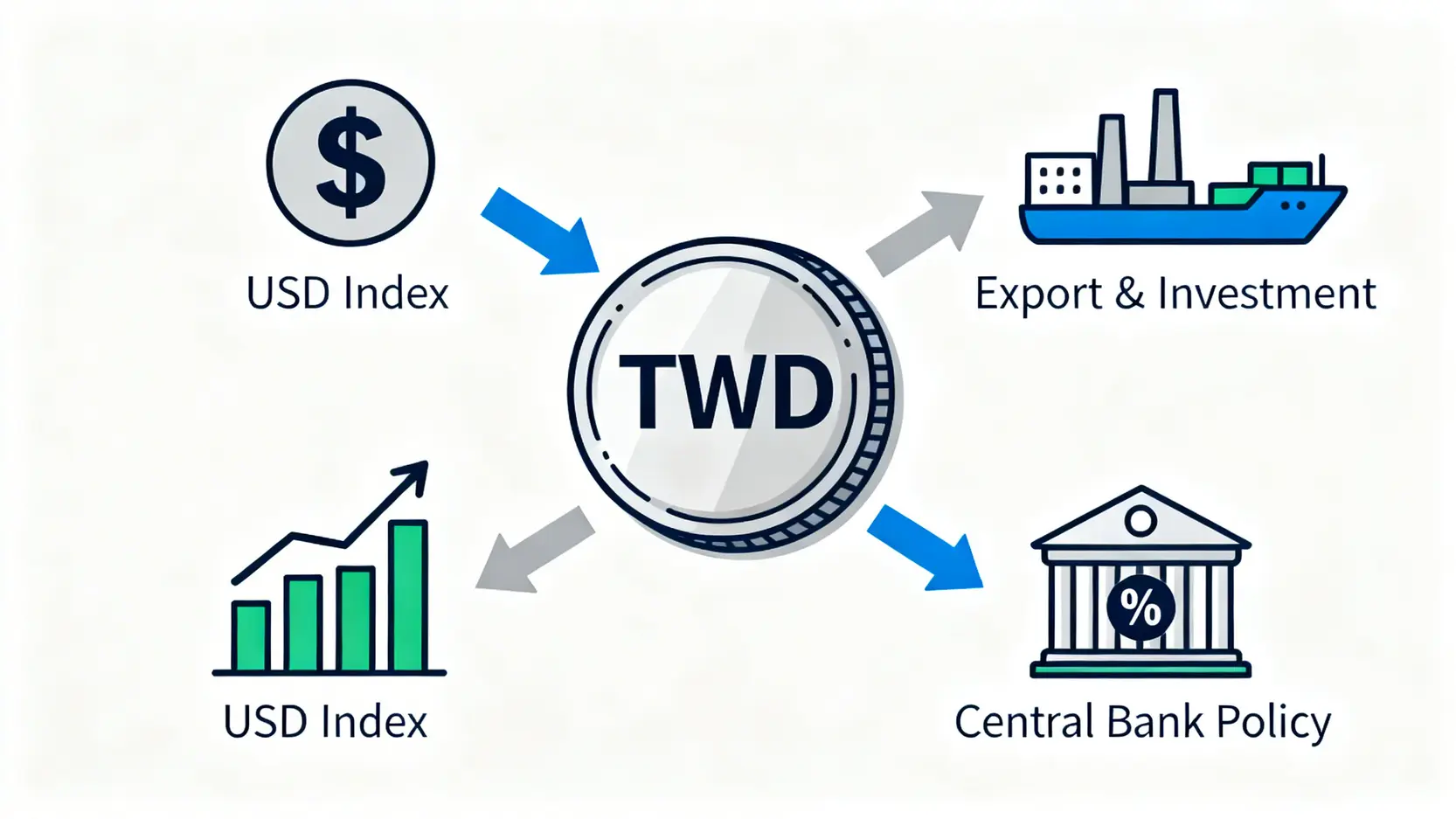
Indicator 1: US Dollar Index (USDX) and the US Federal Reserve policy direction
The US dollar is the world’s dominant reserve currency, and its movement directly affects all non-USD currencies, including TWD. Since HKD is pegged to the US dollar, the strength of the USD has a particularly significant impact on the cost of exchanging TWD.
US Dollar Index (USDX): This index measures the value of the USD against a basket of major currencies. In simple terms:
- When the USDX rises: it indicates a stronger USD. Typically, capital flows into USD assets, causing Asian currencies such as TWD to depreciate (i.e. weaken). At this time, exchanging HKD for TWD becomes more “cost-effective”.
- When the USDX falls: it indicates a weaker USD. TWD tends to appreciate, making exchange costs higher.
How to monitor it? Pay attention to Federal Reserve (Fed) meetings. If the Fed leans toward raising interest rates to combat inflation, the USD usually strengthens. Conversely, if rate cuts are expected, the USD tends to weaken.
Indicator 2: Taiwan export data and foreign capital flows
Taiwan is an export-oriented economy, especially strong in semiconductors and electronic components. Therefore, economic fundamentals are a key support for the TWD exchange rate.
Export data: Taiwan’s export orders, particularly in electronics, act as a key economic indicator. Strong and consistent export performance signals robust economic growth, attracting foreign capital inflows and supporting TWD appreciation.
Foreign capital flows: The behavior of international funds (especially foreign investors) in the Taiwan stock market is another key factor. Large inflows require converting foreign currency into TWD, increasing demand and strengthening the currency. Conversely, persistent outflows will put depreciation pressure on TWD, which may present a better opportunity to buy TWD.
Indicator 3: Taiwan central bank interest rate decisions and inflation data
Similar to the Federal Reserve, Taiwan’s central bank policies also influence the TWD exchange rate.
Interest rate decisions: The central bank’s main tool is interest rate adjustments. To curb inflation, rate hikes may be implemented. Higher rates attract international capital seeking better returns, supporting TWD appreciation. Conversely, rate cuts in a weak economy may lead to TWD depreciation. You can further understand how central bank policies affect markets by learning forex trading fundamentals.
Inflation data (CPI): The Consumer Price Index (CPI) reflects inflation levels. If inflation in Taiwan remains high, pressure for rate hikes increases, indirectly signaling potential TWD strength in the future. This may indicate that current levels are relatively low for exchange.
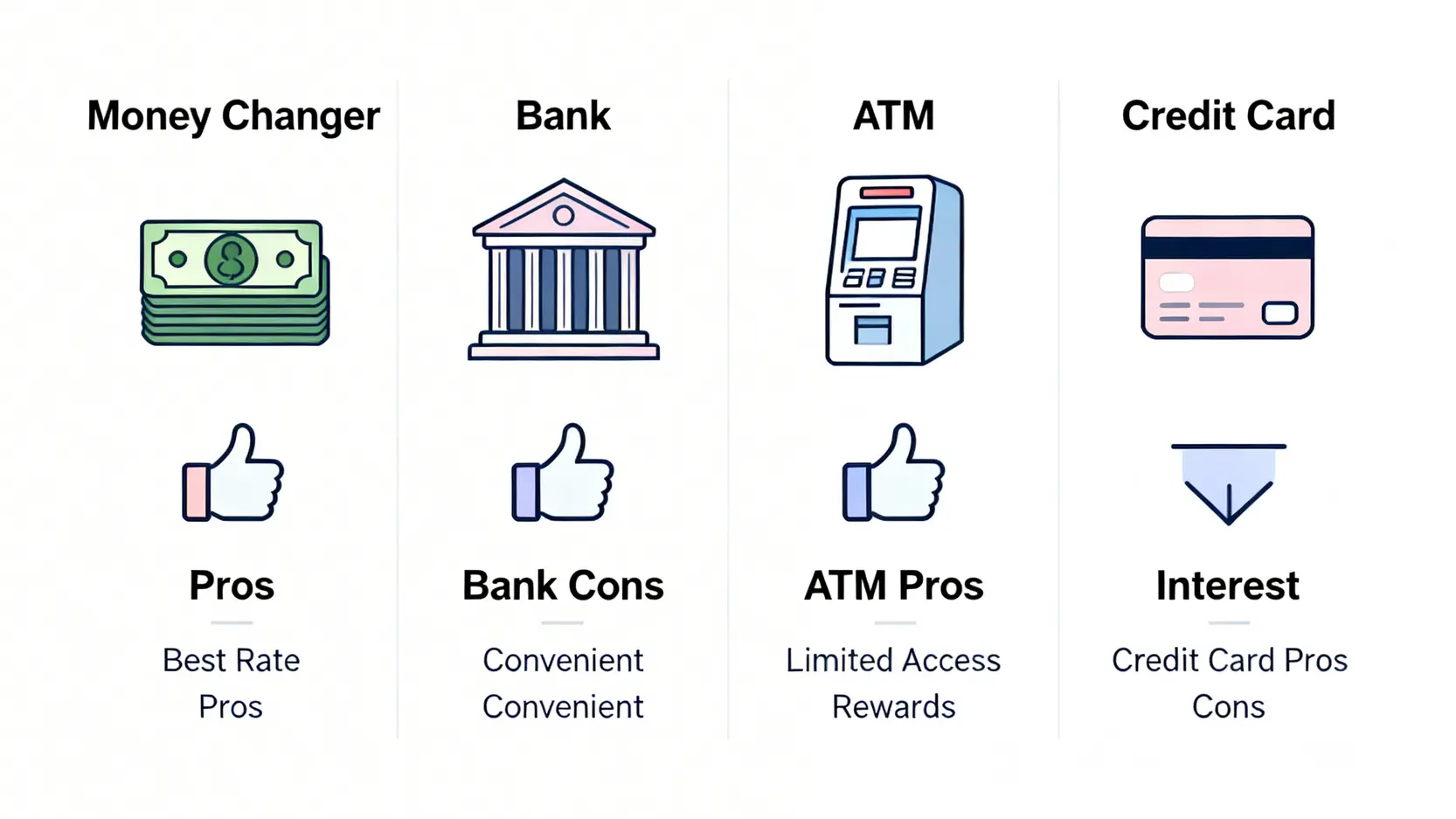
When Is the Best Time to Exchange TWD? Comparison of 4 Major Exchange Channels
After understanding macro factors, the next step is to compare practical exchange methods to determine the best timing for exchanging TWD.

Method 1: Hong Kong Money Changers – Pros and Cons
For those seeking the best exchange rates, Hong Kong money changers (such as Pak Nin and Fat Tat Bird) are usually the top choice.
- Pros: Cash exchange rates are typically the most competitive, especially for large amounts. Many shops offer online booking for convenience.
- Cons: Requires in-person visits, and popular locations often have long queues. Favorable-rate shops are mainly located in Central, Sheung Wan, or Sham Shui Po, which may not be convenient.
Method 2: Taiwan Airports and Local Banks – Beware of Poor Rates
Exchanging money at airports or local banks in Taiwan is the most convenient option, but this convenience comes at a cost.
- Pros: Safe and reliable with minimal risk of counterfeit money. Extensive branch networks, with airport counters offering 24-hour service.
- Cons: Exchange rates are usually the worst, and a fixed service fee (around TWD 100–300) is typically charged regardless of amount. Not recommended unless for emergencies.
Method 3: Taiwan ATM withdrawals – convenient but watch the fees
This method suits travelers who prefer not to carry large amounts of cash. With overseas withdrawal enabled (e.g. PLUS/Cirrus), you can withdraw TWD directly from ATMs in Taiwan.
- Pros: Extremely convenient, with ATMs widely available. Exchange rates are generally based on international network rates, which are relatively fair.
- Cons: Each withdrawal may incur fees from both the Hong Kong issuing bank and the local Taiwanese bank (around HKD 20–50). Frequent small withdrawals can be costly.
Method 4: Credit card overseas spending – cashback can offset fees
More travelers are choosing to pay directly with credit cards overseas. With the right card, it may be more cost-effective than exchanging cash.
- Pros: Eliminates the need to carry large amounts of cash. Some cards offer cashback or rewards that can offset or even exceed the typical 1.95% foreign transaction fee.
- Cons: Not all places accept cards (e.g. night markets, small shops). You bear the exchange rate fluctuation risk, and must avoid Dynamic Currency Conversion (DCC) traps by always choosing TWD settlement. For more details, refer to overseas credit card spending comparisons.
FAQ
Q: Is it better to exchange all the money at once?
A: Unless you have strong confidence in the exchange rate trend, it is not recommended to “go all in” at once. For travelers, you can exchange in batches before departure, for example exchanging a portion whenever you see a favorable rate. For investors, a phased buying strategy should be adopted to diversify exchange rate risk.
Q: What is the difference between the “cash selling rate” and the “spot selling rate”?
A: Simply put, the “cash selling rate” is the rate used when you exchange HKD cash for TWD cash, while the “spot selling rate” is used when making telegraphic transfers through a bank account. Generally, since handling cash incurs costs for banks, the “cash selling rate” is usually worse (i.e. more expensive) than the “spot selling rate”.
Q: Does TWD appreciation mean it is not a good time to buy?
A: Not necessarily. Exchange rate movements are relative. If TWD appreciates due to strong economic fundamentals, even though the short-term cost of buying is higher, from a long-term investment perspective, the appreciation trend may continue, and buying earlier may still be a wise decision. The key lies in assessing the reasons behind the appreciation and its sustainability.
Q: Will Taiwan’s political situation affect the TWD exchange rate?
A: Yes. Geopolitical risk is an important non-economic factor affecting the TWD exchange rate. Any event that intensifies cross-strait tensions may trigger market concerns, leading to capital outflows and short-term depreciation pressure on TWD. Therefore, monitoring relevant news is also part of the analysis.
Conclusion
In summary, identifying the best timing to buy TWD requires combining macroeconomic analysis with personal needs. For investors, it is important to closely monitor the US Dollar Index, Taiwan’s central bank policies, and foreign capital flows, conduct low-level exchange rate analysis, and adopt a phased buying strategy to diversify risk. For travelers, the answer to “when is the best time to exchange TWD” is more flexible. By comparing exchange rates at Hong Kong money changers, the total fees of ATM withdrawals in Taiwan, and selecting a credit card with strong overseas spending rewards, you can find the most cost-effective and convenient personalized solution. By mastering these analytical methods and exchange strategies, whether for currency exchange or investment in the future, you will be able to make more confident and informed decisions.
Related Articles
-
Complete Guide to Virtual Asset Trading Platform (VASP) License Applications: A 2026 Hong Kong Web3 Compliance Practical Guide At the pivotal moment of 2026, as global financial digitization accelerates at an unprecedented pace, Hong Kong has firmly established itself as a leading Web3 compliance hub in Asia and around the...2026 年 6 月 3 日
-
2026 Offshore Renminbi Range-Bound Arbitrage Trading Guide: Mastering the CNH-CNY Spread and a Profit Guide to Hedging Through Two-Way Volatility Against the combined influence of global macroeconomic developments and international trade policies, the foreign exchange market in 2026 has become increasingly complex. The Renminbi exchange rate often exhibits a pattern...2026 年 6 月 3 日
-
Friday Taiwan Index Options Buyer Strategies: Precisely Capturing Explosive Market Moves From Non-Farm Payroll Data Many investors often complain that options buyers have low win rates, frequently predicting the direction correctly but ultimately losing to time decay. However, under the new dual-settlement system, short-term volatility and event-driven trading have created...2026 年 6 月 3 日