AUD/USD Forecast 2026: 5 Key Factors & Outlook

Updated: 2026/03/17  |  CashbackIsland

audusd-forecast-2026

Australian Dollar Against US Dollar Outlook 2026: Complete AUD/USD Analysis, 5 Key Factors and Expert Forecasts

Looking to invest in the Australian dollar but struggling to time your entries and exits? Do you often feel confused when facing the highly volatile Australian Dollar Against US Dollar (AUD/USD) chart? As one of the most heavily traded currency pairs in the world, the AUD/USD exchange rate is influenced by multiple factors. For traders seeking a diversified portfolio, understanding its movements is crucial. This article provides a comprehensive analysis of the five core factors affecting the US Dollar Against Australian Dollar exchange rate, along with the latest AUD/USD outlook forecasts and professional insights, helping you make more informed investment decisions in the ever-changing forex market. 


Real-Time AUD/USD Chart and Latest Exchange Rate Analysis

Before diving into the complex factors influencing the AUD/USD outlook, learning how to interpret real-time AUD/USD charts is a fundamental skill for every investor. This not only provides a window to observe price changes but also serves as a starting point to understand market sentiment and potential opportunities.


How to Read the AUD/USD Real-Time Quote Chart?

When you open any forex trading platform’s quote chart, you typically see two prices:

  • Bid: The highest price buyers are willing to pay, which is also the price at which you can sell Australian dollars.
  • Ask: The lowest price sellers are willing to accept, which is also the price you pay to buy Australian dollars.

The difference between the ask and bid is called the “Spread”, which is one of the main trading costs. For an active and highly liquid currency pair like AUD/USD, the spread is usually relatively low. Observing the real-time chart allows you to intuitively perceive price volatility and frequency, providing a basis for short-term or long-term trading decisions.


Introduction to Basic Technical Indicators: Candlestick and Moving Averages (MA)

To extract more information beyond simple price lines, it is necessary to learn basic technical indicators. These are the culmination of prior market wisdom and help convert complex market data into relatively clear buy or sell signals.

  • Candlestick: Also known as a K-line, each candlestick contains four key pieces of information: opening price, closing price, highest price, and lowest price. By observing the color (red/green), body size, and wick length, you can assess the relative strength between buyers and sellers within a specific time period.
  • Moving Average (MA): An MA plots the average price over a past period as a smooth line. It helps filter short-term market noise and indicates long-term trend direction. Commonly used MAs include 5-day, 10-day, 20-day, and 60-day periods. When a short-term MA crosses above a long-term MA, it is considered a “Golden Cross”, potentially signaling a buy; conversely, a cross below is a “Death Cross”, potentially signaling a sell.

Mastering these basic tools allows you to gain a deeper understanding of AUD/USD charts and lays a solid foundation for further analysis.


Five Key Factors Affecting the US Dollar Against Australian Dollar Exchange Rate

The AUD/USD exchange rate does not fluctuate randomly; multiple economic, political, and market forces are at play behind it. Understanding these core driving factors is key to accurately forecasting the Australian Dollar Against US Dollar outlook.

影響澳元兌美元匯率的五大關鍵因素示意圖,包括利率、大宗商品、主要貿易夥伴經濟、美國數據和市場風險情緒。

The Australian dollar exchange rate is determined by multiple factors, and understanding their interactions is crucial for investment.


Factor 1: Interest Rate Policy Differences Between the Reserve Bank of Australia (RBA) and the Federal Reserve (Fed)

Central bank interest rate policy is the most direct and fundamental factor affecting exchange rates. Decisions and forward guidance from the RBA and the Fed directly determine the “interest yield” of holding Australian dollars or US dollars.

  • Rate Hike Expectations: If the market expects the RBA to raise rates (or the Fed to cut rates), holding Australian dollars offers relatively higher interest returns, attracting international capital inflows to Australia and boosting the AUD exchange rate.
  • Rate Cut Expectations: Conversely, if the RBA may cut rates (or the Fed is preparing to raise rates), the attractiveness of the AUD is weakened, leading to a decline in the exchange rate.

澳洲央行與美國聯儲局利率政策對澳元匯率影響的對比圖。

Interest rate differentials are central to exchange rates: the more hawkish a central bank is, the stronger its currency tends to be. 

Investors should closely monitor statements, minutes, and public speeches from both central banks to glean clues about future monetary policy. First-hand information can be obtained from RBA official announcements

Factor 2: Commodity Price Fluctuations, Including Iron Ore and Gold

Australia is a major global resource exporter, and its economy is closely tied to the prices of commodities such as iron ore, coal, gold, and natural gas. Therefore, the AUD is often referred to as a “commodity currency.”

  • Iron Ore: As Australia’s largest export commodity, fluctuations in iron ore prices have a significant impact on the AUD. When global (especially Chinese) steel demand is strong and iron ore prices rise, the AUD is typically supported.
  • Gold: Australia is one of the world’s major gold producers. As a safe-haven asset, rising gold prices can also partially support the AUD.

Observing price changes in major commodity futures markets is an important reference for judging the AUD’s medium-term trend.


Factor 3: Direct Impact of China’s Economic Data

China is Australia’s largest trading partner, with huge demand for Australian resources such as iron ore and coal. Therefore, China’s economic health is effectively a “barometer” for Australia and directly transmits to the USD/AUD exchange rate.

  • Key Data: Investors should focus on China’s GDP growth rate, PMI, industrial production, and import-export data.
  • Transmission Path: When China’s economic data is strong, the market expects demand for Australian resources to increase, which benefits the AUD; conversely, if China’s economy slows, the AUD faces pressure.


Factor 4: Core US Economic Indicators (e.g., Non-Farm Payrolls, CPI Inflation Data)

The other side of the AUD/USD pair is the US dollar, so US economic conditions are equally important. Strong US economic data can boost the USD, thereby putting downward pressure on AUD/USD.

  • Non-Farm Payrolls (NFP): A key measure of the US labor market, released on the first Friday of each month, often triggering significant market volatility.
  • Consumer Price Index (CPI): As a core inflation measure, CPI directly affects Fed rate decisions. Inflation above expectations may prompt the Fed to adopt a more hawkish stance, supporting the USD.

Investors should also pay attention to US retail sales, GDP, and other data, which together provide a comprehensive picture of the US economy and influence the world’s strongest currency: the USD. Monitoring the US Dollar Index (DXY) can help gauge USD strength.


Factor 5: Global Market Risk Sentiment (VIX Index) and Geopolitics

The AUD is a “risk currency,” meaning it tends to rise in a risk-on environment when investors seek higher returns. Conversely, during market panic or heightened risk-off sentiment, capital flows into safe-haven currencies like the USD and JPY, putting pressure on the AUD.

  • VIX Index: Known as the “fear index”, a spike in the VIX usually indicates heightened risk-aversion sentiment, which is unfavorable for the AUD.
  • Geopolitical Events: Any major international conflict, trade dispute, or political instability can quickly trigger risk-off sentiment, impacting the AUD and other risk currencies.


2026 AUD/USD Outlook and Technical Analysis

By combining the five key factors above, a forward-looking assessment of the AUD/USD outlook for 2026 can be made. This requires integrating macroeconomic analysis with chart-based technical analysis to form a multidimensional framework.


Major Bank Expert Views: Future AUD/USD Outlook

Looking ahead to 2026, the market generally anticipates high uncertainty for AUD/USD, focusing on several core points of contention:

  • Monetary Policy Divergence: Will significant divergence re-emerge between Fed and RBA policy paths? Control of global inflation and which central bank enters a clear easing cycle first will be the main determinants of exchange rate direction.
  • China’s Economic Transition: Whether China can achieve a soft landing and maintain stable growth will directly affect commodity prices and Australia’s export outlook.
  • Global Economic Outlook: The possibility of a global recession influences overall risk sentiment. If the economy remains resilient, it favors the risk currency AUD; if recession risks rise, the USD’s safe-haven status strengthens its advantage.

Most investment banks expect AUD/USD to exhibit range-bound fluctuations in 2026, though volatility will increase significantly due to intertwined bullish and bearish factors.


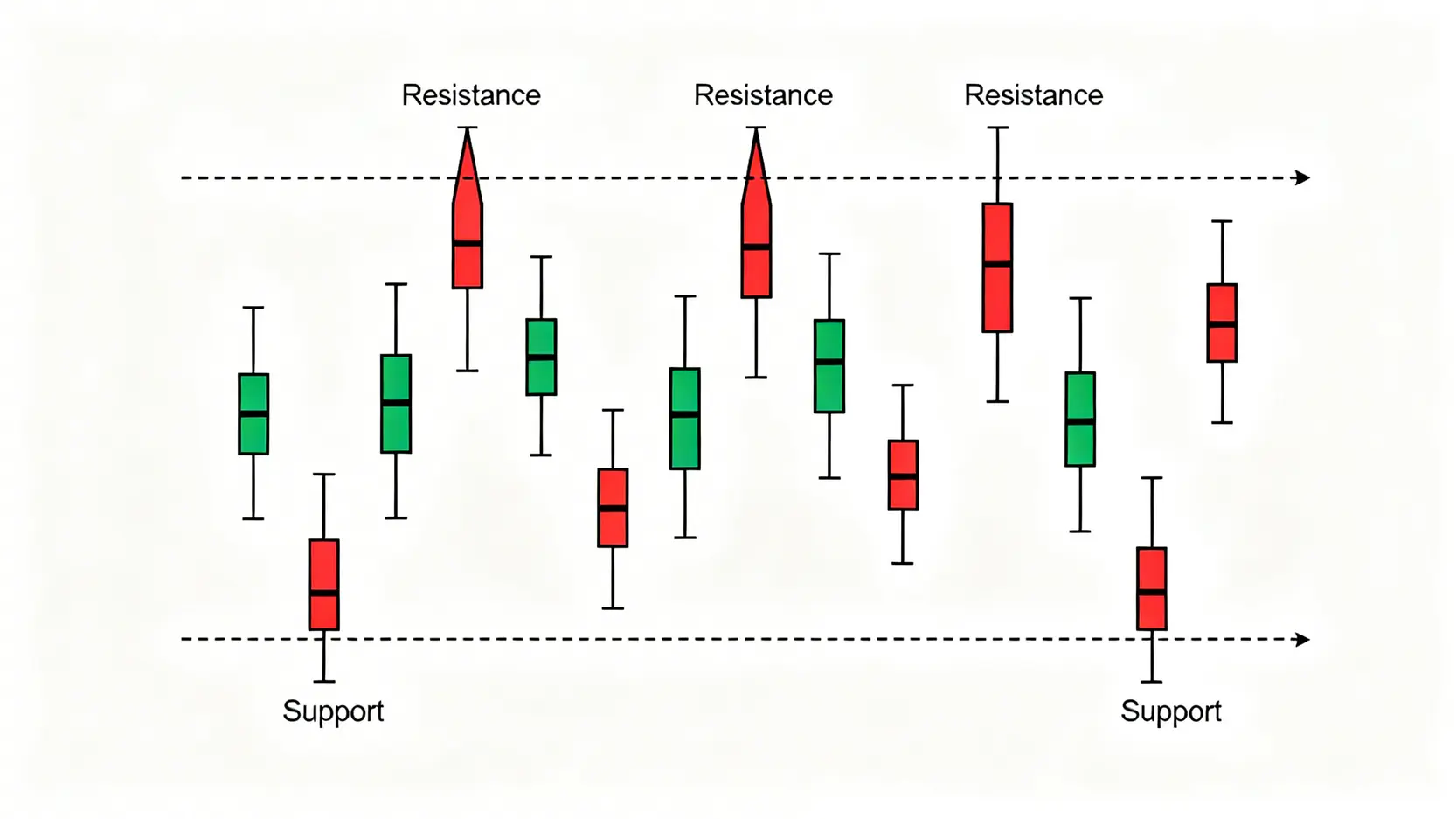
Key Support and Resistance Levels on AUD/USD Charts

From a technical analysis perspective, identifying key support and resistance levels is critical, as they are potential trend reversal or acceleration points.

  • Support: Levels where buying pressure may emerge during price declines, such as historical lows, round numbers (e.g., 0.6500), or important moving averages. Repeated rebounds from these levels strengthen their validity.
  • Resistance: Levels where selling pressure may emerge during price increases, such as previous highs or round numbers (e.g., 0.7000). Repeated rejection at these levels constitutes strong resistance.

一張解釋技術分析中支撐位與阻力位的 K 線圖。

Support zones are potential buy areas, while resistance zones are potential sell areas. 

Investors should analyze longer-term charts, such as weekly and monthly timeframes, to identify these levels, which provide better guidance for long-term trend assessment. 

Further Reading (Highly Recommended)

2026 Hong Kong Forex Investment Ultimate Guide: Offers, Rebates, Strategies, and Bank Account Essentials


Long-Term Investment Strategy: Is Holding the AUD Worth It? Opportunities and Risk Assessment

For long-term investors, holding the AUD depends on confidence in Australia’s economic fundamentals and the global macro environment.

Potential Opportunities:

  • Global Green Transition: Australia possesses not only traditional energy but also key minerals such as lithium and copper needed for the new energy supply chain, which may create new long-term export growth.
  • Relatively High Interest Rates: Historically, Australia’s rates have been relatively high among developed countries, making the AUD attractive for carry trades.

Potential Risks:

  • Overreliance on China’s Economy: This is the AUD’s main structural risk. Any economic shock from China can disproportionately affect the AUD.
  • Commodity Price Cyclicality: Booms and busts in commodity markets directly cause large AUD fluctuations, adding uncertainty for long-term holders.

Overall, the AUD has potential as a long-term investment, but investors must fully understand and prepare for its high volatility and associated risks.


Frequently Asked Questions About the Australian Dollar Against US Dollar Outlook (FAQ)

Q: Will the Australian dollar appreciate or depreciate in the future?

A: This depends on the combined influence of multiple factors. In short, if global economic growth is optimistic, commodity prices rise, and the Reserve Bank of Australia’s monetary policy is tighter relative to the US, the AUD tends to appreciate. Conversely, if global risk aversion increases, China’s economy slows, or the Federal Reserve continues to raise rates, the AUD may depreciate. Investors need to continuously monitor the five key factors discussed in this article to make a comprehensive assessment.

Q: Where can I find the most accurate AUD/USD exchange rate?

A: Real-time and accurate rates can be obtained through multiple channels. For example, leading financial news websites (such as Reuters and Bloomberg), trading platforms provided by your forex broker, and official websites of major banks. It is recommended to cross-check quotes from different sources to obtain the most fair market price.

Q: What is the biggest factor influencing the Australian dollar’s movement?

A: While all factors are important, the market generally considers the “monetary policy differential” between the Reserve Bank of Australia (RBA) and the Federal Reserve (Fed) and “global commodity prices” (particularly iron ore) as the most critical drivers of the AUD’s medium- to long-term trend. These directly affect capital flows and Australia’s trade conditions.

Q: What is the best time to trade AUD/USD?

A: The forex market operates 24 hours a day, but activity varies by session. For AUD/USD, the most active and liquid periods are usually during the Asian trading session (Australian and Tokyo markets open) and the North American session (New York market open) overlap. These periods have the highest participation, offering greater price volatility and trading opportunities.


Conclusion

In summary, the 2026 outlook for AUD/USD is full of both opportunities and challenges. Investors must establish a comprehensive analytical framework, closely monitor monetary policy developments from the Australian and US central banks, track fluctuations in global commodity prices, observe economic data from China and the US, and assess global market risk appetite. By thoroughly understanding the five key factors analyzed in this article and applying the foundational skills for interpreting AUD/USD charts, you can navigate market volatility with greater confidence, more accurately anticipate price direction, and progress steadily in your forex investment journey.

If you liked this article, please share it!

Related Articles

  • Hong Kong VASP License Guide 2026 for Web3 Firms
    Complete Guide to Virtual Asset Trading Platform (VASP) License Applications: A 2026 Hong Kong Web3 Compliance Practical Guide At the pivotal moment of 2026, as global financial digitization accelerates at an unprecedented pace, Hong Kong has firmly established itself as a leading Web3 compliance hub in Asia and around the...
    2026 年 6 月 3 日
  • CNH-CNY Arbitrage Guide 2026: Spread & Hedging
    2026 Offshore Renminbi Range-Bound Arbitrage Trading Guide: Mastering the CNH-CNY Spread and a Profit Guide to Hedging Through Two-Way Volatility Against the combined influence of global macroeconomic developments and international trade policies, the foreign exchange market in 2026 has become increasingly complex. The Renminbi exchange rate often exhibits a pattern...
    2026 年 6 月 3 日
  • Friday Taiwan Index Options: NFP Trading Strategy
    Friday Taiwan Index Options Buyer Strategies: Precisely Capturing Explosive Market Moves From Non-Farm Payroll Data Many investors often complain that options buyers have low win rates, frequently predicting the direction correctly but ultimately losing to time decay. However, under the new dual-settlement system, short-term volatility and event-driven trading have created...
    2026 年 6 月 3 日
返回顶部