From Data to Decision-Making: The Three-Step Framework for Building an AI Trading Model
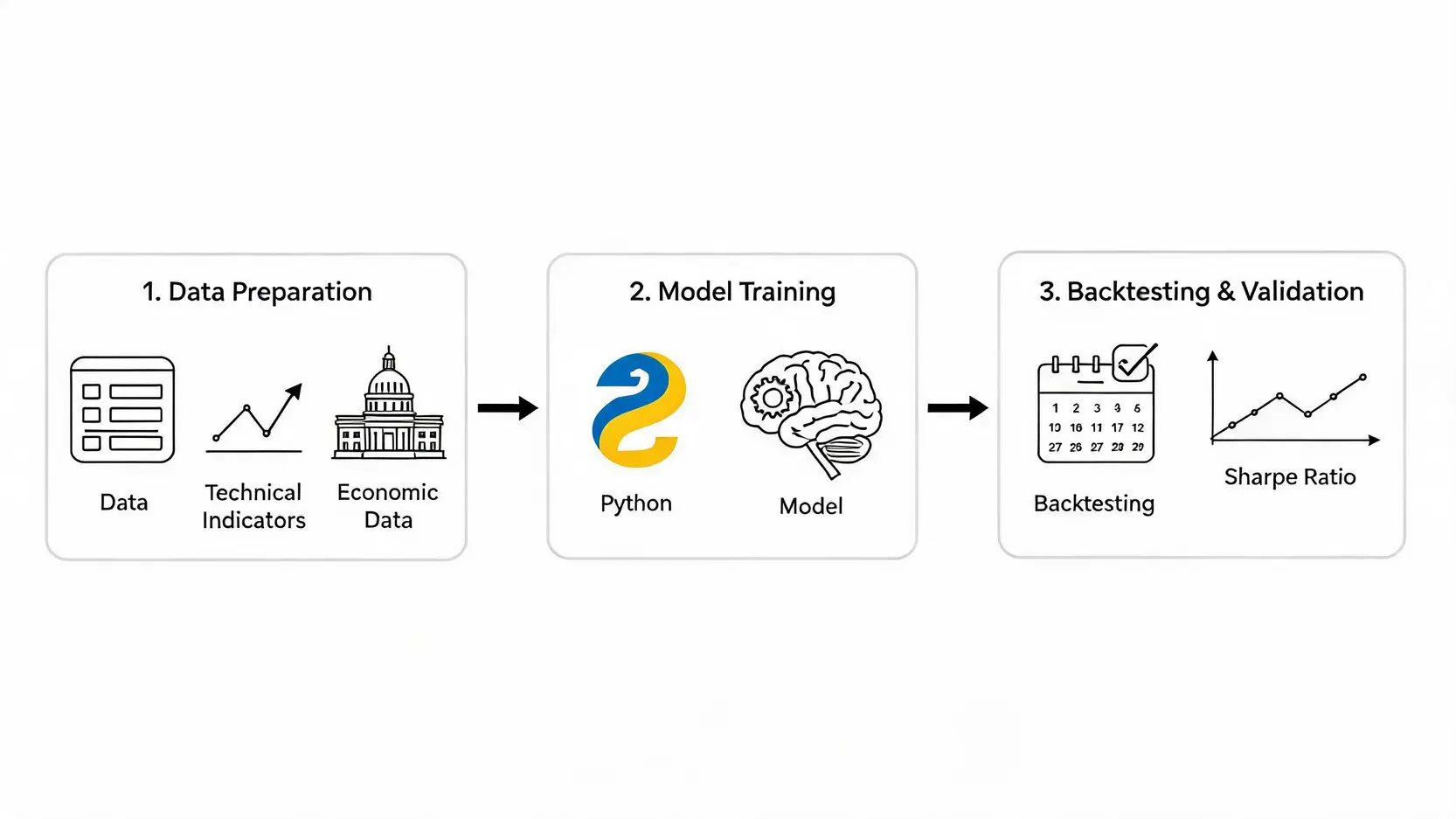
Step 1: Data Preparation and Feature Engineering (Selecting Key Economic Indicators)
The success or failure of a model depends 70% on data. Garbage In, Garbage Out is the golden rule in this field. High-quality data sources are essential.
- Historical exchange rate data: At minimum, this should include daily or hourly open, high, low, close (OHLC) prices and trading volume for a specific currency pair (such as EUR/USD).
- Technical indicators: Calculate commonly used technical indicators as model “features”, such as Moving Averages (MA), Relative Strength Index (RSI), and Bollinger Bands. These indicators help the model understand market conditions more quickly.
- Macroeconomic data: Collect key currency-related economic indicators, such as central bank interest rates, Consumer Price Index (CPI), Non-Farm Payrolls (NFP), and Purchasing Managers’ Index (PMI).
After collecting the data, “preprocessing” is required, including cleaning (handling missing values) and normalization (scaling data with different units into the same range) to ensure data quality.
Step 2: Model Selection and Training (Building a Basic Model With Python)
Python is currently the dominant programming language in data science and machine learning. With its powerful open-source libraries, even those who are not elite programmers can build effective prediction models.
- Commonly used libraries:
- Pandas: Used for data processing and analysis.
- Scikit-learn: Provides data preprocessing tools and various machine learning models.
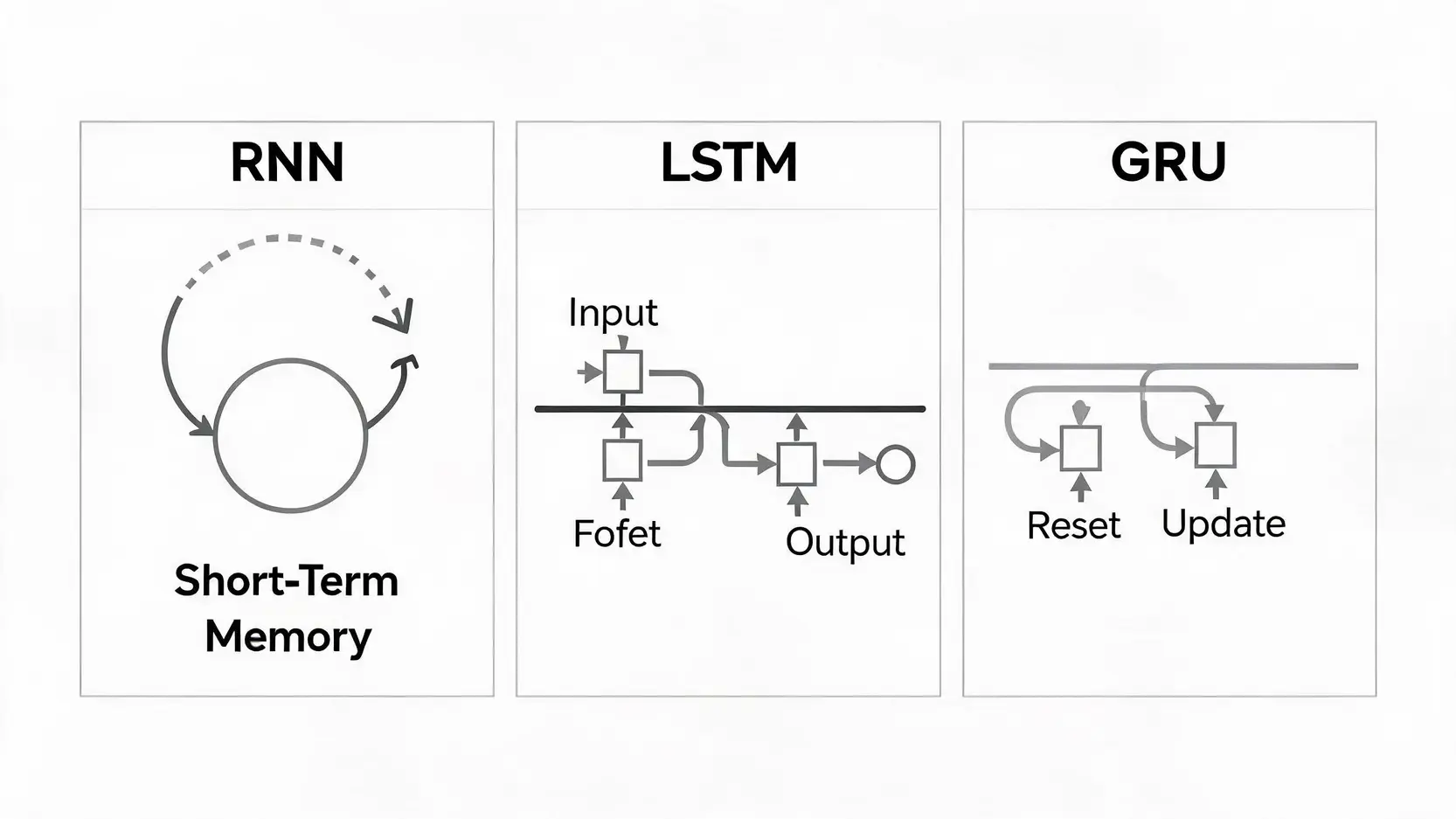
- TensorFlow/Keras: Google’s deep learning framework, the preferred choice for building neural network models such as LSTM and GRU, with abundant educational resources.
The model training process involves “feeding” prepared data into the selected AI model (such as LSTM), allowing it to automatically learn hidden patterns within the data. This process requires continuously adjusting model parameters (such as learning rate and neuron count) to find the optimal predictive combination, known as “hyperparameter tuning”.
Step 3: Backtesting and Validation (How to Evaluate Model Prediction Accuracy)
After model training is complete, it must never be used in live trading immediately. Strict backtesting is required, meaning applying the model to historical data it has never seen before to simulate real trading conditions and evaluate performance.
Key evaluation metrics:
- Accuracy: The percentage of correct predictions out of total predictions.
- Sharpe Ratio: Measures excess return per unit of risk taken.
- Max Drawdown: Measures the maximum potential loss of the strategy.
A good model should not only have high predictive accuracy, but also stable profitability and controllable risk. Only models that pass strict backtesting have the potential to enter real markets.
How Does AI Precisely Capture Forex Market Turning Points?
Market turning points often come with sharp price volatility, representing moments where both risk and opportunity coexist. Beyond predicting direction, AI’s true advantage lies in integrating multidimensional information to detect signals that may trigger turning points in advance.
Combining Market Sentiment Analysis: Gaining an Edge Through News and Social Data
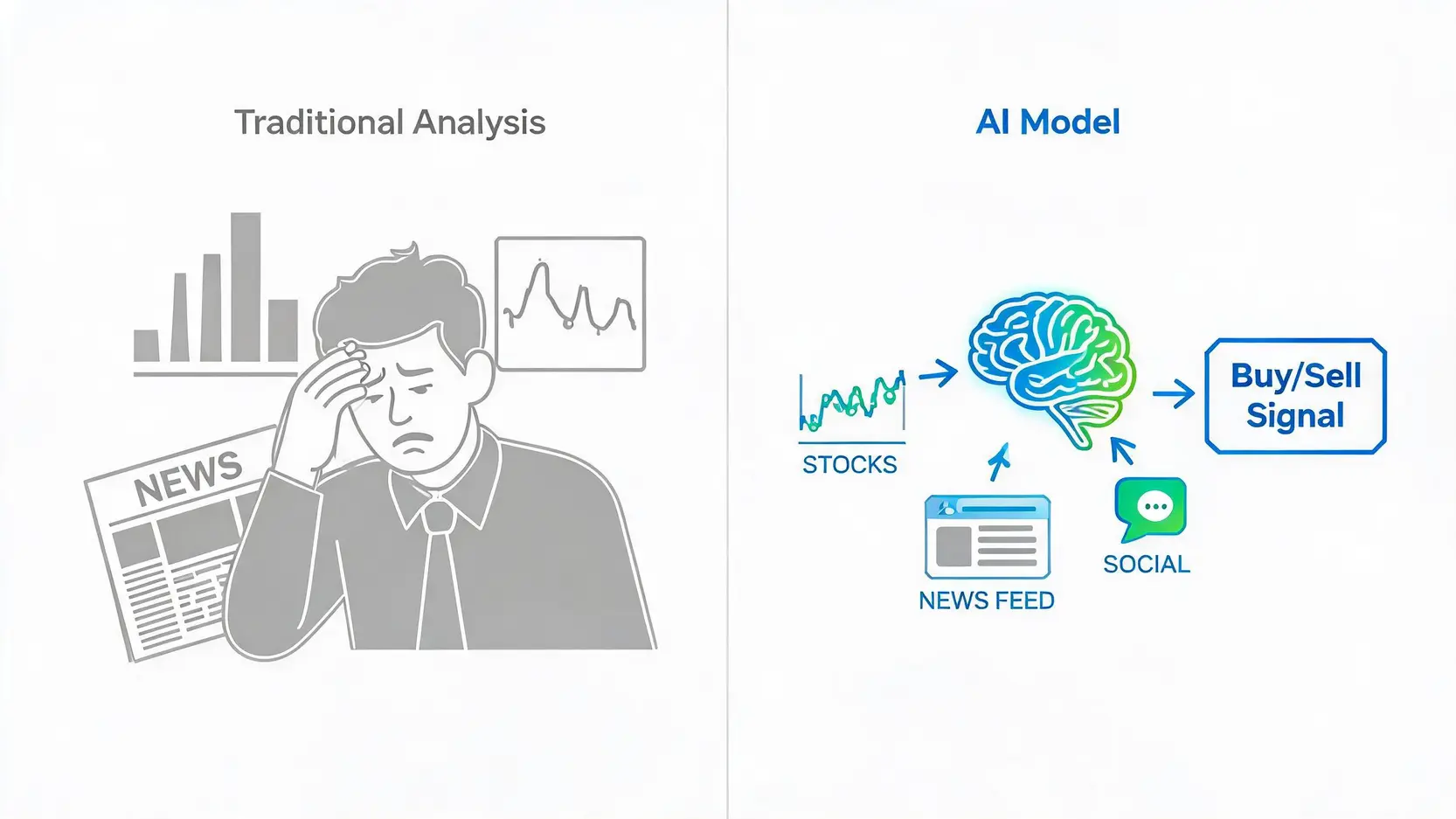
Major financial events, central bank official speeches, and even geopolitical conflicts can rapidly influence market sentiment through news and social media. AI’s Natural Language Processing (NLP) technology can:
- Analyze news headlines: Automatically read thousands of financial articles and determine whether they are bullish or bearish for specific currencies.
- Monitor social sentiment: Analyze discussions on platforms such as Twitter and Reddit to quantify trader optimism or pessimism.
When data shows extreme sentiment levels or rapid sentiment shifts, it often serves as a warning sign of potential turning points.
Identifying Abnormal Volatility: How AI Detects Unusual Trading Signals in Big Data
Large institutions or major market participants often leave traces in market data when entering or exiting positions. AI “anomaly detection” models excel at identifying events that deviate from normal patterns, such as:
- Sudden volume surges: If trading volume spikes abnormally while prices remain stable, it may signal that something significant is about to happen.
- Price-volume divergence: If price reaches a new high while volume fails to confirm, this may indicate trend exhaustion.
These signals may be fleeting for human analysts, but AI can monitor markets 24/7 and issue alerts immediately.
Case Study: A Real Example of Successfully Using AI to Predict Major Exchange Rate Movements
Take an unexpected US Federal Reserve (Fed) rate cut announcement as an example. Traditional analysts may only react after the announcement. However, an advanced AI trading model could:
- Pre-event analysis: Use NLP to analyze recent speeches from multiple Fed officials and detect a gradual shift toward more “dovish” language.
- Intraday monitoring: Detects unusual large buy orders in the interest rate futures market hours before the announcement, indicating rising market expectations for a rate cut.
- Decision execution: By combining sentiment analysis and abnormal trading signals, the model automatically executed short US dollar positions before the official announcement, successfully capturing the sharp decline that followed.
Recommended Reading (Highly Recommended)
Do Not Just Look at Rankings! Combining Forex Eye Reviews and Charting Software to Help You Quickly Avoid Scam Brokers
FAQ: AI Predicting Forex Turning Points
Q: How accurate is AI in predicting exchange rates?
A: No model can achieve 100% accuracy. Professional-grade AI models do not aim to be correct every time, but rather to achieve a stable and positive expected value over the long term. Generally, if a well-trained and thoroughly backtested model can consistently maintain prediction accuracy between 55%-65%, combined with strong money management strategies, it already has considerable profit potential.
Q: Do I need programming skills to use AI trading models?
A: Not necessarily. If you want to build a highly customized model from scratch, then familiarity with programming languages such as Python is essential. However, for general investors, there are already many mature AI trading tools and platforms that provide prebuilt models or signal services. In addition, some low-code or no-code platforms allow users to create their own trading strategies through graphical drag-and-drop interfaces.
Q: What AI forex trading tools or platforms are worth considering?
A: There are many forex trading platforms on the market that offer AI trading signals or automated trading services. When selecting one, you should focus on the transparency of historical performance, the level of detail in backtesting data, and user reviews. Well-known MT4/MT5 platforms also support third-party EA (Expert Advisor) systems, and many developer communities provide machine learning-based EAs for users to choose from and test.
Q: Is building and maintaining an AI trading model expensive?
A: Costs vary depending on your approach. For individual developers, using open-source tools (such as Python and TensorFlow) means software costs are nearly zero, with the primary investment being learning time and hardware resources for backtesting. If you subscribe to commercial AI trading signals or rent professional-grade backtesting servers, monthly costs can range from tens to hundreds of US dollars. The key is finding a solution that matches your needs and budget.
Conclusion
In summary, using neural networks and machine learning models for exchange rate prediction has evolved from distant future technology into a practical tool within reach. Through this practical guide, you can clearly understand the entire process from data preparation and model training to backtesting and validation. Learning how to use AI to predict forex turning points can give you an informational edge in complex and rapidly changing markets. Building your own AI trading model is not an overnight process. It requires continuous learning, testing, and optimization, but this path toward smarter and more rational investing is absolutely worth starting today.