What Is Cardano (ADA)? 2026 Beginner Guide

Updated: 2026/03/10  |  CashbackIsland

Cardano(ADA)是什麼?2026艾達幣新手懶人包:一篇看懂用途、優缺點與投資潛力

What Is Cardano (ADA)? A Beginner’s Guide to ADA in 2026: Understanding Its Uses, Advantages and Disadvantages, and Investment Potential in One Article

In recent years, the cryptocurrency market has developed rapidly, and you may often hear about Cardano, which is known as the “Ethereum killer”, yet still have only a vague understanding of its native token ADA. So what exactly is Cardano? What is the relationship between it and ADA? This comprehensive ADA introduction will provide an in-depth analysis, covering its core concepts, technological advantages, and practical use cases. It will fully reveal the investment potential and risks behind what ADA is, helping you move forward steadily in the wave of cryptocurrencies. 


What Is the Relationship Between Cardano and ADA?

To understand ADA, you must first understand the blockchain platform behind it, Cardano. The two are inseparable. One is the stage, and the other is the star performer on that stage.


Cardano: A Third-Generation Blockchain Based on Academic Research

Cardano is a decentralized public blockchain platform. What makes it unique is that it is entirely built on scientific philosophy and peer-reviewed academic research. Unlike many cryptocurrency projects that follow a “develop first, fix later” approach, every step of Cardano’s development undergoes rigorous review by leading scholars and engineers around the world. Its goal is to build a blockchain ecosystem that is more sustainable, scalable, and interoperable. Because of its advanced concept and architecture, it is regarded by the market as a representative of the “third-generation blockchain”, following Bitcoin (first generation) and Ethereum (second generation). 


ADA: The Native Cryptocurrency of the Cardano Network

ADA is the native token of the Cardano blockchain, similar to how ETH functions within Ethereum. All transaction fees, application interactions, and governance voting activities on the Cardano network must be completed using ADA. The name is derived from the 19th-century British mathematician Ada Lovelace, who is widely recognized as the world’s first computer programmer. This naming also reflects Cardano’s original vision of being rooted in rigorous academic principles.

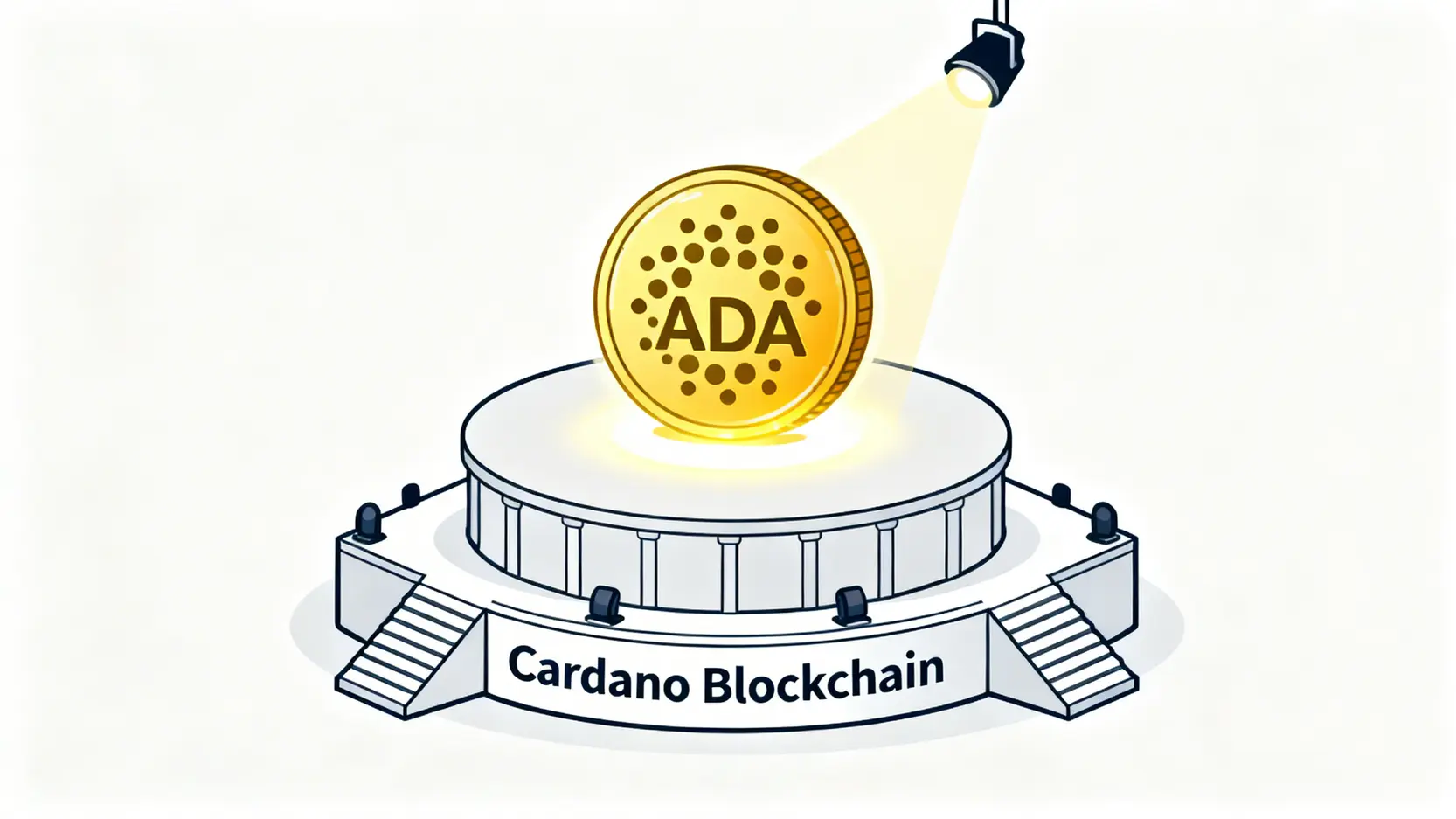
Cardano區塊鏈平台與其原生代幣ADA幣的關係示意圖

Cardano is like a stage, while ADA is the central star performing on that stage.


Founder Charles Hoskinson: The Vision of an Ethereum Co-Founder

The key figure behind Cardano is Charles Hoskinson, who is also one of the indispensable co-founders mentioned in any Ethereum introduction. After leaving the Ethereum project, he founded IOHK (Input Output Hong Kong) in 2015 and launched the Cardano initiative. Hoskinson’s goal was to address the limitations of early blockchains (such as Bitcoin and Ethereum), particularly in sustainability, scalability, and governance. His vision was to build a foundational infrastructure capable of supporting global financial applications.


Cardano Core Technology: Why Is Cardano’s PoS Mechanism Different?

Cardano attracts attention largely because of its innovative core technology. Instead of simply copying existing models, it introduces fundamental innovations in its underlying architecture.


Ouroboros Consensus Mechanism: A More Environmentally Friendly and Secure Proof of Stake (PoS)

Cardano does not use the energy-intensive “Proof of Work” (PoW) mechanism adopted by Bitcoin. Instead, it uses a Proof of Stake (PoS) consensus mechanism called Ouroboros. Ouroboros is the first PoS protocol that has undergone peer review within the academic community and has been proven to have mathematically verifiable security. Unlike PoW, where miners compete with computational power, the PoS mechanism randomly selects nodes to validate transactions based on the amount of ADA they hold and the duration of their staking. This significantly reduces energy consumption, making it a more environmentally friendly option, while also enhancing network decentralization and security.


Dual-Layer Architecture: Separating Transaction Settlement From Smart Contract Computation

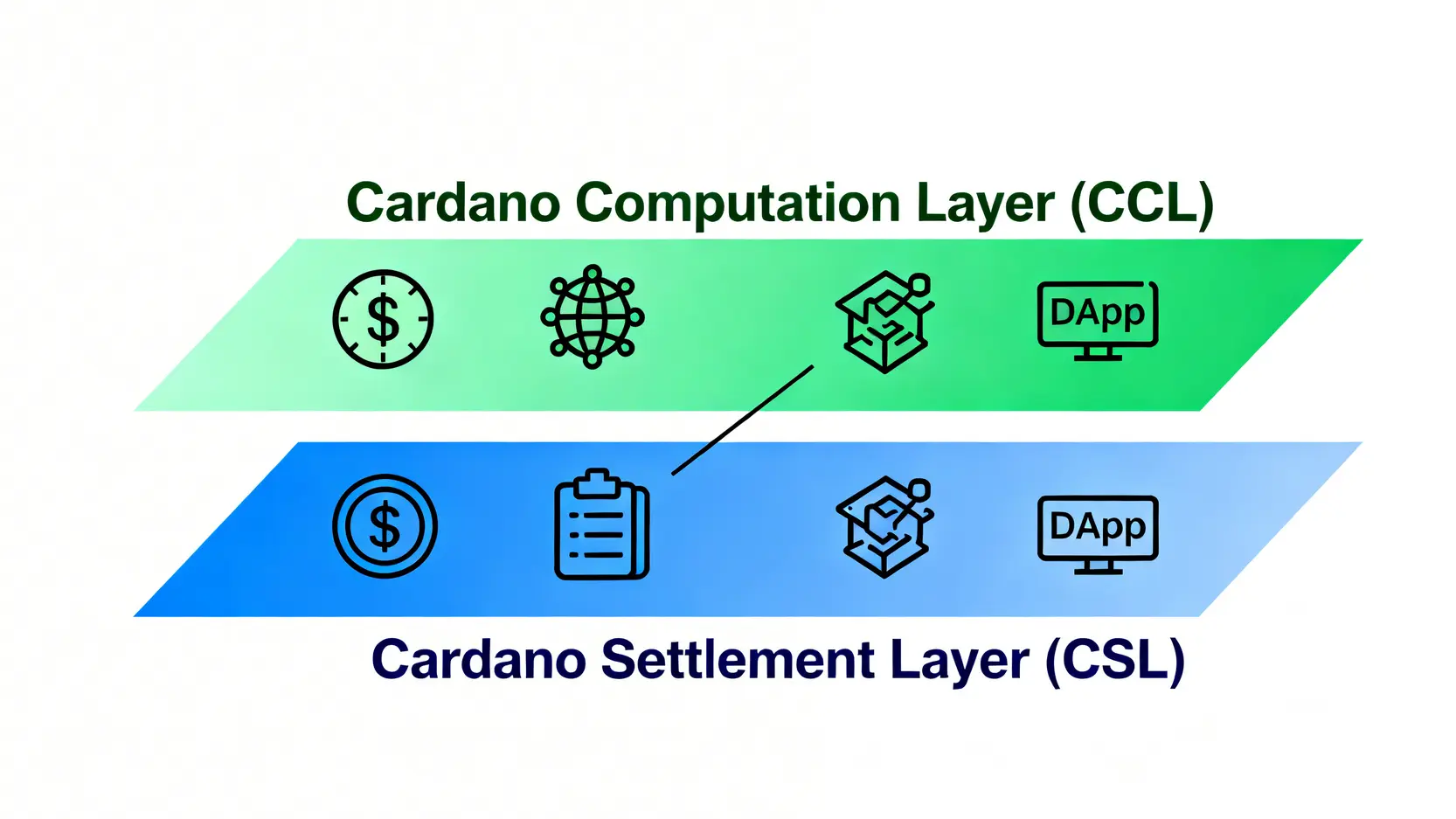
Cardano’s architectural design is highly innovative. It divides the blockchain into two independent layers:

  • Cardano Settlement Layer (CSL): This layer specifically handles ADA transfer transactions. It functions similarly to a traditional bank ledger, responsible for recording value transfers. Its operation is fast, simple, and secure.
  • Cardano Computation Layer (CCL): This layer is responsible for processing complex smart contract operations and decentralized application (DApp) computations.

Cardano的雙層架構圖,顯示結算層CSL和計算層CCL的分工

Cardano’s dual-layer architecture separates transaction settlement from smart contract computation, improving efficiency and scalability.

The greatest advantage of this layered design is flexibility and upgradability. The stability of the settlement layer will not be affected by congestion or upgrades in the computation layer, and vice versa. It is similar to separating passenger and freight traffic on a highway so that they do not interfere with each other, greatly improving overall efficiency and future scalability potential. 

Key Differences Compared With Bitcoin and Ethereum

To help you understand Cardano’s positioning more clearly, the following is a simple comparison table:

Features Bitcoin

Ethereum

Cardano
Consensus Mechanism Proof of Work (PoW) Proof of Stake (PoS) Proof of Stake (Ouroboros PoS)
Core Positioning Digital Gold, Store of Value Decentralized Application Platform Infrastructure for Global Financial and Social Applications
Architecture Single-Layer Architecture Single-Layer Architecture Dual-Layer Architecture (CSL + CCL)
Development Philosophy Conservative, Stability First Rapid Iteration, Community Driven Academic Research, Peer Review, Rigorous Verification
Energy Consumption Very High Low

Extremely Low


Analysis of the 4 Main Uses of ADA

After understanding the grand vision of Cardano, let us focus on ADA itself. As the lifeblood of this ecosystem, ADA has diversified functions and is not merely a speculative instrument.

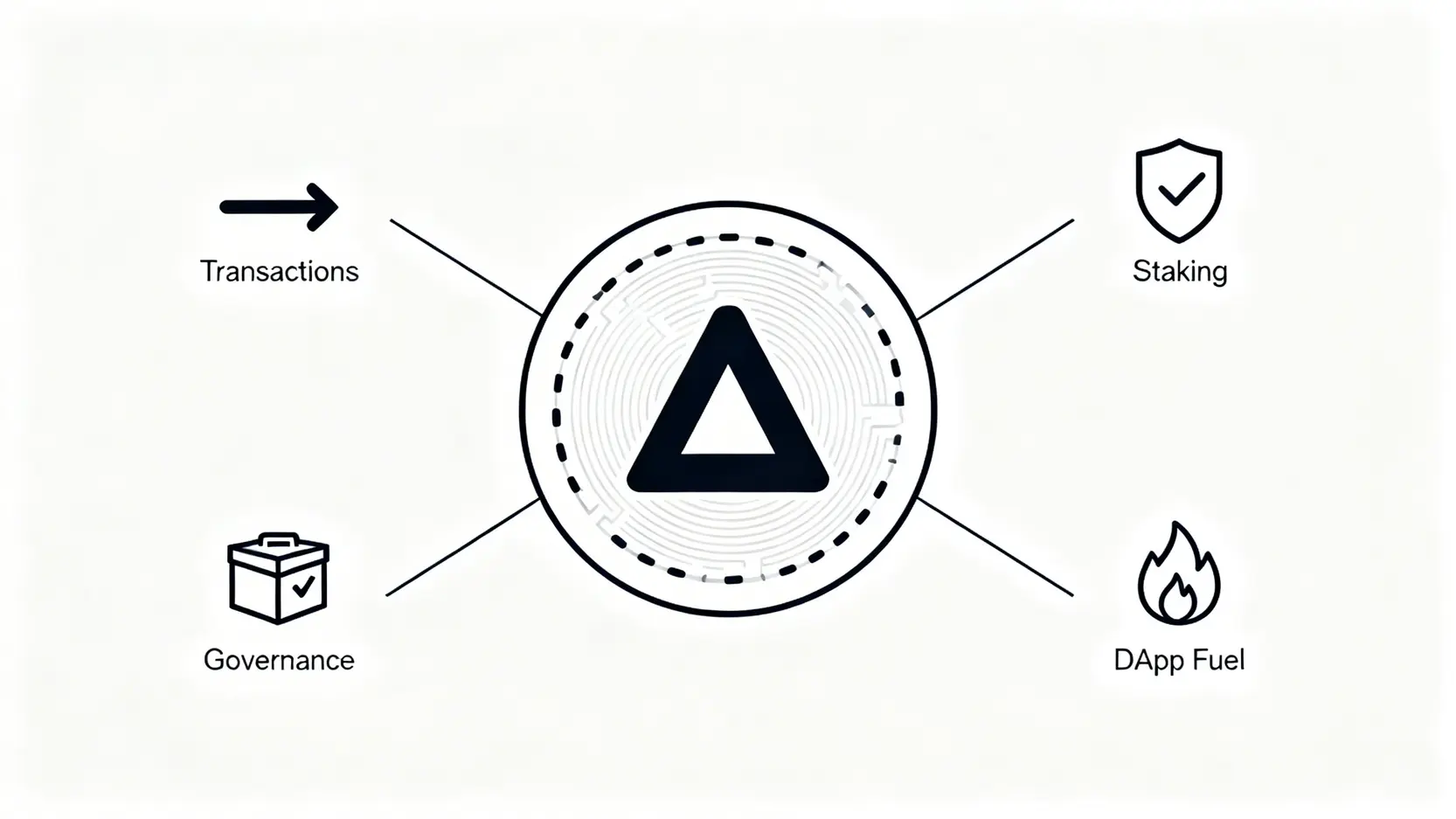
艾達幣ADA的四大核心用途圖解,包含交易媒介、權益質押、鏈上治理和智能合約燃料

ADA is not only a medium of exchange but also plays key roles in network staking, community governance, and powering DApps.


Medium of Exchange: Paying Transaction Fees and Transferring Value

This is the most fundamental function of ADA. Whether you are sending funds to a friend on the Cardano network or interacting with a DApp, you must pay a small amount of ADA as a transaction fee (Gas Fee). This design is intended to prevent malicious users from abusing network resources and to reward nodes responsible for validating transactions.


Staking: Participating in Network Security and Earning Rewards

Users who hold ADA can “stake” their tokens in the network’s validation pools. This is a process of locking assets to support the network’s operation and security. In return, stakers can periodically receive ADA as rewards. This not only provides long-term holders with a source of passive income but also allows ordinary users to directly participate in maintaining network security, achieving true decentralization.


On-Chain Governance: Voting on the Future Development of the Platform

One of Cardano’s long-term goals is to achieve fully decentralized governance. In the future, ADA holders will be able to use their tokens to vote on major decisions, such as protocol upgrades, parameter adjustments, and even how treasury funds are allocated. This means the future development of Cardano will be determined collectively by its community rather than by a single company or foundation.


Smart Contract Fuel: Powering DApps and Decentralized Applications

As the Cardano Computation Layer (CCL) continues to mature, developers can build various decentralized applications (DApps) on it, such as decentralized finance (DeFi), non-fungible token (NFT) marketplaces, and games. The operational costs required to execute these smart contracts, much like how cars require fuel, must also be paid using ADA as “fuel”. Therefore, the more prosperous the Cardano ecosystem becomes, the greater the demand for ADA.


Must Read Before Investing in ADA: Analysis of Cardano Advantages, Disadvantages, and Potential Risks

Every investment comes with opportunities and risks, and ADA is no exception. Before committing funds, it is essential to rationally analyze its strengths and weaknesses.


Advantages: High Security, Sustainability, and Academic Rigor

  • Reliability Driven by Academic Research: Every core technology of Cardano undergoes strict peer review. This scientific approach makes its underlying architecture more stable and secure than many competitors.
  • Environmentally Friendly and Low Cost: Based on the PoS mechanism, Cardano has extremely low energy consumption and relatively low transaction costs, giving it significant advantages in sustainability.
  • Highly Decentralized: The staking mechanism encourages widespread user participation in network validation, preventing computational power from being concentrated in a few mining pools.
  • Clear Development Roadmap: Cardano has a public, phased development roadmap (Byron, Shelley, Goguen, Basho, Voltaire), allowing investors to clearly understand its long-term plans.

Disadvantages: Slower Ecosystem Development and Intense Market Competition

  • Slow Development Progress: While its rigorous academic review process ensures stability, it also results in relatively slower development and feature deployment. For example, its smart contract functionality was launched later than many competing public blockchains.
  • Ecosystem Applications Still in Early Stages: Compared with Ethereum’s extensive DApp ecosystem, the number of applications and user activity on Cardano is still significantly smaller and requires time to grow and attract users.
  • Intense Public Blockchain Competition: In addition to Ethereum, there are many strong competitors in the market such as Solana, Polkadot, and Avalanche. All of them compete for developer and user resources, and the competitive pressure faced by Cardano should not be underestimated.


Frequently Asked Questions About Cardano (ADA) (FAQ)

Q: Are Cardano and ADA the same thing?

A: No. Cardano is a blockchain platform, a technological infrastructure, while ADA is the native cryptocurrency that runs on this platform. You can imagine Cardano as a country’s highway system, while ADA represents the vehicles traveling on that system and the currency used to pay tolls.

Q: Is ADA a good investment?

A: This depends on your investment goals and risk tolerance. The advantages of ADA lie in its strong technological foundation, academic rigor, and long-term development planning. However, it also faces challenges such as slower development speed and intense market competition. Any cryptocurrency investment carries high volatility, so thorough research and risk diversification should be considered before investing.

Q: How can you buy and store ADA?

A: You can purchase ADA through major cryptocurrency exchanges such as Binance, Coinbase, or Kraken using fiat currency or other cryptocurrencies. After purchasing, for security reasons, it is recommended to transfer your ADA to a wallet under your own control, such as the officially recommended Daedalus (desktop wallet) or the Yoroi (light wallet), or hardware wallets such as Ledger or Trezor.

Q: Why is Cardano called the “Ethereum killer”?

A: The term “Ethereum killer” is usually used to describe next-generation smart contract platforms designed to solve existing issues faced by Ethereum, such as high gas fees and network congestion, while competing with it. Cardano, with its more scalable dual-layer architecture, environmentally friendly PoS mechanism, and more rigorous development model, is considered to have the potential to challenge Ethereum’s leading position in the future, which is why it received this title. However, this is largely a market metaphor, and the two may coexist for a long time in the future.


Conclusion

In summary, Cardano is a blockchain platform with ambitious goals and a solid foundation, while ADA serves as its core token with diverse functions and potential, including transactions, staking, governance, and powering DApps. It has chosen a different path by replacing rapid market speculation with slower but more stable academic research. Through this comprehensive ADA introduction, you should now have a deeper understanding of what Cardano is and its investment value. Before investing any funds, be sure to conduct your own research (DYOR) and evaluate your personal risk tolerance. The cryptocurrency market is full of uncertainties, and cautious action is the wisest approach.

If you liked this article, please share it!

Related Articles

  • Volatility Surface Guide: Skew Trading Strategies
    Practical Applications of Volatility Surfaces: From Options Modeling to Advanced Skew Trading Strategies In options markets, implied volatility is never a flat line. Instead, it forms complex "smile" or "skew" surfaces. For advanced traders, mastering the practical applications of volatility surfaces is equivalent to possessing a lens that reveals market...
    2026 年 6 月 3 日
  • Foreign Capital Flow Model: Track Institutional Money
    Building a Foreign Capital Flow Copy Trading Model: A Stock Market Indicator for Accurately Tracking Institutional Positioning In Asia-Pacific stock markets, foreign capital inflows and outflows often determine the direction of the index. However, simply looking at daily net buy and sell data is no longer enough. Only by building...
    2026 年 6 月 3 日
  • Options Buying Strategies for Extreme Market Risks
    Options Buyer Strategies During Extreme Market Conditions: Black Swan Hedging and Cross-Market Arbitrage During Volatility Surges The most terrifying aspect of financial markets is not a gradual decline, but overnight flash crashes and cross-market capital withdrawals accompanied by volatility surges. In the highly unpredictable global macroeconomic environment of 2026, geopolitical...
    2026 年 6 月 3 日
返回顶部