Illustration of Futures Margin: Understand the Margin Call Process to Avoid Forced Liquidation.
Key Point: Never prepare only the exact amount of the initial margin. It is recommended to prepare at least 2 to 3 times the initial margin so you can withstand normal market fluctuations and avoid being easily forced out of the market. If you want to gain a deeper understanding of how margin works, you can refer to this futures margin tutorial article.
Trading Cost Analysis: How Are Fees and Taxes Calculated?
The costs of trading silver futures mainly consist of two items:
- Commission: This is the service fee paid to the futures broker, charged once when buying and once when selling. Commissions for overseas futures are usually a fixed amount. Competition among brokers is intense, so it is advisable to compare different providers.
- Tax: Profits from trading overseas futures (such as CME silver futures) are considered overseas income. According to the tax regulations of different regions, reporting is only required if overseas income reaches a certain threshold. Generally speaking, small-scale traders are less likely to reach this threshold.
Further Reading (Highly Recommended)
Futures Trading App Recommendations: Comparison of Five Pro-Favorite Apps (Fees, Stability, Downloads)
KGI Futures Funding Guide: 2024 Complete Guide to Understanding Margin Transfer Procedures
Beginner Order Placement Tutorial: Five Steps to Start Your First Silver Futures Trade
Once you have mastered the theory, it is time to get started! Follow the five steps below to successfully complete your first trade.
Step One: Choose a Suitable Futures Broker and Open an Account
Selecting a safe and reliable futures broker is the first step in trading. Key considerations include:
- Regulatory licenses: Whether the broker is regulated by authoritative bodies such as the National Futures Association (NFA) in the US or the Financial Conduct Authority (FCA) in the UK.
- Trading costs: Whether commissions and currency exchange costs are reasonable.
- Trading platform: Whether the trading software is stable, user-friendly, and provides fast quotes.
- Customer service: Whether Chinese-language support is available and whether the service is responsive.
Investors can open accounts through sub-brokerage services offered by domestic brokers, or directly with overseas futures brokers.
Step Two: Funding and Currency Exchange Process
After opening an account, you need to deposit funds into your trading account. Since silver futures are denominated in US dollars, you usually need to convert local currency (such as New Taiwan dollars or Malaysian ringgit) into US dollars and then wire the funds to the bank account designated by the futures broker. The entire process typically takes one to three business days.
Step Three: Understand the Trading Platform Interface and Real-Time Quotes
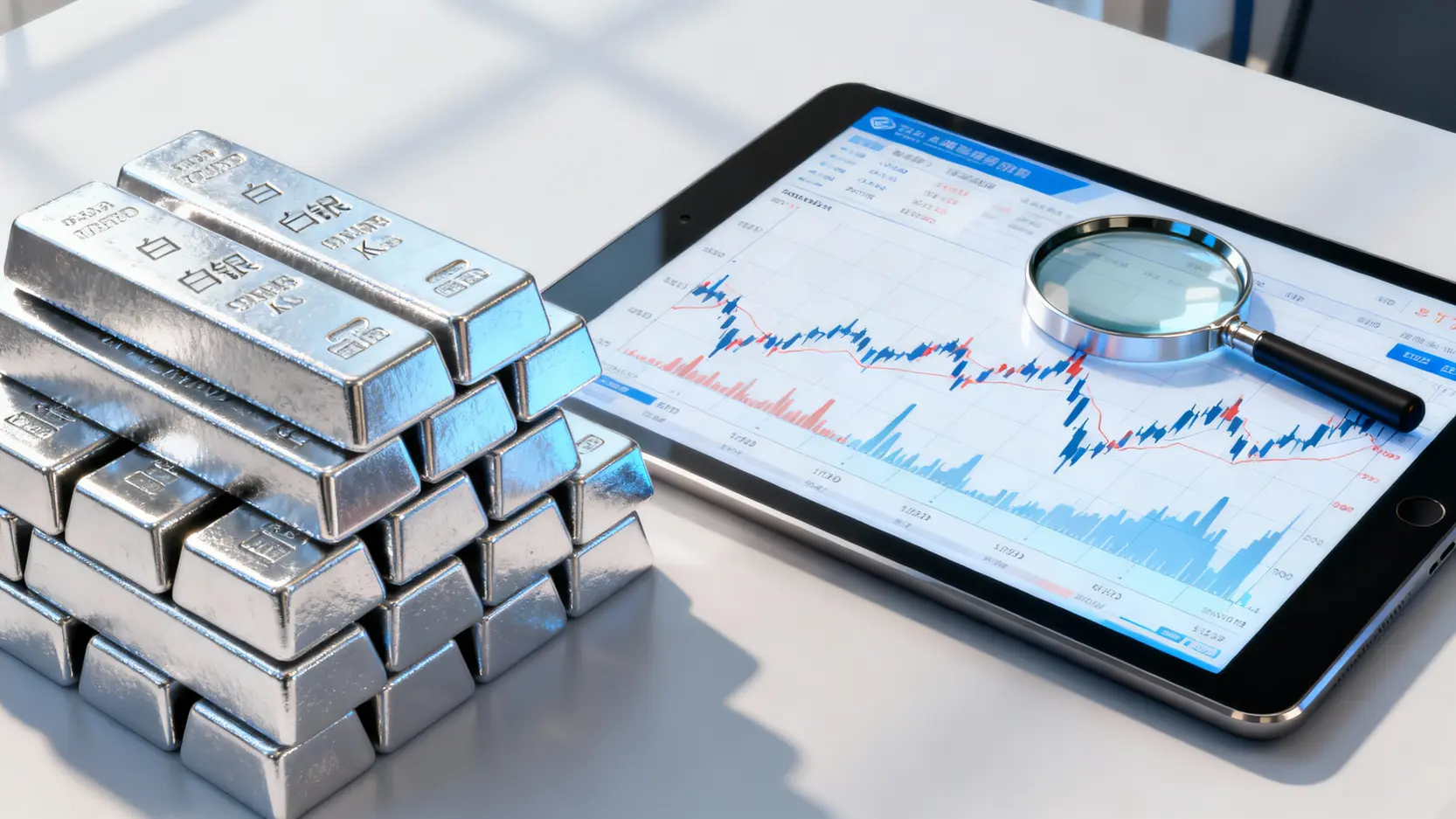
After logging into the trading platform, first familiarize yourself with the interface. Locate the product codes for silver futures (SI) or micro silver futures (MSI). You will see real-time price movements, including bid price, ask price, last traded price, and price change. At the same time, technical charts (such as candlestick charts) are important tools for determining entry and exit timing.
Step Four: Execute Your First Trade and Set Stop Loss and Take Profit
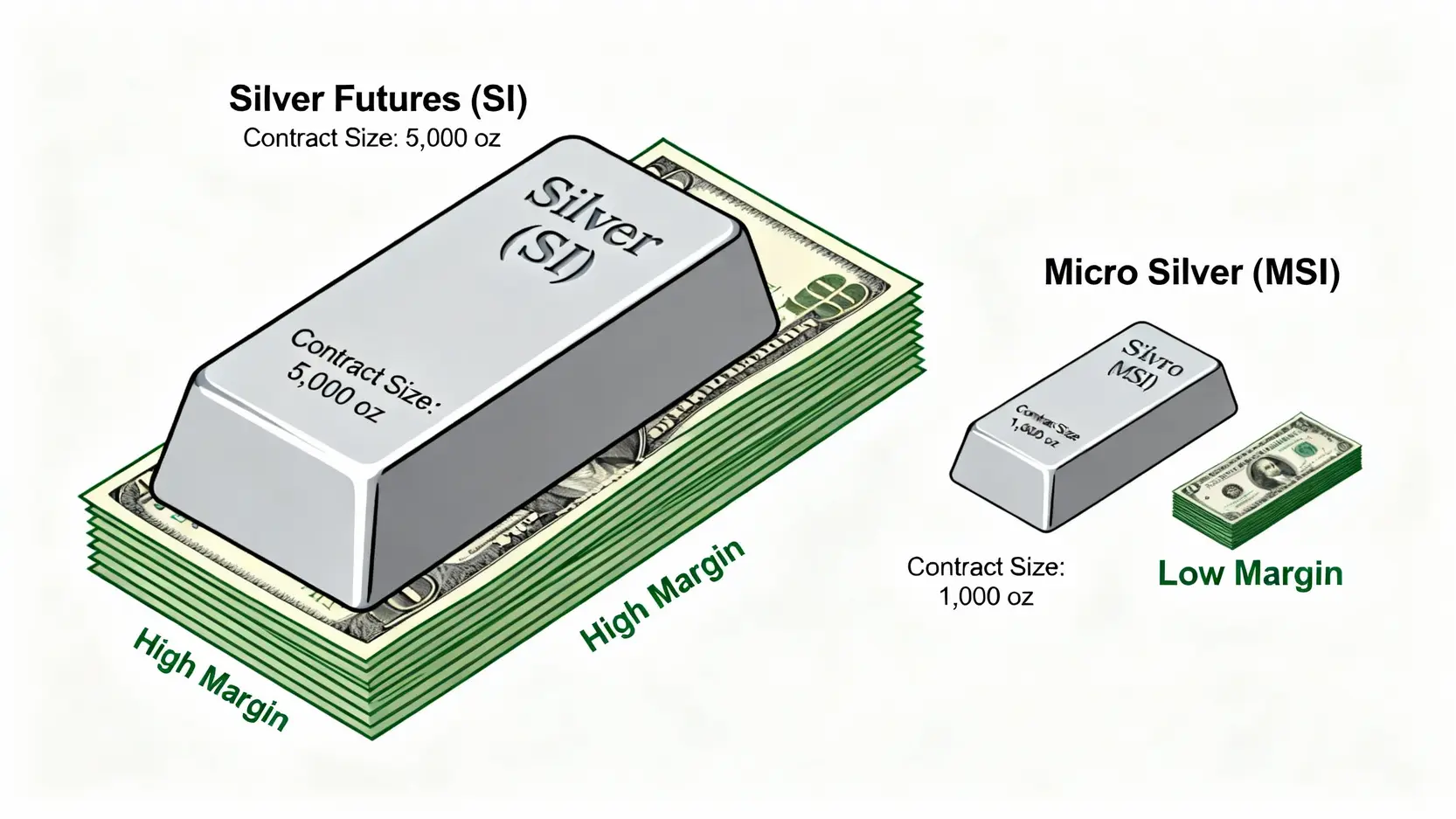
Assume that after analysis you believe silver prices will rise and decide to go long on one micro silver futures contract (MSI).
- On the order entry screen, select “Buy”.
- Enter the number of contracts to trade, “for example, 1”.
- Choose the order type. Beginners are advised to use a “market order” for immediate execution or a “limit order” (to execute at a specified price).
- The most important step: set a “Stop Loss” and a “Take Profit”. For example, set the position to close automatically when losses reach US$50, or when profits reach US$150. This helps you strictly enforce trading discipline and avoid large losses caused by human emotions.
Besides Silver Futures, What Other Silver Index Investment Options Are There?
Although silver futures are flexible, their high leverage characteristics may not be suitable for everyone. Fortunately, there are other ways to participate in silver price movements:
Pros and Cons Analysis of Silver Index ETFs (Such as SLV)
Silver ETFs (exchange-traded funds) track spot silver prices, such as SLV, the largest silver ETF in the US market. Investors can trade them in a stock account just like buying and selling stocks.
- Pros: Very low entry threshold, no leverage required, no margin call pressure, and easy management.
- Cons: Management fees apply (built-in cost), tracking error may exist, and short selling is not available (except for certain inverse ETFs).
Comparison of Physical Silver, Silver CFDs, and Futures Investments
In addition to futures and ETFs, there are physical silver products (such as silver bars and silver coins) as well as contracts for difference (CFDs). Each has its own advantages and disadvantages.
| Investment Instrument |
Advantages |
Disadvantages |
| Physical Silver |
Physical ownership with collectible value and no default risk |
Wide bid-ask spreads, storage and safekeeping costs, and poor liquidity |
| Silver CFD |
High leverage flexibility, tradable in very small units, with flexible long and short operations |
Non-standardized products, higher spread and overnight interest costs, and counterparty risk |
| Silver Futures |
Excellent liquidity, low transaction costs, transparent public pricing, and subject to strict regulation
|
Fixed leverage, expiration date restrictions, and relatively high capital thresholds |
Frequently Asked Questions (FAQ)
Q: What Are The Trading Hours For Silver Futures?
A: CME Globex electronic silver futures trading is available nearly 24 hours a day. In Taiwan/Malaysia time, it is typically from Monday 6:00 AM to Saturday 5:00 AM, with a brief daily halt of about one hour. For exact hours, please refer to the exchange’s latest announcements.
Q: Do I Need To Pay Transaction Tax When Trading Silver Futures?
A: Profits from trading overseas futures (such as silver futures traded on CME) are considered foreign-sourced income. In Taiwan, if foreign-sourced income does not reach certain thresholds (for example, TWD 1 million), it does not need to be included in the basic income calculation, so most retail investors typically do not need to pay tax on it. However, for specific tax matters, it is still recommended to consult a professional accountant.
Q: How Much Leverage Do Silver Futures Offer? Is The Risk High?
A: Leverage is variable and depends on the ratio between “contract value” and “initial margin”. Using the example above, an SI contract worth USD 150,000 with a margin of USD 10,000 implies 15x leverage. High leverage is a double-edged sword. It can amplify gains, but it can also magnify losses, so the risk is indeed higher. This is why strict risk management and stop-loss settings are crucial.
Q: What Should I Do When A Futures Contract Expires?
A: Most traders do not hold futures contracts until the last trading day. They close out the old contract before expiry and buy the next month’s contract. This process is called “rolling”. If you forget to close your position, the contract may enter physical delivery after expiry, which is complex and costly. Avoid this at all costs.
Conclusion
In summary, silver futures are a flexible precious metals investment tool that can amplify leverage, whether you are looking to speculate on price swings or hedge risk. However, before committing real capital, make sure you fully understand the contract specifications, margin system, and high-leverage risks. This article provides a complete silver futures guide, covering basic concepts, cost analysis, and practical steps, with the goal of helping you invest more steadily. Beginners are advised to start with micro contracts and practice thoroughly in a demo account, so you are fully prepared for your silver futures trading journey.