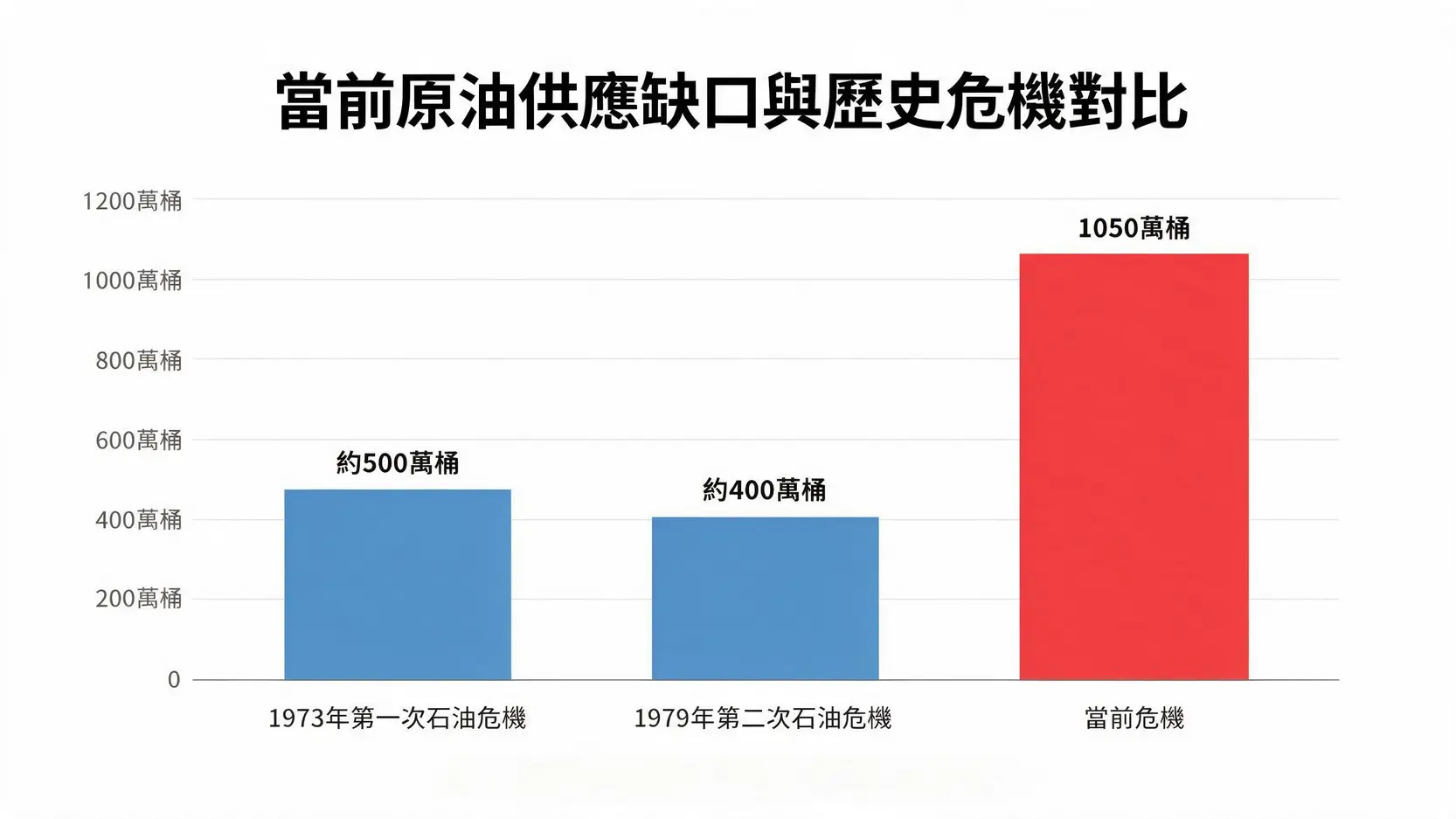
Figure 1: The Current Crude Oil Supply Shortfall Is More Than Twice the Scale of the Previous Two Oil Crises
Where Did the Shortfall Come From? Tracking the Two Epicenters of Supply Chain Disruptions
This enormous supply shortfall did not emerge overnight. It is the result of multiple overlapping geopolitical factors, with two major epicenters at its core.
Epicenter One: Geopolitical Tensions in the Middle East and Persian Gulf Production Below Prewar Levels
The Middle East, particularly the Persian Gulf, which controls the Strait of Hormuz, the key chokepoint for global oil transportation, has long been the heart of the global energy supply. However, persistent conflicts in the region in recent years, including proxy wars and direct military confrontations between multiple countries, have led to repeated attacks on oil production facilities and placed transportation routes under severe threat. Production at many oil fields has still not returned to prewar levels, directly resulting in the loss of millions of barrels of daily output.
Epicenter Two: Restricted Russian Production Capacity and the Ongoing Effects of International Sanctions
As one of the world’s three largest oil-producing countries, Russia plays a crucial role in the global energy market. However, since the outbreak of the Russia-Ukraine conflict in 2022, the US and European countries have imposed severe economic sanctions on Russia, particularly restrictions targeting its energy exports. These sanctions have not only directly reduced Russia’s crude oil exports, but more importantly, have also restricted the inflow of Western technology and capital. This has made it difficult for Russia to maintain and upgrade its aging oil field facilities, severely damaging its long-term production capacity and making a rapid recovery unlikely.
Further Reading (Highly Recommended)
Crude Oil ETF Investment Guide: Understanding Oil Funds, Fees, and Popular ETF Recommendations in One Article
Your Money Is Shrinking! Understanding How Inflation Affects the Purchasing Power of the New Taiwan Dollar and Your Assets
Is Rising Oil Prices Only the Beginning? The Global Economic Chain Reaction Triggered by the Shortfall
Surging crude oil prices are only the most direct manifestation. The chain reaction triggered by the “10.5 million-barrel daily crude oil production shortfall” is now affecting every level of the global economy.
Impact on Downstream Industries: Surging Costs From Transportation and Logistics to Petrochemical Materials
Crude oil is the lifeblood of modern industry, and price fluctuations quickly spread to downstream industries:
- Transportation and logistics: Whether in aviation, maritime shipping, or land transportation, fuel costs are a major expense. Surging oil prices directly compress corporate profits, with the higher costs ultimately passed on to consumers through higher freight charges.
- Manufacturing: The petrochemical industry uses crude oil as a basic raw material to produce plastics, synthetic fibers, rubber, and various everyday products. Surging raw material costs mean higher production costs for everything from automobile tires to packaging materials.
Impact on the Consumer Economy: Intensifying Inflationary Pressure and How Central Banks Will Respond
Higher transportation and manufacturing costs are ultimately reflected in the prices of consumer goods. This is a typical example of “imported inflation”. When you notice that refueling, shopping, and even ordering food delivery have become more expensive, high oil prices are likely one of the underlying causes. To curb uncontrolled inflation, central banks may be forced to adopt more aggressive interest rate hikes. However, this would further weaken economic growth and could push the global economy into the quagmire of “stagflation”.
A Test for International Relations: Energy Diplomacy and the Formation of New Alliances
Energy security has become one of the most important national strategies for countries worldwide. Against the backdrop of elevated oil prices, traditional international relations are being reshaped. Major consuming countries (such as the US, China, and European countries) are actively seeking more diversified sources of energy supply, making energy diplomacy more active than ever. At the same time, energy-producing countries are gaining greater influence on the international stage, while new geopolitical alliances and patterns of confrontation are quietly taking shape.
How Is the Market Responding? Strategies From OPEC+, the IEA, and Major Consumer Countries
Faced with a severe supply shortfall, major global participants are implementing their own measures in an attempt to stabilize the increasingly volatile market.
OPEC+ Production Increase Decisions and Their Actual Implementation
As the world’s most important alliance of oil-producing countries, the position of OPEC+, the Organization of the Petroleum Exporting Countries and its allies, is crucial. Although OPEC+ has held multiple meetings and reached agreements to increase production, actual output increases have been less than satisfactory. Due to prolonged underinvestment or domestic instability, many member countries have already reached their production capacity limits and are unable to meet their quotas. This has created deep doubts in the market about OPEC+’s ability to stabilize oil prices.
The International Energy Agency’s (IEA) Strategic Petroleum Reserve Release Plan
The International Energy Agency (IEA), which consists of major oil-consuming countries, primarily relies on coordinating member countries to release their “strategic petroleum reserves” (SPR). Injecting additional crude oil into the market can ease supply constraints in the short term. However, the total volume of strategic reserves is ultimately limited. They can only serve as an emergency measure and cannot fundamentally resolve the long-term imbalance between supply and demand. This is more like a contest with the market, buying time to find a long-term solution.
Response Measures From Major Consumer Countries, Including the US, China, and Europe
In addition to following the IEA in releasing strategic petroleum reserves, major economies are also actively taking steps to protect themselves:
- US: On the one hand, the US is increasing policy support for the domestic shale oil industry and encouraging higher production. On the other hand, it is actively engaging in diplomatic efforts to persuade its Middle Eastern allies to increase output.
- China: As the world’s largest crude oil importer, China is leveraging its enormous market influence to sign long-term supply agreements with Russia, the Middle East, and South American countries to ensure a stable energy supply.
- Europe: While actively seeking alternatives to Russian energy, Europe is also accelerating its green energy transition in an effort to fundamentally reduce its dependence on fossil fuels.
As Goldman Sachs warned in its latest crude oil market analysis, if geopolitical conflicts cause prolonged transportation disruptions, this could become one of the largest supply shocks in the history of the global crude oil market.
Further Reading (Highly Recommended)
How to Buy Crude Oil Futures? A Beginner’s Guide to Oil Futures Investment in 2026, Oil Price Trend Analysis, and International
Crude Oil ETF Investment Guide: Understanding Oil Funds, Fees, and Popular ETF Recommendations in One Article
FAQ: Frequently Asked Questions About the 10.5 Million-Barrel Daily Crude Oil Production Shortfall
Q: How long will this crude oil shortfall last?
A: This depends on how the geopolitical situation develops. As long as conflicts in the Middle East and sanctions against Russia continue, it will be difficult to fully close this shortfall in the near term. Most analysts believe that this tight supply-demand situation will persist until at least the end of 2027, and possibly even longer.
Q: What direct impact will this have on oil prices and the cost of living in Taiwan and Malaysia?
A: Taiwan and Malaysia rely almost entirely on crude oil imports and are therefore highly sensitive to international oil prices. Rising international oil prices will directly push up local gasoline and diesel prices, increasing transportation costs for the public and logistics costs for businesses. These costs will then be passed on to various goods and services, leading to broad-based price increases and affecting everyone’s finances.
Q: Apart from crude oil, what alternative energy solutions can we use?
A: In the short term, natural gas (LNG) is the main alternative. In the long term, however, accelerating the development of renewable energy, such as solar, wind, and hydropower, as well as improving energy efficiency, is the fundamental way to reduce dependence on fossil fuels and address the energy crisis.
Q: How should investors respond to this crude oil crisis?
A: A high oil price environment affects different assets in different ways. Traditional energy stocks and oil ETFs may benefit. However, high volatility also brings high risk. Investors should carefully assess their risk tolerance and may consider allocating part of their funds to energy-related assets or focusing on industries that are less affected by inflation and have pricing power. Before making any oil investment, thorough research is essential.
Conclusion
In summary, the 10.5 million-barrel daily crude oil production shortfall is a serious challenge currently facing the global economy. The geopolitical factors behind it are complex and have triggered a series of chain reactions, from industrial costs to consumer inflation. Although governments and international organizations are working to address the situation, fundamental solutions will take time. For investors and the general public, closely monitoring OPEC+ production policies, the response strategies of major economies, and the latest geopolitical developments will be crucial for assessing future oil price trends and protecting personal assets. The impact of this energy storm is far-reaching, and no one can remain unaffected.