Complete Guide to Personal Currency Exchange Limits in Hong Kong: Declaration Requirements for Large Foreign Currency Transactions and Comparison of Online Limits Among 5 Major Banks
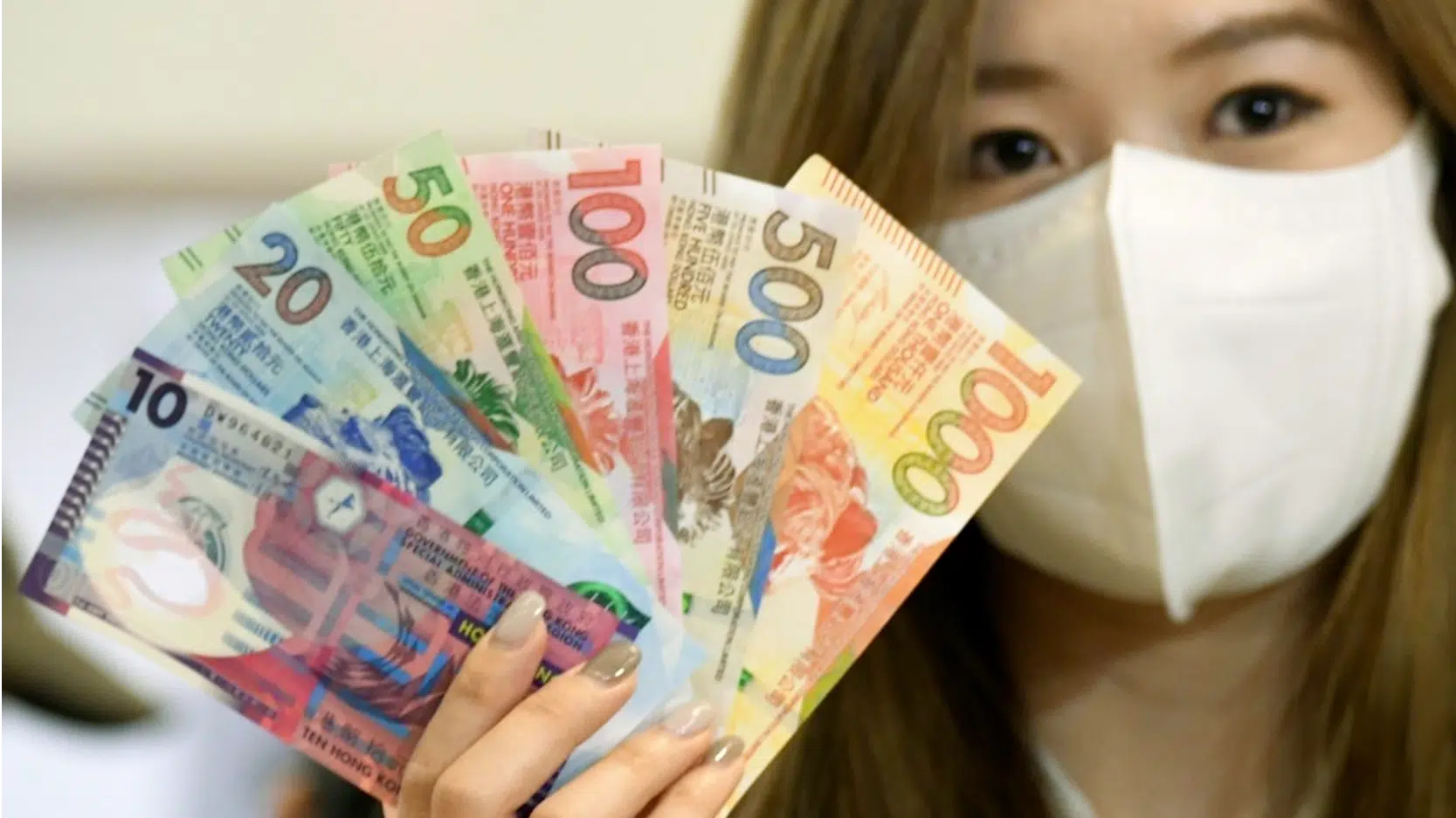
Planning a trip abroad, investing overseas, or sending money to family? If you feel confused about Hong Kong personal currency exchange limits and the complex declaration procedures for large foreign currency exchanges, you are not alone. Many people also worry about exceeding the daily online exchange limits set by banks and having their transactions rejected. As an international financial center, Hong Kong allows relatively free capital flow, but there are still various rules and practical limitations that people should understand. This article compiles the latest information for 2026, covering regulatory requirements, operational limits in major bank apps, and key compliance considerations. It will help answer your questions so you can complete every foreign currency exchange safely and efficiently. Whether you are exchanging small travel funds or transferring large assets, you will be better prepared.
Overview of Personal Currency Exchange Limits in Hong Kong: Is There Still a Daily Limit?
Many people misunderstand the level of freedom Hong Kong offers in foreign currency exchange. In principle, Hong Kong does not impose strict foreign exchange controls, and funds can flow freely in and out of the territory. This means that legally there is no clearly defined “daily limit” for individuals exchanging foreign currency. However, in practical operations, banks and financial institutions set internal risk control thresholds due to anti-money laundering (AML) and know-your-customer (KYC) compliance requirements. As a result, while there is no “statutory limit:, there are “operational limits” imposed by banks.
Common Misconception: Does the HKD 20,000 RMB Daily Exchange Limit Still Exist?
This is one of the most common misunderstandings. The so-called “RMB 20,000 daily exchange limit” actually refers to the quota for Hong Kong residents exchanging RMB through personal RMB accounts. This rule mainly applies to certain personal RMB transactions handled through banks or money changers and originates from mainland China’s foreign exchange control policies. However, if you exchange HKD or other foreign currencies through your own bank account and remit RMB to a same-name account in mainland China (must comply with mainland recipient requirements), the RMB 20,000 restriction may not necessarily apply. The allowable amount depends on the bank’s internal policies and the remittance channel used. Therefore, treating this figure as a “universal limit” for all currency exchange activities would be inaccurate.
Practical Limits for Major Currencies (USD, JPY, and EUR)
For major freely traded currencies such as the US dollar, Japanese yen, and euro, banks and money changers in Hong Kong generally do not impose a statutory daily exchange limit. You can exchange currency according to your own needs. However, when the transaction amount reaches a certain level (such as tens of thousands of Hong Kong dollars or more), financial institutions will typically conduct additional checks. In practice, they may ask questions such as:
- Source of Funds: For example, salary income, investment profits, or proceeds from property sales. Supporting documents may sometimes be required.
- Purpose of Transaction: For example, overseas education, travel expenses, medical costs, or family remittances.
- Recipient Information: If the exchange involves a remittance, detailed information about the recipient may be required.
These questions are not meant to cause inconvenience but are necessary procedures to fulfill regulatory compliance obligations.
Further Reading (Highly Recommended)
2026 Latest International Remittance Fee Guide: Comparison of Charges Among 5 Major Banks and Tips to Avoid Hidden Costs
2026 Hong Kong High-Interest Savings Accounts and Credit Card Guide: Latest Offers From Major Banks
Bank Counter vs Money Changer: Comparison of Exchange Limits and Convenience
Whether you choose a bank or a money changer mainly depends on the transaction amount and your preference for convenience.
| Comparison Item |
Bank Counter |
Licensed Money Changer |
| Single Transaction Limit |
Higher internal limits, but large transactions (such as several hundred thousand HKD) usually require advance appointment. |
Lower single transaction limits, suitable for small to medium cash exchanges. Large cash transactions may need to be processed in multiple batches. |
| Compliance Procedures |
Very strict. Large transactions require forms to be completed and may even require supporting documents. |
Relatively simpler, but still subject to customs supervision. Large transactions also require identity documentation to be registered. |
| Convenience |
Must be handled during business hours and may require queuing. |
Longer business hours with many branches, making it more flexible and convenient. |
| Exchange Rate |
Relatively stable exchange rates, but they may not be the most competitive. |
Exchange rates fluctuate more, and differences between shops can be significant, but there is a chance to find better rates. |
How Are Large Foreign Currency Exchanges Handled? Understanding Reporting Procedures and Legal Requirements
When large amounts of money are involved, the mindset of “cash is king, exchange and leave immediately” is no longer appropriate. Understanding the relevant reporting procedures and legal requirements is the first step to protecting your funds.
What Counts as a “Large Amount”? Thresholds That May Trigger CRS and Anti-Money Laundering (AML) Reviews
First, it should be clarified that in Hong Kong there is no unified mandatory threshold requiring individuals to “declare” large “local” cash exchanges to the government. The so-called “declaration” is more related to the internal compliance procedures of financial institutions. The key factors that trigger a review mainly include two aspects:
- Anti-Money Laundering (AML) regulations: Under Hong Kong’s “Anti-Money Laundering and Counter-Terrorist Financing Ordinance” (Cap. 615), financial institutions are responsible for identifying and reporting suspicious transactions. Although no specific amount is publicly defined, the industry generally considers cash transactions exceeding around HKD 80,000 to HKD 120,000, or frequent small transactions within a short period, as potentially attracting attention.
- Common Reporting Standard (CRS): CRS mainly concerns tax matters. Financial institutions must identify accounts held by non-local tax residents and exchange account information with relevant tax jurisdictions. This is not directly related to a single currency exchange transaction. However, frequent large cross-border fund movements involving overseas accounts may trigger CRS reporting mechanisms.
In addition, travelers carrying cash-like instruments with a total value exceeding HKD 120,000, (including cash, cheques, and bearer negotiable instruments), when entering or leaving Hong Kong must make a written declaration to customs.
Large Foreign Currency Exchange Procedures: What Documents Should You Prepare?
If you plan to conduct a large foreign currency exchange at a bank (for example exceeding HKD 500,000), it is advisable to follow these steps.
- Make an appointment in advance: Contact your relationship manager or bank branch ahead of time and inform them of your requirements. This ensures the branch has sufficient cash and can prepare the necessary documentation in advance.
- Prepare supporting documents: This is the most important step. You must clearly demonstrate the legitimate source of funds. Common documents include:
- Identity document: Hong Kong identity card or passport.
- Proof of address: Utility bill or bank statement issued within the last three months.
- Proof of source of funds: Such as salary slips from the past six months, tax statements, property sale agreements, investment profit statements, or company dividend documentation.
- Proof of transaction purpose: For example overseas property purchase agreements, school admission letters and tuition invoices, or overseas investment contracts.
- Answer questions patiently: Bank staff will follow procedures and ask about the details of the transaction. Providing accurate answers and having documents prepared will make the process smoother.
Daily Online Exchange Limits: Comparison of Bank App Limits
For most people, the most frequently used method is online currency exchange through bank apps. It is convenient and usually offers better rates than counter exchanges. However, each bank sets different daily limits for online currency exchange and transfers. Understanding these limits can help avoid being restricted when you urgently need funds.
Practical Comparison Table: HSBC, Bank of China, Hang Seng, and Citibank Online Exchange and Transfer Limits
The following summarizes the daily exchange and transfer limits of several major bank apps, allowing you to see the differences at a glance. Please note that these limits may change, and you should always refer to the official announcements from each bank before conducting transactions.
| Bank |
Daily Online Currency Exchange Limit (Same-Name Account) |
Daily Online Transfer Limit to Third Party (Default) |
Maximum Adjustable Limit |
Remarks |
| HSBC |
Usually no specific limit, subject to account balance |
HKD 50,000 |
HKD 1,000,000 (Security Device or Mobile Security Key required) |
Large exchanges may trigger internal review. |
| Bank of China (Hong Kong) (BOC) |
Usually no specific limit, subject to account balance |
HKD 50,000 |
HKD 1,000,000 (Security Device application required) |
RMB exchange is subject to the daily limit for personal customers. |
| Hang Seng Bank |
Usually no specific limit, subject to account balance |
HKD 10,000 (Unregistered Recipient)
HKD 50,000 (Registered Recipient) |
HKD 1,500,000 (Application required at branch or via form) |
Similar system to HSBC with smooth operation. For more details, refer to comparisons of bank account opening in Hong Kong. |
| Citibank |
Usually no specific limit, subject to account balance |
HKD 100,000 |
HKD 3,000,000 (Depending on customer tier and application) |
Citigold customers usually enjoy higher transfer limits. |
Tutorial: How to Set or Increase Your Daily Exchange and Transfer Limits in a Mobile Banking App?
Most bank apps allow customers to adjust their daily transfer limits, and the process is generally similar:
- Log in to the mobile banking app: Enter your username and password.
- Go to “Settings” or “Transfer Settings”: This is usually found in the main menu under “Settings”, “Profile”, or “More”.
- Select “Limit Settings”: You will see different types of limits, such as “Transfer to Unregistered Accounts” or “Bill Payment”.
- Adjust the amount: Enter your desired daily limit amount, making sure it does not exceed the bank’s maximum allowed limit.
- Complete security verification: You will usually need to enter a code generated by a security device, an SMS one-time password, or confirm the change using biometric authentication (such as fingerprint or Face ID).
- Done: The new setting usually takes effect immediately, and you can then enjoy a higher transfer limit.
FAQ: Common Questions About Currency Exchange Limits in Hong Kong
Q: What happens if the total amount exceeds the limit through one transaction or multiple exchanges within a short period?
A: Banks’ monitoring systems aggregate multiple transactions conducted within a certain time frame (such as a day or a week). If you attempt to avoid large transaction reviews by splitting transactions into smaller amounts, (a practice known as “Smurfing”), it may actually trigger anti-money laundering alerts more easily. Once flagged as a suspicious transaction, the bank may temporarily freeze your account and request detailed explanations and supporting documents. In serious cases, the bank may also submit a report to the Joint Financial Intelligence Unit (JFIU).
Q: Are currency exchange limits different for non-Hong Kong residents?
A: Legally, there is no difference in currency exchange limits between non-Hong Kong residents and local residents. However, in practice, non-Hong Kong residents (especially tourists or individuals holding short-term visas) may be subject to stricter scrutiny by financial institutions. Banks or money changers may impose lower internal transaction limits and may more frequently ask about the source and purpose of funds to ensure compliance requirements are met.
Q: What are the differences in exchange rates and fees between online currency exchange and exchanging at a bank branch?
A: Generally, the telegraphic transfer rate used in online banking is more favorable than the cash rate offered at bank counters, because electronic transactions involve lower operational costs for banks. Foreign currency exchange between accounts under the same name through online banking is usually free of handling fees. Exchanging cash at a branch, particularly for less common currencies, may involve less favorable rates and sometimes additional handling or service charges. Therefore, unless cash is urgently required, online banking exchange is usually the more cost-effective option.
Q: What is the best method for exchanging large amounts exceeding HKD 500,000?
A: For large transactions equivalent to HKD 500,000 or more, the best approach is to contact your bank relationship manager directly. They may be able to arrange a more competitive “Special Rate” or “Premium Rate”, which is often better than the publicly quoted bank exchange rate. At the same time, they can guide you through the necessary compliance documentation and reporting procedures in advance, helping avoid delays at the branch due to incomplete documentation and ensuring the entire process runs smoothly.
Conclusion
In summary, although Hong Kong offers a high level of freedom in foreign currency exchange, this does not mean there are “no regulatory considerations”. Clearly understanding the practical operation of personal currency exchange limits, especially the reporting requirements for large foreign currency transactions, is essential. For everyday small exchanges, making good use of the daily online exchange limits offered by major bank apps provides both convenience and better exchange rates. For large fund transfers, preparation and proactive communication with the bank remain the golden rules to ensure smooth transactions. Use this guide to plan your next currency exchange with confidence!