7 Key Factors Affecting Gold Price Movements: Understand the Relationship Between Gold, the US Dollar, and Inflation
The gold market is highly unpredictable, with prices sometimes surging sharply and at other times plunging rapidly, leaving many investors confused. Do you also want to know the reasons behind gold price movements? In fact, gold price fluctuations are not without patterns. This article provides an in-depth analysis of the 7 core “factors affecting gold prices”, from the seesaw effect between gold and the US dollar, to the safe-haven logic in the relationship between inflation and gold, helping you build a complete analytical framework and make more informed investment decisions.
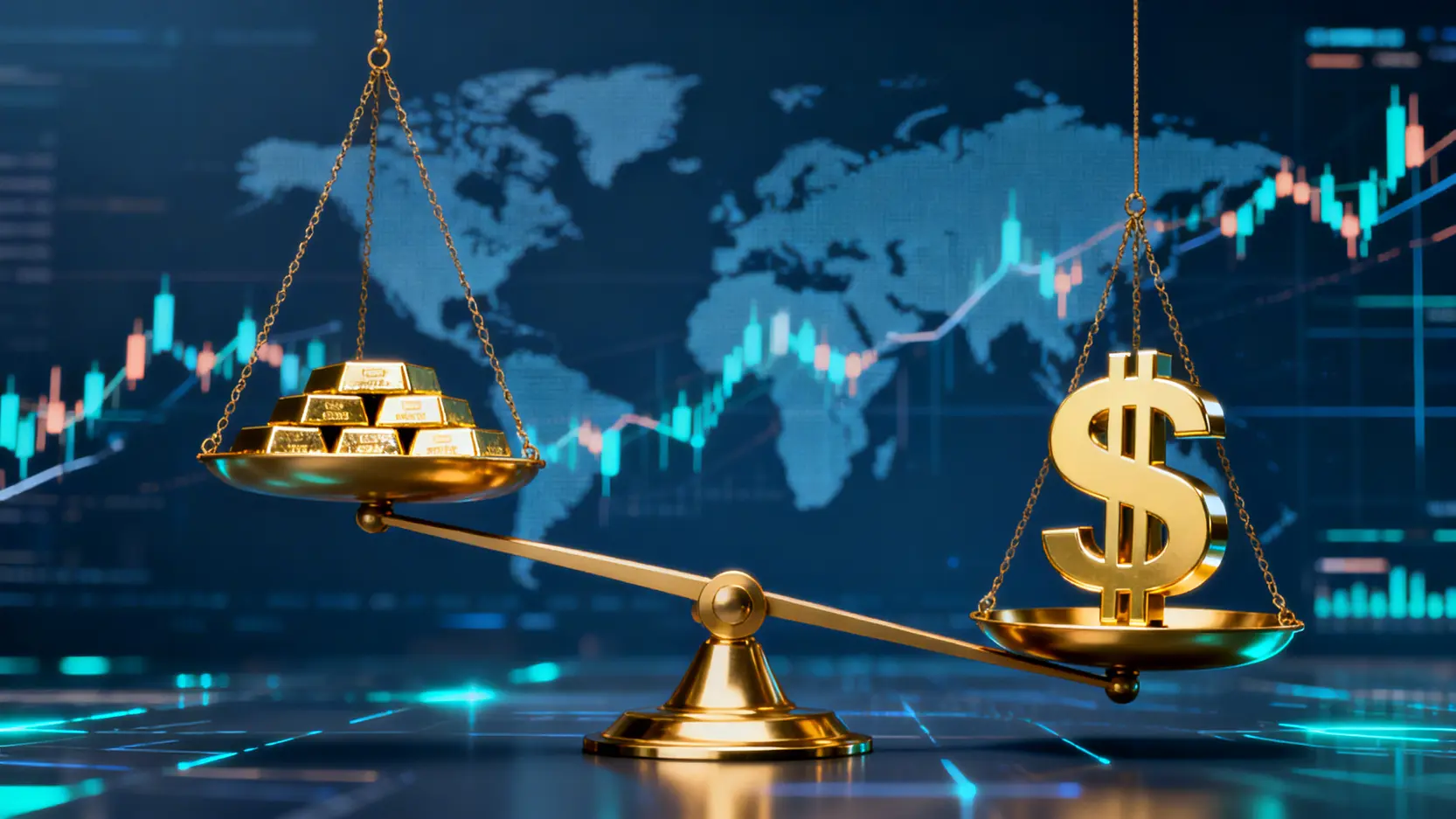
Key Factor 1: The Seesaw Relationship Between Gold and the US Dollar
The relationship between gold and the US dollar is the most classic and important aspect when analyzing gold prices. In most cases, the two exhibit a negative correlation of “when one strengthens, the other weakens”, like two ends of a seesaw. Understanding the cause of this relationship is the first step in mastering gold price movements.
Why Does a Strong US Dollar Usually Weigh on Gold Prices?
There are two main reasons behind this:
- Pricing Currency Effect: The international gold market is primarily priced in US dollars (USD). When the US dollar appreciates and strengthens, it becomes more expensive for investors holding other currencies (such as the euro, Japanese yen, or New Taiwan dollar) to purchase gold. Demand naturally decreases, putting downward pressure on gold prices. Conversely, when the US dollar weakens, gold becomes cheaper for foreign buyers, demand increases, and gold prices are pushed higher.
- Asset Substitution Effect: The US dollar itself is also a globally recognized reserve currency and safe-haven asset. When the US dollar strengthens due to strong economic data or Federal Reserve rate hikes, capital tends to flow into US dollar assets (such as US Treasury bonds) in search of stable returns. This diverts some of the safe-haven funds that might otherwise flow into gold, causing gold prices to come under pressure.
Exception: Simultaneous Gains During Heightened Risk Aversion
Although negative correlation is the norm, there are always exceptions. When the world faces major financial crises or geopolitical turmoil (such as the 2008 financial crisis or large-scale war outbreaks), market panic reaches extreme levels. In such situations, investors seek the safest assets regardless of cost, and both gold and the US dollar, as the world’s two top safe-haven assets, may be simultaneously favored, resulting in the rare phenomenon of “rising together”. At this time, safe-haven demand overrides the pricing effect.
Further Reading (Highly Recommended)
Beginner’s Guide to Gold Investment: A Complete Analysis of the Pros and Cons of 5 Major Channels, Understand the Benefits and Risks of Investing
Gold-Silver Ratio Investment Strategy: Understand Historical Trends and Identify Gold and Silver Trading Opportunities
Key Factor 2: The Dual Impact of Inflation and Real Interest Rates
The saying “buy gold in turbulent times” reflects gold’s role as an inflation hedge and store of value. However, looking at inflation alone is not sufficient. It must be combined with the concept of “real interest rates” to more accurately understand the relationship between inflation and gold.
Is Gold Truly the Best Inflation Hedge?
From historical data, gold is indeed a highly effective inflation hedge. When a country’s currency loses purchasing power due to excessive money printing (inflation), gold, with its relatively stable supply and intrinsic value, can effectively preserve wealth. Investors shift funds from depreciating currencies into gold, thereby pushing up gold prices. This is why gold prices often surge during periods of severe inflation. However, gold is not a perfect hedge against inflation. In the short term, it may decouple from inflation trends due to other market factors. Nevertheless, allocating a portion of gold in a long-term investment portfolio to hedge against currency depreciation risk remains a prudent strategy.
Essential Concept: How Negative Real Interest Rates Drive Gold Prices
To fully understand gold prices, it is essential to understand real interest rates. Its calculation formula is very simple:
Real Interest Rate = Nominal Interest Rate – Inflation Rate
Gold itself is a “non-yielding” asset, meaning it does not generate interest or dividends. Therefore, the “opportunity cost” of holding gold becomes particularly important. When real interest rates are positive and high, it means that keeping money in banks or purchasing government bonds can yield attractive returns even after adjusting for inflation. In this case, the attractiveness of holding gold decreases. Conversely, when real interest rates are “negative” (i.e., inflation exceeds nominal interest rates), it means that keeping money in the bank results in a loss of purchasing power! In such situations, non-yielding gold becomes a more attractive store of value, leading to a large inflow of funds into the gold market and pushing prices higher. Therefore, a “negative real interest rate” environment is often the most favorable condition for gold bulls.
Key Factor 3: How Federal Reserve Monetary Policy Affects Gold Prices
The Federal Reserve (Fed), as the most influential central bank in the world, has a significant impact on global financial markets, including the gold market. Its monetary policy, especially interest rate decisions, is one of the most critical factors affecting gold prices.
Why Rate Hikes Are Usually Negative for Gold Prices?
When the Federal Reserve “raises interest rates” in order to curb an overheating economy or rising inflation (increases the federal funds rate), it typically triggers the following chain reactions in gold prices:
- Boosting the US Dollar: Higher interest rates make US dollar-denominated assets more attractive, attracting international capital inflows and strengthening the US dollar. As mentioned earlier, a stronger US dollar suppresses gold prices.
- Increasing Opportunity Cost: Higher interest rates increase the opportunity cost of holding non-yielding gold. Investors may choose to sell gold and shift to assets that offer higher interest returns, such as US Treasury bonds.
How Rate Cut Expectations Become a Catalyst for Rising Gold Prices
Conversely, when the economy faces recession risks and the Federal Reserve signals or implements “rate cuts”, it often becomes a catalyst for rising gold prices.
- Weakening the US Dollar: Rate cuts reduce the attractiveness of US dollar assets, potentially leading to capital outflows and a weaker US dollar, which benefits gold priced in US dollars.
- Lowering Opportunity Cost: Lower interest rates reduce the opportunity cost of holding gold. At the same time, rate cuts are often accompanied by concerns about the economic outlook, which stimulates risk-averse sentiment and further pushes gold prices higher.
Smart investors not only pay attention to current interest rate levels but also closely monitor Federal Reserve officials’ speeches and meeting minutes to detect clues about future monetary policy directions. Often, market “expectations” are reflected in prices earlier than actual actions.
Other Important Factors Affecting Gold Prices
In addition to the three core factors above, there are several other variables that can significantly influence gold prices at different times, together forming the complex landscape of gold price movement analysis.
Supply and Demand Fundamentals: Gold Mine Production and Industrial and Jewelry Demand
The price of any asset is ultimately driven by supply and demand. Gold supply mainly comes from mining production and recycled gold. If major gold mines worldwide experience prolonged strikes or production halts, reduced supply will naturally support higher gold prices. On the demand side, besides investment demand, jewelry consumption (especially in major markets like India and China) and industrial applications (such as conductors in high-end electronic products) are also important components. During periods of strong global economic growth, these consumption demands increase, providing support for gold prices.
Geopolitical Risks: How Wars and Conflicts Stimulate Safe-Haven Demand
This is one of the most intuitive factors affecting gold prices. Whenever wars, severe political unrest, or terrorist attacks occur globally, financial market uncertainty rises sharply. Investors withdraw funds from risk assets such as equities and shift them into gold, which is regarded as a “safe haven”. This “flight to safety” behavior can rapidly push gold prices higher in a short period.
Central Bank Reserves: Market Signals from Accumulation and Reduction
Central banks around the world are a major force in the gold market. They allocate a portion of their foreign exchange reserves to gold to diversify reserve assets and hedge risks. When multiple central banks (especially those in emerging markets) continuously and significantly increase their gold holdings, it not only directly boosts market demand but is also interpreted as a signal of declining confidence in the global economy and the US dollar system, providing strong long-term support for gold prices. Conversely, if central banks begin to sell gold, it is seen as a significant bearish signal.
FAQ: Common Questions About the Reasons Behind Gold Price Movements
Q: Do the US dollar and gold always have an inverse relationship?
A: Not necessarily. Although the US dollar and gold exhibit a negative correlation (inverse relationship) more than 70% of the time, during periods of extreme market panic, such as a global financial crisis or the outbreak of a major war, both may rise simultaneously due to strong safe-haven demand. Investors should consider the current macroeconomic environment when conducting their analysis.
Q: What specific impact do interest rate hikes have on gold?
A: Interest rate hikes are generally unfavorable for gold. There are two main effects: first, rate hikes push up the US dollar exchange rate, making gold priced in US dollars more expensive for foreign buyers, thereby suppressing demand. Second, rising interest rates increase the opportunity cost of holding gold (which is a non-interest-bearing asset), leading investors to prefer assets that provide interest income, such as US Treasury bonds.
Q: Which factor is most important when analyzing gold prices?
A: This depends on the main market dynamics in different periods. During times of high inflation, “real interest rates” may be the most important indicator. During economic recessions or financial turmoil, “safe-haven sentiment” and “US dollar trends” may dominate. No single factor can determine gold prices indefinitely. Successful investors need to learn to evaluate multiple factors comprehensively and identify what the market is currently focusing on.
Q: Besides the US dollar, which other currencies affect gold prices?
A: Although the US dollar is the dominant factor, other major currencies also have some influence. For example, the euro has the largest weight in the US Dollar Index, and its strength directly affects the relative value of the US dollar, thereby indirectly influencing gold prices. In addition, the Swiss franc (CHF), also a safe-haven currency, sometimes shows a certain degree of positive correlation with gold.
Conclusion
In summary, to accurately determine the reasons behind gold price movements, it is essential not to rely on a single indicator. Investors must take into account a combination of factors that affect the gold price, including the strength of the US dollar, inflation data, changes in real interest rates, the Federal Reserve’s policy direction, and geopolitical conditions. Only by building a comprehensive macro perspective and understanding how these forces interact can one navigate the gold market with confidence. It is hoped that this article will help you build a solid foundation and begin your journey into gold investment research.