Futures Account Opening Guide: Requirements & Docs

Futures Account Opening Requirements Guide: Understand Personal Account Application, Documents, and Entry Thresholds in 10 Minutes
Want to enter the futures market but feel confused about the account opening process, eligibility, and required capital? Many new investors feel uncertain about “futures account opening requirements” before opening a personal futures account, and are not clear about what the “futures entry threshold” actually is. Don’t worry, this article is your one-stop guide. It will break down in detail every step of applying for a personal futures account, from eligibility review and required account documents to how much starting capital is actually needed, helping you complete the account opening process smoothly and enter the futures market with ease.
Step 1: Self-Assessment, Do You Meet Futures Account Opening Requirements
Before rushing to open an account, take a few minutes to evaluate whether you meet the basic requirements. This step is not only to comply with broker regulations, but also a form of responsibility toward yourself.
Age Requirement: Minimum 18 Years Old
This is the most strict requirement. Like stocks and funds, futures trading is considered a high-risk financial activity. Therefore, applicants must be at least 18 years old and have full legal capacity. This is a global regulatory standard with no exceptions.
Financial Situation and Investment Experience: Risk Tolerance Assessment
In addition to age, brokers are legally required to conduct a “Know Your Customer” (KYC) assessment. This is not to make things difficult, but to ensure you understand the risks of futures trading. Brokers will assess, through questionnaires, your:
- Investment experience: Whether you have experience in trading stocks, forex, or other derivatives.
- Financial situation: Sources of income, net assets, etc., to evaluate whether you can bear potential losses.
- Risk tolerance: Your level of acceptance toward investment losses, whether you are a conservative or aggressive investor.
It is very important to complete this questionnaire honestly. It helps the broker (and yourself) determine whether you are suitable for high-leverage futures trading. If the assessment shows low risk tolerance, the broker may suggest lower-risk investment products.
Step 2: Prepare in Full! Personal Futures Account Document Checklist
Incomplete documents are one of the most common reasons for delays in account applications. Preparing the following documents in advance will ensure a smooth account opening process. In general, whether online or in-person, the required documents are similar.

Essential Documents for Futures Account Application
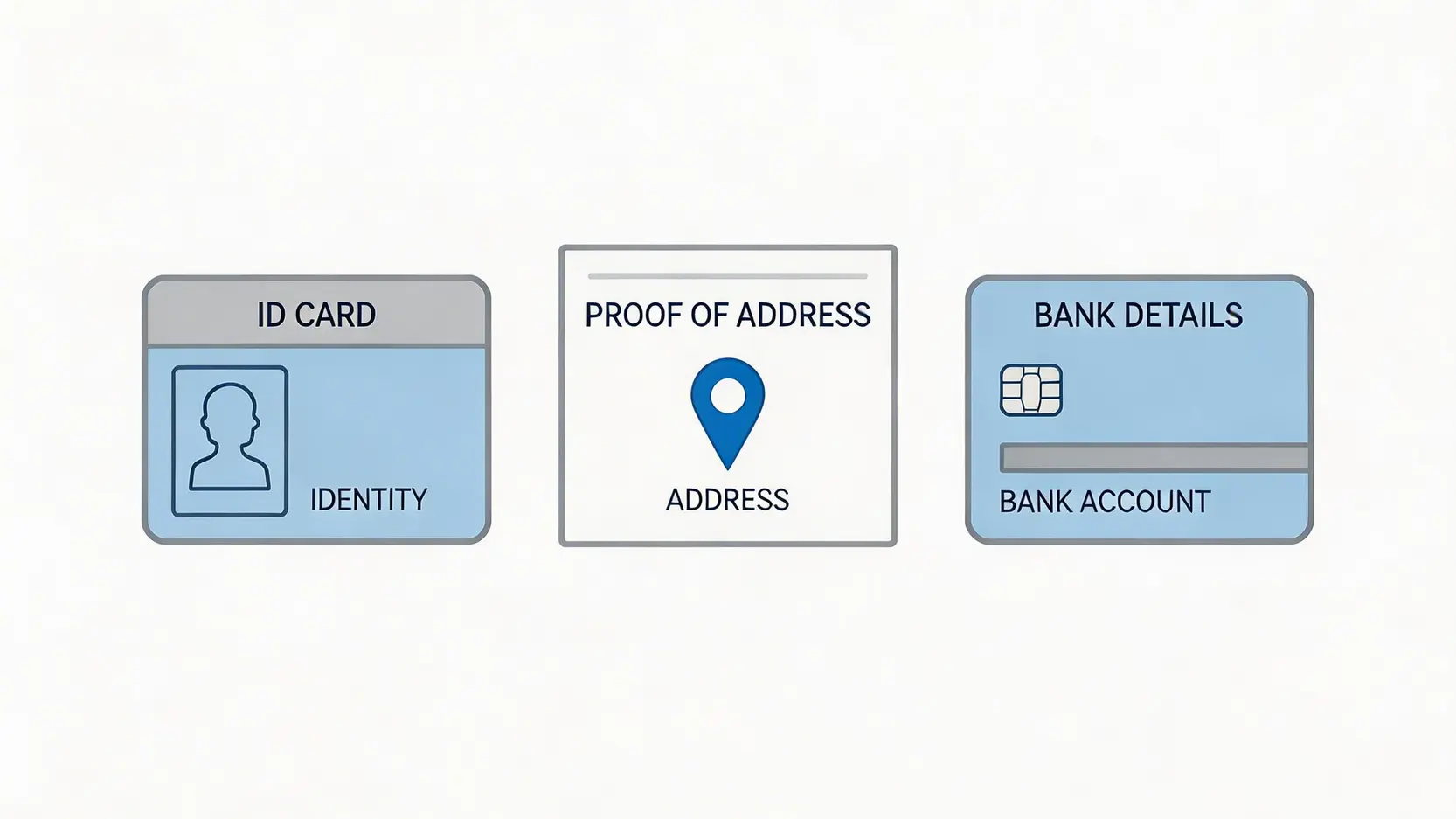
Identity Proof: Valid Identification Document
This is the most important document for verifying your identity. You are usually required to provide a clear, unexpired copy or photo of the front and back of your ID card. Some brokers also accept passports as an alternative form of identification.
Proof of Address: Valid Document Within Three Months
This is used to confirm your residential address, as required by anti-money laundering regulations. Commonly accepted documents include:
- Utility bills (such as water, electricity, or gas bills)
- Bank or credit card statements
- Official government-issued letters
⚠️ Important note: The name on the proof of address must exactly match your identity document, and the document must have been issued within the last three months.
Bank Account Details: Personal Bank Account for Deposits and Withdrawals
You need to provide proof of a personal bank account under your name, such as a bank card copy or bank statement. This account will be used for future deposits (funding) and withdrawals (profits), ensuring fund security.
Further Reading (Highly Recommended)
US Stock Futures Guide: 5 Steps to Start Trading Dow/Nasdaq Futures Strategy (2026 Beginner Guide)
Step 3: Clearing the Misconception About Entry Thresholds: How Much Money Do You Actually Need?
Many people hear “futures” and assume it is an inaccessible game for the wealthy, believing the entry threshold is extremely high. In reality, this is a common misconception. The real futures entry threshold is not about your total wealth, but whether you can afford the “initial margin”.
Key Concept: Understanding “Initial Margin”
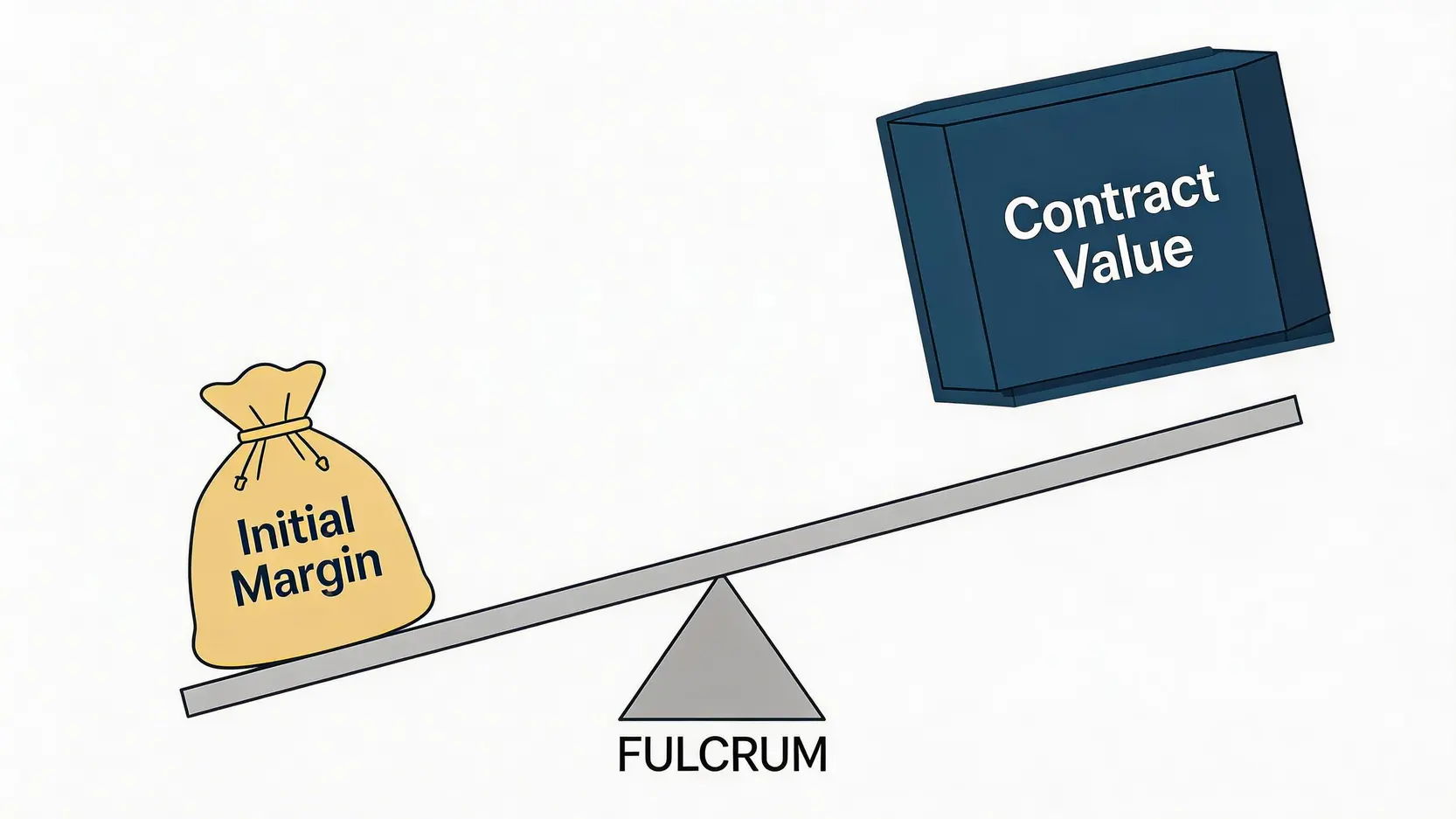
Initial margin is the minimum amount of funds that must be deposited before opening a futures contract. It is similar to a “deposit” or “good faith margin”. Its purpose is to ensure traders can fulfill potential contractual obligations. This money is not a trading cost, but temporarily locked funds. When you close the position, it will be released (adjusted for profit or loss).

Using “Initial Margin” to Leverage High-Value Futures Contracts
The key to understanding margin is that you use a relatively small amount of capital (margin) to control a contract with a much higher value, which is the leverage effect of futures. To learn more about how margin works, you can refer to 【Futures Margin Tutorial】Understand Margin Meaning, Calculation Methods, and Risk Management in One Article.
Reference Entry Costs for Popular Futures Contracts
Different futures contracts require different initial margin levels, which are regularly adjusted by exchanges based on market volatility. Below are reference margin requirements for some popular index futures contracts (Note: Figures are for reference only; please refer to the latest updates from exchanges and brokers).
| Futures Contract |
Exchange |
Tick Value | Approximate Initial Margin (HKD) |
| Hang Seng Index Futures (Large Contract) | Hong Kong Exchanges and Clearing (HKEX) | HK$50 | ~ HK$100,000 – HK$120,000 |
| Mini Hang Seng Index Futures (Mini Contract) | Hong Kong Exchanges and Clearing (HKEX) | HK$10 | ~ HK$20,000 – HK$24,000 |
| Micro E-mini S&P 500 Index Futures | CME Group (CME) | US$5 | ~ US$1,300 (~HK$10,200) |
| Micro E-mini Nasdaq 100 Index Futures | CME Group (CME) | US$2 | ~ US$1,800 (~HK$14,100) |
From the above table, it can be seen that entry barriers for mini or micro futures contracts are not out of reach for most investors. Traders should determine the number of contracts to trade based on their own risk profile, rather than relying solely on the broker’s minimum margin requirement. For more detailed risk management information, you may refer to authoritative institutions such as CME Group’s position and risk management guidelines.
Step 4: Practical Futures Account Opening Process: Online Application vs. In-Person Application Comparison
After understanding all the requirements and documents, you move on to the final practical stage. Most brokers today offer both online and in-person account opening methods, and you can choose based on your preference.
| Comparison Item | Online Account Opening (Mobile App / Website) |
In-Person Application (Branch Appointment) |
| Advantages | ✅ Fast and convenient, not restricted by time or location
✅ Usually takes as little as 10–15 minutes to complete ✅ Highly automated process with faster approval |
✅ Dedicated staff assistance to answer questions ✅ More secure document verification ✅ Suitable for users who are not familiar with digital operations |
| Disadvantages | ❌ Issues must be handled via online customer service
❌ Network or system issues may interrupt the process |
❌ More time-consuming, requires in-person visit
❌ Limited by branch operating hours |
Online Account Opening: Fast Application Process via Mobile App
Online account opening is currently the mainstream method and is very convenient:

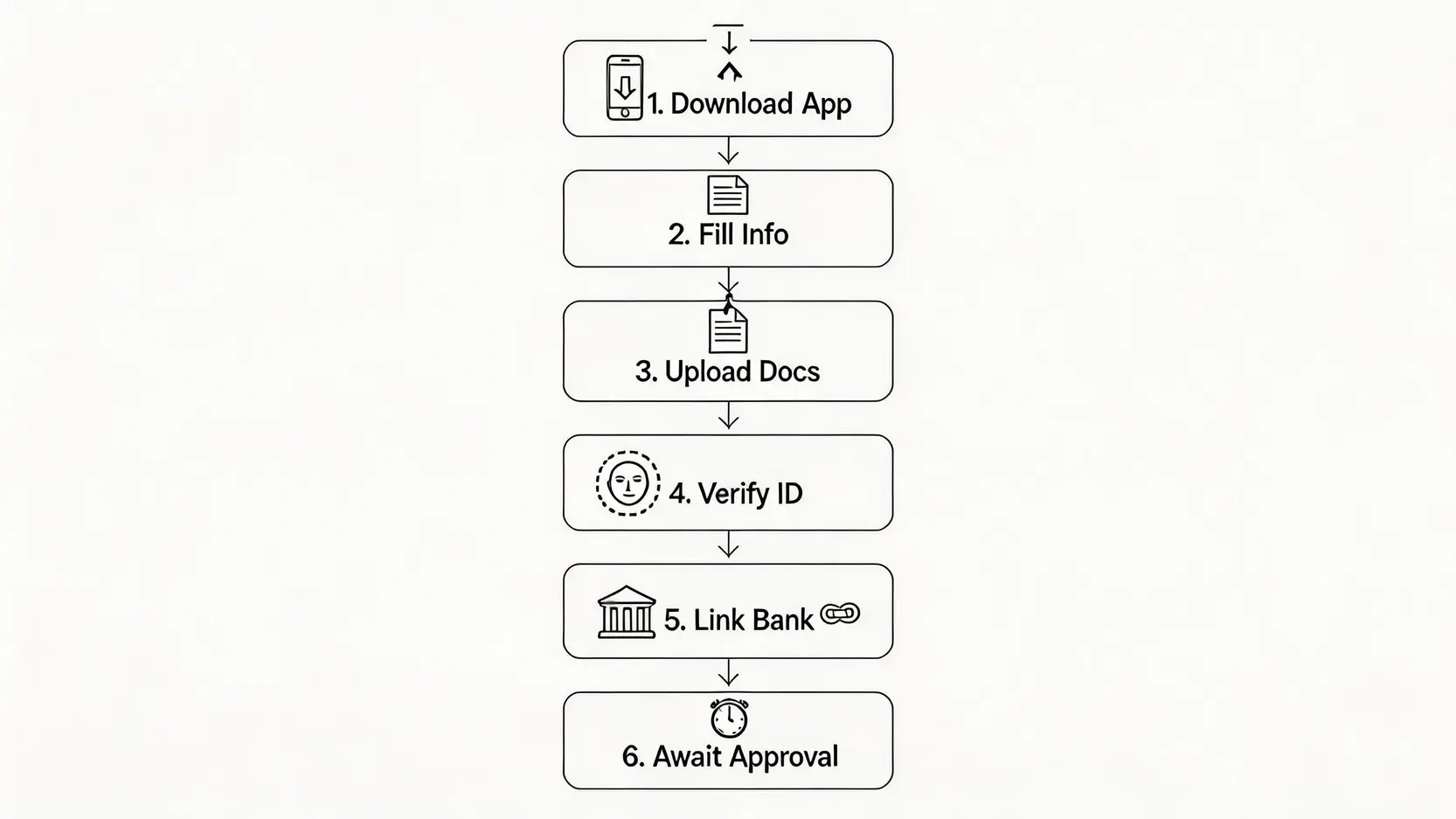
Six-Step Online Account Opening Process: Fast and Convenient
- Download the broker’s app: Download the designated mobile application from the official source.
- Fill in personal information: Enter your name, contact details, financial situation, and other required information as prompted.
- Upload documents: Use your mobile phone to take photos or upload prepared identity and proof of address documents.
- Identity verification: You may need facial recognition or a short video call with customer service to confirm your identity.
- Link bank account: Enter your bank account details. Some brokers support fast linking services (such as eDDA).
- Wait for approval: After submission, the broker will conduct verification. Approval can be completed as fast as the same day.
In-Person Application: Branch Appointment Account Opening Notes
If you prefer a traditional method or have more questions during the application process, you may choose in-person application:
- Make an appointment in advance: It is recommended to call the broker’s branch or book through the website to avoid long waiting times.
- Bring original documents: Be sure to bring the original identity and proof of address documents. Staff will verify and copy them on-site.
- Allow sufficient time: The entire process, including form filling, verification, and explanation, may take 30 minutes to 1 hour.
- Ask questions in person: This is the biggest advantage of in-person application, as you can clarify contract terms, platform operations, fees, and other concerns directly.
Further Reading (Highly Recommended)
US Stock Futures Guide: 5 Steps to Start Trading Dow/Nasdaq Futures Strategy (2026 Beginner Guide)
Frequently Asked Questions (FAQ) About Futures Account Opening
How long does the futures account opening process take?
The time varies. For online applications, if documents are complete and the process goes smoothly, approval and account activation can be completed within 1–2 business days. For in-person applications, although the procedure may be completed on the same day, backend approval still typically takes 1–3 business days. Overall, online account opening is more efficient.
Is there any fee for opening a personal futures account?
Most reputable brokers do not charge any account opening fees. However, you should pay attention to trading-related costs, such as commissions, platform fees, and exchange fees. Before opening an account, carefully compare the fee structures of different brokers.
Can I open multiple futures accounts with different brokers?
Yes, absolutely. This is very common among experienced investors. There are several benefits, such as diversifying risk (to avoid reliance on a single broker system), comparing different trading platforms, or taking advantage of promotions and research reports from different brokers.
What happens if my margin is insufficient?
When the market moves against your position and your account balance falls below the “maintenance margin” level, the broker will issue a “margin call”. You will need to deposit additional funds or close part of your position. If you fail to respond in time, the broker has the right to forcibly liquidate your position (known as “forced liquidation”) to prevent further losses.
Conclusion
In summary, successfully opening a personal futures account requires a clear understanding of your futures account opening requirements, preparing your futures account documents in advance, and understanding the futures entry threshold (initial margin). Modern account opening processes have become very simple, especially with online applications, which have almost eliminated physical barriers. By following the steps in this article, whether online or in-person, you can complete the process smoothly. Take action now, choose a reputable futures broker, and start your futures investment journey. Remember, thorough preparation is the first step to ensuring smooth investing.
Related Articles
-
Practical Applications of Volatility Surfaces: From Options Modeling to Advanced Skew Trading Strategies In options markets, implied volatility is never a flat line. Instead, it forms complex "smile" or "skew" surfaces. For advanced traders, mastering the practical applications of volatility surfaces is equivalent to possessing a lens that reveals market...2026 年 6 月 3 日
-
Building a Foreign Capital Flow Copy Trading Model: A Stock Market Indicator for Accurately Tracking Institutional Positioning In Asia-Pacific stock markets, foreign capital inflows and outflows often determine the direction of the index. However, simply looking at daily net buy and sell data is no longer enough. Only by building...2026 年 6 月 3 日
-
Options Buyer Strategies During Extreme Market Conditions: Black Swan Hedging and Cross-Market Arbitrage During Volatility Surges The most terrifying aspect of financial markets is not a gradual decline, but overnight flash crashes and cross-market capital withdrawals accompanied by volatility surges. In the highly unpredictable global macroeconomic environment of 2026, geopolitical...2026 年 6 月 3 日