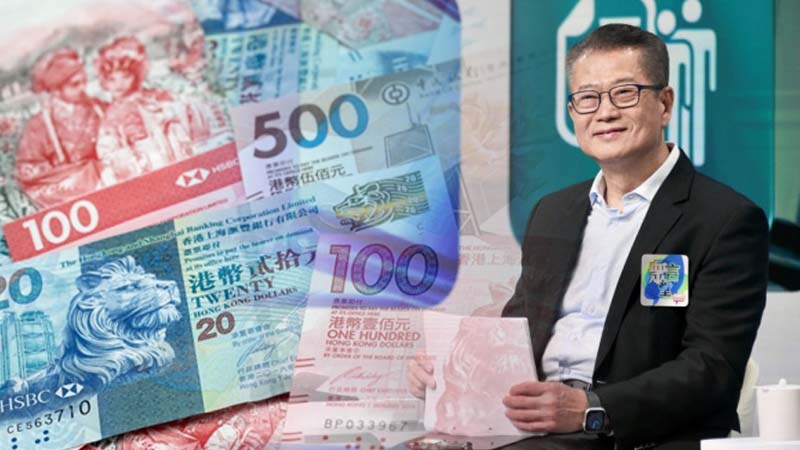
As the announcement of the 2025 Budget on February 26, 2025, approaches, Hong Kong society is closely watching how the government will balance the need for relief measures with structural reforms amidst the pressure of its HK$680 billion fiscal reserves. Financial Secretary Paul Chan Mo-po’s recent emphasis on “precision in policy implementation” not only responds to public expectations for consumption vouchers but also necessitates the promotion of sustainable fiscal reforms, which will have a certain impact on the investment market.
Hong Kong’s Current Fiscal Situation: Deficit and Reserve Pressure
Although Hong Kong’s fiscal situation has been gradually recovering since the pandemic, the fiscal deficit remains a serious issue. According to the latest forecasts, the Hong Kong government’s fiscal reserves are expected to drop to around HK$680 billion by March 2025, a level close to that of the 2011/12 fiscal year. This change has raised market concerns about the government’s fiscal stability, especially as public expenditure continues to account for over 24% of GDP, increasing the pressure for structural fiscal reform.
For investors, this means the government may face greater pressure to borrow and could raise interest rates to cope with rising capital costs, which will affect market liquidity and capital allocation decisions. In particular, while government-issued green bonds and infrastructure bonds may help with short-term fundraising, they could increase Hong Kong’s interest burden in the long run.
Market Impact of the Evolution and Transformation of Relief Policies
Over the past three years, the electronic consumption voucher scheme has distributed over HK$30 billion, successfully leading to a V-shaped recovery in the retail sector. However, the latest data shows that the marginal effect of the vouchers on GDP has decreased from 1.8% in 2021 to 0.6% in 2023, making a policy transformation imperative.
The Financial Secretary is exploring linking consumption vouchers to specific policy goals, such as:
- Targeted subsidies for cross-border consumption (applicable to designated merchants in the Greater Bay Area)
- Double deductions for green product consumption
- Special subsidies for elderly medical services
According to think tank simulations, allocating 30% of the consumption voucher budget to stimulate cross-border spending could generate an additional HK$4.5 billion in regional economic flow while strengthening business synergies between Hong Kong and the Greater Bay Area.
These policies will have a significant impact on investors’ strategies in the consumption, retail, and health sectors. In particular, cross-border consumption subsidies could promote economic synergy between Hong Kong and the Greater Bay Area, further strengthening regional business cooperation and creating potential growth opportunities for related industries. For investors, this presents investment opportunities in the Greater Bay Area and the green economy.
Fiscal Reform Proposals: A Dual Approach of Cost-cutting and Revenue Generation
As the fiscal deficit continues to widen, the political and business communities have proposed several suggestions aimed at controlling expenditure while promoting economic growth. The following proposals are particularly crucial for their market impact:
- Freezing Civil Servant Salaries and Reducing Establishment
This move could effectively reduce public spending but may also lead to social discontent and affect market sentiment, especially if a decline in civil servant morale negatively impacts the consumer market and social stability.
- Reforming the Stamp Duty on Stock Transfers
The proposal to lower the stamp duty rate on stock transfers would directly impact the trading activity in the Hong Kong stock market. Reduced transaction costs are expected to attract more international capital, further consolidating Hong Kong’s position as a global financial hub. Investors should pay attention to the potential positive effects of such policies on market liquidity and Hong Kong stock valuations.
- Introducing a “Wealth Tax”
Increasing the tax rate for high-income groups would affect the capital flow of the wealthy, potentially accelerating the outflow of high-end assets. For investors, this could mean that some capital might move to overseas markets, posing a challenge to the stability of the local capital market.
- Adjusting the $2 Fare Scheme
Although this policy has a significant impact on the general public, a drastic change could trigger social dissatisfaction, thereby affecting local consumption patterns. Investors should monitor the short-term impact of this policy on the public transport and retail sectors.
The Possibility of Reintroducing Relief Measures and Market Risks
With the escalating fiscal deficit and reserve pressure, how the Hong Kong government balances economic stability with expenditure control will be the core challenge of the 2025 Budget. Investors should monitor the government’s adjustments to future fiscal policy, especially as it further emphasizes a dual approach of cost-cutting and revenue generation, and how future policies will affect market liquidity, interest rates, and capital allocation.
For long-term capital allocators, this may mean a reduced reliance on a low-interest-rate environment, shifting focus towards asset classes with stable growth potential. Investors should pay attention to how the government guides market expectations and use this information to adjust their investment portfolios to seize market opportunities brought by government reforms.
*The content of this article is for sharing and reference purposes only and does not constitute professional investment advice. As individual circumstances and needs vary, you may contact the Cashback Island team or consult your financial planner for professional advice.
Frequently Asked Questions
Q1. When will the 2025 Budget be announced?
The Hong Kong Government’s 2025 Budget will be announced by the Financial Secretary, Paul Chan Mo-po, on February 26, 2025.
Q2. How many types of taxes are there in Hong Kong?
1. Profits Tax: Tax on profits from incorporated and unincorporated businesses.
2. Salaries Tax: Progressive tax on individual employment income.
3. Property Tax: Tax on rental income from properties.
4. Stamp Duty: Tax on stock and property transactions.
5. Betting Duty: Tax on horse racing, Mark Six lottery, and football betting.
6. Customs and Excise Duty: Limited to 4 types of goods (liquor/tobacco/hydrocarbon oil/methyl alcohol).
7. Rates: 5% of the rateable value of a property (includes government rates for municipal services).