Altcoin Guide: Find 100x Coins & Meme Coin Risks

【Altcoin Investment Guide】How to Discover the Next 100x Potential Coin? MEME Coin Risks and Pitfall Prevention
Have you also heard stories of people becoming overnight millionaires through altcoin investments, yet feel hesitant because of the enormous risks? The market is flooded with all kinds of information, from projects with unlimited potential to purely speculative meme coins (MEME coins), making it difficult for new investors to differentiate. Want to know how to identify promising altcoins while avoiding MEME coin risks? This article provides a systematic analysis framework, teaching you how to discover genuinely potential altcoins and deeply analyze MEME coin risks, helping your altcoin investment journey become more stable.
Analyzing Altcoins: More Than Just Bitcoin Alternatives
Before embarking on the altcoin investment journey, the first task is to clarify their essence. Many people mistakenly believe that altcoins are just inferior copies of Bitcoin, but in reality, this field is full of innovation and opportunities, accompanied by corresponding risks.
What Are Altcoins?
Altcoins are short for “Alternative Coins” and refer to all cryptocurrencies other than Bitcoin (BTC). Since Bitcoin pioneered cryptocurrencies, thousands of altcoins with different functions, goals, and technologies have emerged like mushrooms after rain. Their existence is not merely to copy Bitcoin but mainly to improve Bitcoin’s shortcomings (such as slow transaction speed and limited functionality) or to create entirely new application scenarios.
Main Types of Altcoins: Utility, Platform, and MEME Coins
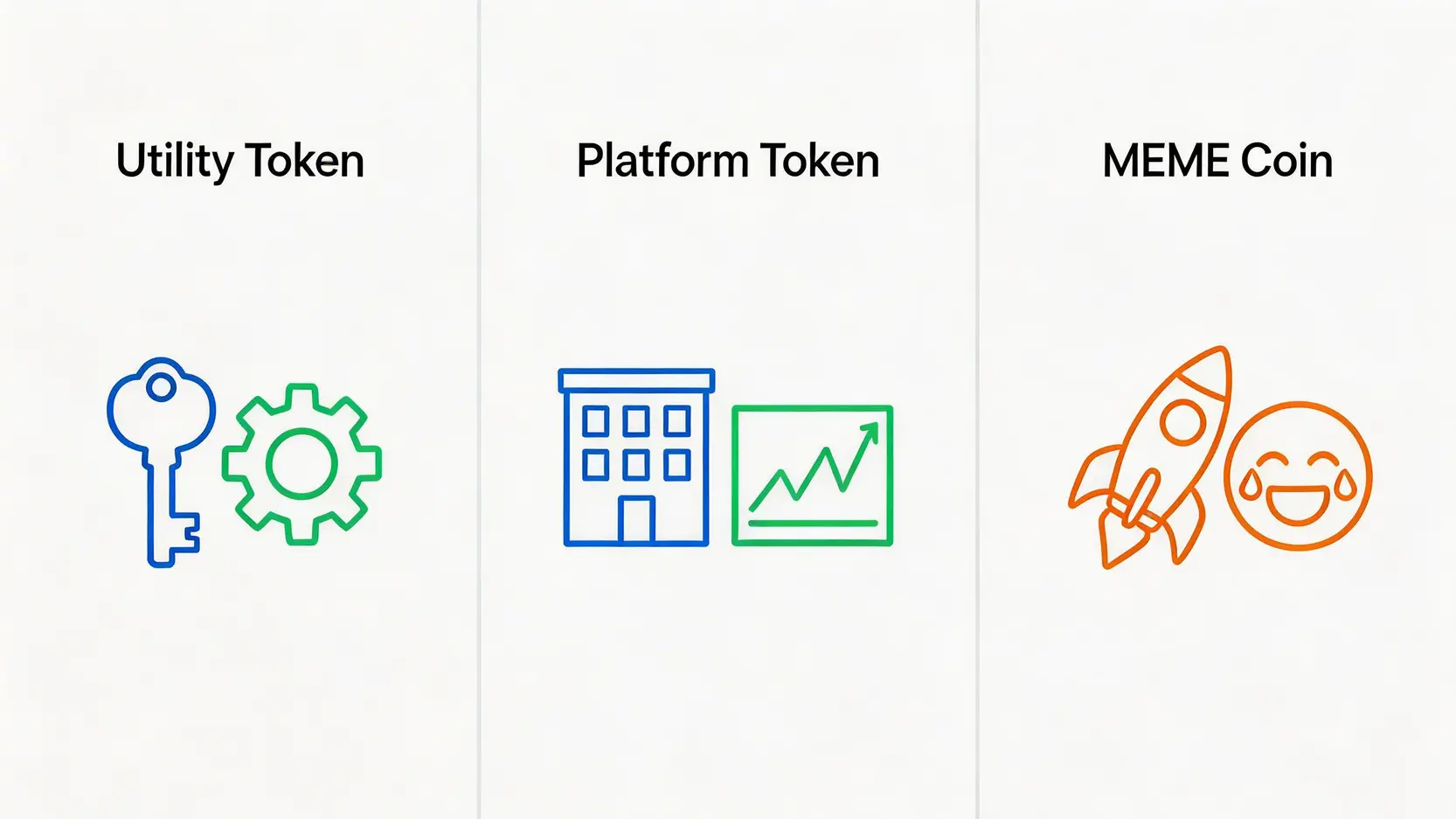
The altcoin universe is vast, and we can roughly categorize them as follows to better understand their value:
- Utility Tokens: These tokens provide holders with access to specific products or services. For example, Filecoin (FIL) allows users to pay for decentralized storage space. Their value is closely tied to the utility and user base of their corresponding ecosystem.
- Platform Tokens: Issued by cryptocurrency exchanges, these tokens are typically used to offset trading fees, participate in platform governance, or subscribe to new projects. For example, Binance Coin (BNB) is the platform token of Binance, the world’s largest exchange.
- MEME Coins: Originally derived from online memes or community jokes, such as Dogecoin and Shiba Inu. These tokens usually lack practical application scenarios, with prices highly dependent on community hype and market sentiment, exhibiting extreme volatility. These are the focus for our subsequent MEME coin risk analysis.

Overview of Main Altcoin Types: Utility, Platform, and Community-Driven
Why Is Altcoin Investment a High-Risk, High-Reward Track?
Compared with Bitcoin, altcoin investment is considered a high-risk, high-reward field for three main reasons:
- Extreme market volatility: Altcoins usually have a market cap far lower than Bitcoin, meaning that even small capital inflows or outflows can cause sharp price swings. A positive partnership announcement or a negative security vulnerability can make their price double or drop to zero in a single day.
- Innovation paired with failure: Many altcoins represent cutting-edge blockchain innovations. If their technology or applications are widely adopted, they can bring returns of 100x or even 1000x. However, the majority of projects eventually fail due to technical bottlenecks, funding shortages, or market competition.
- Severe information asymmetry: Compared with mature stock markets, cryptocurrency markets are less regulated, and project transparency is lower, providing space for market manipulation and scams, while increasing research difficulty for investors.
How to Discover Promising Altcoins? A Four-Step Evaluation Framework
With thousands of options, identifying promising altcoins is the biggest challenge for investors. Instead of blindly chasing market trends, establish your own evaluation framework. The following four steps help you systematically filter projects worth attention.

Four-Step Evaluation Framework for Promising Altcoins
Step 1: Analyze Project Fundamentals (Whitepaper, Team Background, Pain Points Addressed)
Fundamental analysis is at the core of value investing. A promising project must have a clear vision and the ability to solve real problems.
- Read the Whitepaper in Detail: The whitepaper is the project’s “manual”, detailing its objectives, technical architecture, solutions, and future roadmap. When reading, pay attention to whether the logic is clear, the technology is feasible, and which industry “pain point” it addresses.
- Study Team Background: The project’s success is closely related to its team members. Does the founding team have successful experience in relevant industries? Do the developers have strong technical expertise? A transparent, experienced team is a key indicator of project reliability.
- Evaluate Value Proposition: Does the project offer a unique solution? Are there strong competitors in the market? What is the target market size? A truly promising project should have a clear and competitive value proposition.
Step 2: Examine Tokenomics Model (Total Supply, Distribution, Utility)
Tokenomics is critical for assessing altcoin investment value. It determines the token’s supply and demand, directly affecting long-term price trends.
- Supply: Is the token supply fixed or continuously issued? Is there a deflationary mechanism (e.g., burning)? Generally, tokens with a capped supply and deflationary model are scarcer in the long term.
- Distribution: How is the token allocated? What proportion is assigned to the team, early investors, and the community? If the team and early investors hold too much, future large sell-offs may pose risks to retail investors in the secondary market.
- Token Utility: What role does the token play in the ecosystem? Is it used for payments, governance voting, or staking mining? The broader and more central the utility, the higher its intrinsic value. Related concepts can be referenced in the article What Is BNB? Understanding 5 Key Uses of Binance Coin.
Further Reading (Highly Recommended)
LINK What Is Chainlink? Understanding Chainlink Oracle, 3 Core Uses, and Future Prospects …
What Is BNB? Understanding 5 Key Uses, Price Potential, and Investment Risks
Step 3: Evaluate Community Hype and Market Narrative (Using Twitter, Telegram)
In the crypto world, “consensus” is also a form of value. An active and growing community reflects project vitality, while market narrative determines capital flows.
- Community Metrics: Follow the project’s official Twitter, Telegram, Discord, and other community platforms to assess follower count, activity, and discussion quality. Are members genuinely discussing technology and future plans, or just promoting the coin (shilling)?
- Market Narrative: What is the current market trend? AI, real-world assets (RWA), or GameFi? Projects aligned with mainstream narratives are more likely to attract market attention and capital inflow, driving price increases.
Step 4: Utilize On-Chain Data Analysis Tools (Recommended Tools List)
On-chain data is public and transparent, providing the most accurate picture of project health. Learning to use these tools allows for more objective judgments.
- CoinGecko / CoinMarketCap: Essential tools for crypto investors, providing comprehensive token prices, market caps, trading volume, contract addresses, and other basic information.
- Dune Analytics / Nansen: Provide advanced on-chain data analysis, such as active addresses, whale movements, and capital flows, helping assess real market momentum.
- DeFi Llama: Focused on decentralized finance (DeFi), showing total value locked (TVL) across public chains and protocols, an important metric for assessing DeFi project scale.
Key Focus: MEME Coin Risk Fully Explained The Traps Behind High Returns
When it comes to altcoin investment, MEME coins cannot be ignored. They often make headlines, creating astonishing wealth stories, but the enormous hidden risks are a critical issue every investor must face. Understanding MEME coin risks is the first step in protecting your hard-earned money.
The Essence of MEME Coins: Assets Driven by Community Consensus
The core value of MEME coins does not come from technological innovation or practical applications, but purely from “community consensus” and “cultural phenomena”. Their price increases are often driven by enthusiastic discussions on social media, endorsements by online influencers (KOLs), and speculative sentiments seeking quick wealth. When the hype fades, prices can plummet, making their foundation extremely unstable.
Three Common MEME Coin Risks: Liquidity Drain, Rug Pull, Market Manipulation
When investing in MEME coins, you may encounter the following deadly traps:
- Liquidity Drain: Many MEME coins are issued on decentralized exchanges (DEX), with trading depth (liquidity) provided by the project team or early whales. If these whales withdraw their funds, the trading pool instantly dries up, preventing subsequent investors from selling, turning their tokens into worthless “air”.
- Rug Pull: This is the most malicious form of fraud. Dishonest project teams collect large amounts of funds and then abscond, simultaneously removing liquidity pools, causing the token price to drop to zero instantly. Such cases are rampant in the poorly regulated MEME coin market.
- Market Manipulation (Pump and Dump): Whales (addresses holding large amounts of tokens) or the project team exploit their capital advantage to create hype on social media, driving up prices (Pump) to attract retail investors, then sell heavily at the peak (Dump), causing significant losses for retail participants.

Warning: MEME Coin Investment Traps Rug Pull Illustration
Risk Management Strategies Before Investing in MEME Coins: Position Sizing and Stop-Loss Techniques
If you still wish to participate in the high-risk game of MEME coins, risk management must be your top priority:
- Strict Position Control: Never invest more than you are willing to lose entirely. It is recommended to keep MEME coin investments at a very small portion of your total portfolio (e.g., 1%-5%).
- Set Clear Stop-Loss Points: Establish a stop-loss price before purchasing. If the price falls below this level, sell immediately to prevent unlimited losses. Do not assume “it will bounce back”.
- Take Profits Timely: MEME coin rallies rise and fall rapidly. Set target profit points and, once reached, sell partially or entirely to lock in gains. Avoid greed.
Conclusion
In summary, successful altcoin investment relies not on luck but on rigorous research and analysis. Using the four-step evaluation framework outlined in this article, from fundamentals, tokenomics, and community activity to on-chain data, you can more objectively identify projects with long-term potential. Especially when dealing with highly volatile MEME coins, recognizing and managing MEME coin risks, along with proper position sizing and stop-loss strategies, is essential. Start applying these strategies now to fully prepare your altcoin portfolio before the next bull market arrives.
FAQ
Is altcoin investment gambling?
It depends on your approach. Blindly following news or chasing price trends is no different from gambling. However, if you conduct in-depth research on project fundamentals, analyze tokenomics, and implement risk management, altcoin investment can be considered a high-risk speculative activity rather than pure gambling.
Do MEME coins have real value?
From a traditional financial perspective, most MEME coins have no intrinsic value based on cash flow or utility. Their value mainly derives from community consensus and cultural recognition. They can be viewed as “digital collectibles” or “community stocks” with prices entirely determined by market supply, demand, and sentiment.
Where should beginners start researching potential altcoins?
Beginners can start with blue-chip altcoins that have higher market capitalization, a solid community base, and are listed on major exchanges, such as Ethereum (ETH) and Solana (SOL). Utilize platforms like CoinGecko or CoinMarketCap, identify leading projects from trending sectors (e.g., AI, GameFi), and gradually study their whitepapers and community dynamics.
How can you determine if an altcoin project is a “Rug Pull” scam?
Although it is impossible to guarantee 100%, certain indicators can raise alertness: 1. The team is anonymous or the background cannot be verified. 2. Token distribution is highly concentrated in a few wallet addresses. 3. Community platforms (e.g., Telegram) restrict free speech or are filled with false hype. 4. Liquidity locking is very short or absent. Any of these warning signs should be treated with extreme caution.
Related Articles
-
How to Get Started with Bitcoin? The Complete 2026 Bitcoin Buying Guide for Beginners After watching Bitcoin repeatedly reach new highs in recent years and successfully pass spot ETF reviews in the US and Hong Kong in 2024, officially entering mainstream financial markets, many investors have turned their attention to...2026 年 7 月 20 日
-
Is Gold’s V-Shaped Rebound a Bottom-Fishing Signal? A Complete Guide to Trading Strategies Amid “$100 Price Swings” What Is a Gold V-Shaped Rebound? More Than Just a Technical Pattern The gold market has recently experienced sharp rises and falls, with prices frequently displaying dramatic “gold V-shaped rebounds”. Single-day “$100 price...2026 年 7 月 20 日
-
What Is PPI Data? 2026 Latest Analysis: Understand the Differences from CPI and How It Affects Stock Market Trends With market information constantly changing, do you always hold your breath while waiting for CPI data to be released? But did you know that a more forward-looking inflation indicator, PPI data...2026 年 7 月 20 日