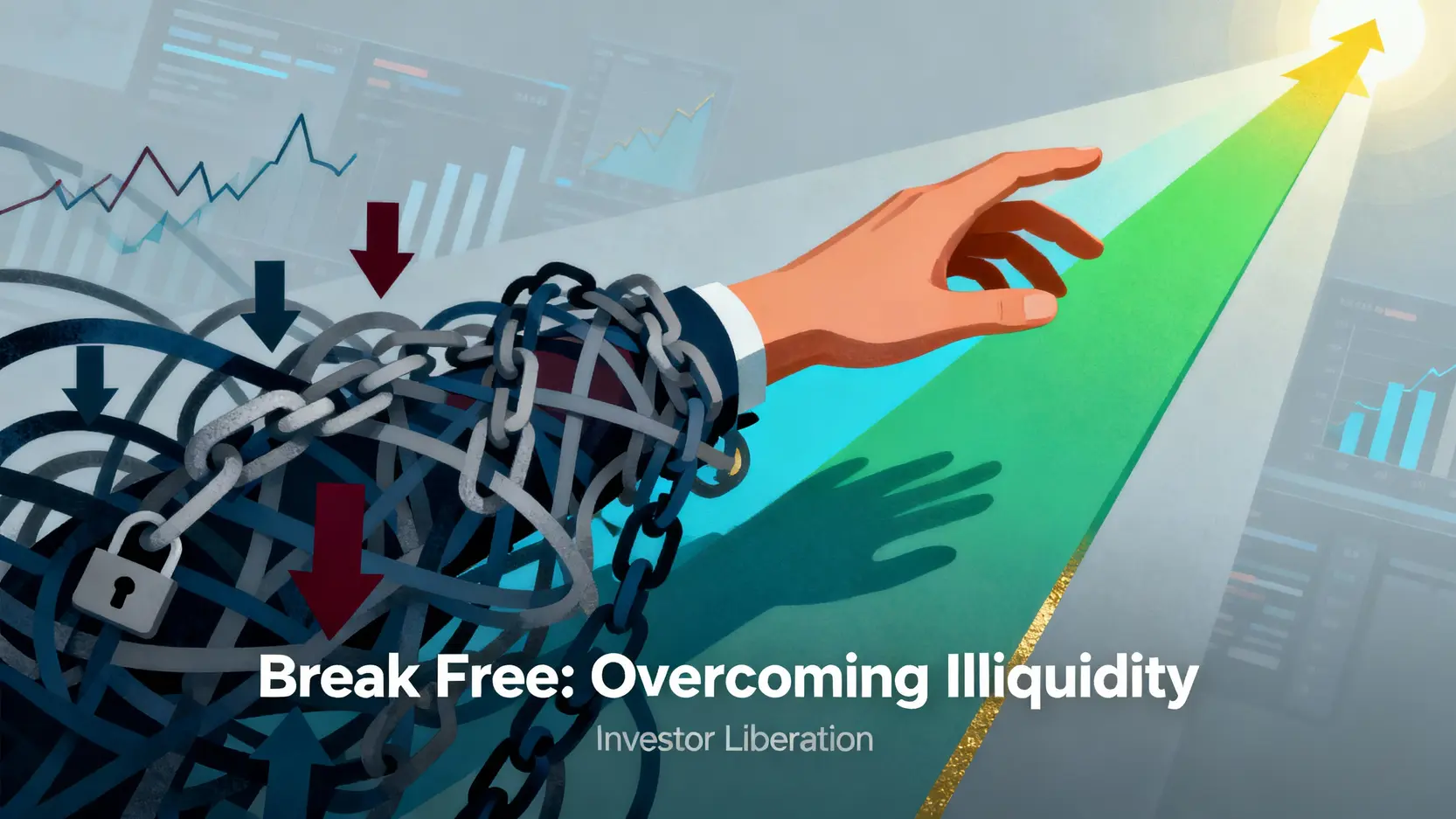
Don’t Panic If Warrants Cannot Be Sold! Five Major Self-Rescue Guides to Help You Exit Smoothly Without Getting Stuck
Have you ever encountered the awkward situation of placing a sell order for warrants only to find that it cannot be executed for a long time? When faced with insufficient warrant liquidity, or even the dilemma of warrants that cannot be sold, many investors feel helpless and worry that their funds will be trapped. As a high-leverage investment instrument, warrants have trading characteristics that differ significantly from stocks. Without understanding how they work, it is easy to run into difficulties when trying to exit. This article provides an in-depth analysis of the common reasons why warrants cannot be sold and offers a series of practical and effective response strategies to help you master warrant exit techniques, avoid the frustration of sell orders that cannot be executed, and prevent investment losses.
Why Can’t My Warrants Be Sold? Analysis of Three Common Reasons
The reason warrants cannot be sold usually lies in several key factors. Understanding these reasons is the first step toward finding solutions. The following summarizes three common causes:
Insufficient Warrant Liquidity: Inactive Market Makers and Weak Market Demand
Warrant liquidity is one of the most critical factors determining whether you can exit smoothly. Unlike stocks, warrant liquidity largely depends on the role of the “market maker”. After issuing warrants, market makers, typically securities firms, are responsible for providing bids and asking quotes in the market to ensure sufficient liquidity. However, if:
- Market makers are inactive: Some market makers may, due to strategic considerations, risk control, or unfavorable warrant conditions, fail to place orders actively or provide reasonable quotes.
- Weak market demand: If the underlying stock linked to the warrant (such as a popular stock or a stock with potential), attracts little market attention, or if overall market trading is thin, warrants will naturally lack buying interest, leading to insufficient liquidity.
When warrants fail to attract interest from either buyers or sellers, even if you attempt to sell at market price, the order may not be executed because no one is willing to take the other side, resulting in warrants that cannot be sold.
Deep Out-of-the-Money or Approaching Expiration: Loss of Trading Value
The value of warrants declines over time and is closely tied to the price movement of the underlying stock:
- Deep out-of-the-money: If your call warrant has an underlying stock price far below the strike price, or your put warrant has an underlying stock price far above the strike price, the warrant becomes deeply out-of-the-money, leaving minimal profit potential. Such warrants lose their appeal, causing buying interest to shrink significantly and making it much harder to exit the warrant.
- Approaching expiration: Warrants have a limited lifespan. As the expiration date approaches, time value accelerates in its decline, commonly referred to as “time decay to zero”. Even if the warrant still retains slight intrinsic value, investors typically avoid entering positions at the final stage due to the risk of failing to realize profits before expiration. At this point, the probability of sell orders not being executed increases substantially.
Extreme Market Volatility or Weak Individual Stock Performance: No Buyers
External market conditions and the performance of the underlying stock are also key factors affecting whether warrants can be sold smoothly:
- Extreme market volatility: When the stock market experiences sharp declines, panic-driven selling pressure, or major uncertainty events, investors tend to avoid risk, and buying interest in high-risk products such as warrants can disappear rapidly.
- Weak individual stock performance: The value of a warrant is closely linked to its underlying stock. If the underlying stock shows weak price action or faces negative news, investor expectations may turn pessimistic, causing related warrants to be ignored by the market and resulting in warrants that cannot be sold. In such cases, even if market makers continue to provide quotes, prices may be far below expectations, making it difficult to exit warrants smoothly.
What Should You Do If Warrants Cannot Be Sold? Five Practical Self-Rescue Strategies at a Glance
When facing the awkward situation of warrant sell orders not being executed, investors must not sit and wait helplessly. Mastering the following five self-rescue strategies can help improve your success rate in exiting warrants and minimize losses:
Re-Evaluate Order Price and Method: Adjust Selling Conditions Appropriately
When your warrant fails to execute for an extended period, the first step is to review your order price. Many investors aim to sell at an ideal price, but if there is no buying interest at that level, the warrant naturally cannot be sold.
- Adjust the price: Observe the market’s bid and ask levels and consider slightly lowering your selling price to move closer to the buyer’s quotation. You may also try placing a “market order” or a “limit order” aligned with the market maker’s bid price. However, be aware that if warrant liquidity is extremely poor, a market order may be executed at a price far below expectations, so caution is required.
- Observe market maker quotations: Warrant prices are provided by market makers, and the bid-ask spread is an important indicator of liquidity. If the spread is too wide, it indicates poor liquidity. Appropriately referencing the market maker’s bid price can help accelerate your warrant exit.
Proactively Contact the Issuing Securities Firm: Understand Market-Making Conditions and Potential Solutions
When you find that your warrants cannot be sold and the market maker is not actively placing orders, directly contacting the securities firm that issued the warrant is one of the most direct and effective approaches.
- Inquire about market-making obligations: Issuers have specific market-making obligations and rules. You can ask why the market maker is not placing orders or why the quotations appear unreasonable. In some cases, it may be due to system delays, adjustments in market-making strategy, or other special circumstances.
- Seek assistance: Some securities firms may offer support, such as re-evaluating quotation strategies or providing internal suggestions. While this does not guarantee an immediate solution, it is a channel to understand the situation and express your difficulties.
You may also refer to this article to learn more about how to choose a securities firm: How to Choose the Right Securities Firm?
Review Warrant Conditions and Premium Changes: Assess Whether There Is Still Exit Value
Before attempting to sell, be sure to reassess the condition of the warrants you hold:
- Remaining days: The closer the warrant is to its expiration date, the faster its time value erodes. If only a few days remain, even if an exit is possible, the price may be extremely unfavorable.
- In-the-money or out-of-the-money status: Calculate the current in-the-money or out-of-the-money level of the warrant. If it is already deeply out-of-the-money and retains only minimal time value, the difficulty of exiting becomes extremely high.
- Underlying stock condition: Has the underlying stock encountered new negative news? Or is there a chance of a rebound? These factors all affect the warrant’s potential value and buyers’ willingness to participate.
Through a comprehensive evaluation, determine whether your warrant still has residual value and estimate the possible execution price range. This helps you make more rational decisions instead of blindly insisting on unrealistic prices.
Consider Long-Term Holding or Cutting Losses: Avoid Further Loss Expansion
If warrant liquidity is truly too poor and you judge that it will be difficult to exit the warrant smoothly in the short term, you must seriously consider the following two possibilities:
- Long-term holding (wait-and-see): If the warrant is still some distance from expiration and you remain confident in the future trend of the underlying stock, you may consider holding it temporarily and waiting for a rebound in the underlying stock or an improvement in market sentiment, increasing the chances of resolving the issue of what to do when warrants cannot be sold. However, this also means bearing the risk of continued time value erosion.
- Decisive stop loss: When the warrant is already deeply out-of-the-money, approaching expiration, or the underlying stock continues to perform weakly with no signs of a turnaround, cutting losses decisively may be the wisest choice. Although it results in a loss, it prevents further expansion of losses and frees up capital to seek other, better investment opportunities. Cutting losses is the golden rule for capital protection.
Master Intraday Liquidity Peak Periods: Increase the Probability of Execution
Warrant trading volume is not evenly distributed throughout the day and is usually relatively higher during certain periods:
- At market open and before market close: Many investors position themselves at the open or settle positions before the close, so trading volume during these periods is usually higher.
- Periods of active underlying stock trading: When the underlying stock is actively traded or experiences larger price fluctuations, it also drives trading activity in related warrants.
You can try placing orders during these relatively high-liquidity periods while closely monitoring changes in market maker quotations to seize opportunities to exit warrants. If warrant sell orders cannot be executed, switching to a different time period may present an opportunity.
How Can You Avoid the Dilemma of Warrants That Cannot Be Sold? Three Preventive Mindsets to Apply in Advance
Rather than fixing the problem afterward, prevention beforehand is better. The following three mindsets can help you prepare properly before investing in warrants and significantly reduce the risk of warrants that cannot be sold:
Select Warrants With Sufficient Liquidity and Active Market Making
This is the most critical step in avoiding insufficient warrant liquidity.
- Observe bid and ask order volume: Choose warrants with sufficient bid and ask order sizes and narrow bid-ask spreads. This indicates that the market maker is willing to provide adequate liquidity and also reflects the level of market attention toward the warrant.
- Check historical trading volume: Select warrants with stable daily trading volume, rather than illiquid warrants that only trade occasionally.
- Pay attention to market-making quality: Many securities firms provide market-making information for warrants. Choose warrants issued by securities firms with good market-making quality, stable quotations, and reasonable spreads.
Conduct in-Depth Research on Warrant Conditions and Issuer Reputation
Before investing, be sure to have a thorough understanding of both the warrant itself and its issuer.
- Warrant conditions: Carefully review key terms such as the strike price, expiration date, and exercise ratio. Choose an appropriate in-the-money or out-of-the-money level and remaining lifespan, and avoid warrants that are excessively out-of-the-money or close to expiration.
- Issuer reputation: Choose warrants issued by large, reputable, and professional securities firms. These firms typically have stronger capital strength and market-making capabilities and are more likely to fulfill their market-making obligations. You can visit the stock exchange website to review relevant information on each issuer.
Understanding this information helps you make more informed investment decisions and avoid the risk of warrants that cannot be sold due to information asymmetry.
Closely Monitor the Underlying Stock and Market Developments
The value of warrants is derived from the underlying stock. Therefore, maintaining close attention to developments in the underlying stock is crucial.
- Underlying stock fundamentals: Regularly review fundamental information such as the underlying stock’s financial reports, industry news, and operating conditions.
- Underlying stock technical analysis: Analyze technical indicators such as price trends and trading volume of the underlying stock to assess its short-term and long-term trends.
- Overall market trends: Pay attention to broader market movements and major financial news, as overall market sentiment affects trading willingness across all warrants.
By identifying potential risks in the underlying stock or the market at an early stage, you gain more time to adjust your warrant exit strategy and avoid the dilemma of sell orders not being executed. Continuous learning and staying in tune with market dynamics are the most reliable ways to improve your warrant trading success rate.
Frequently Asked Questions FAQ
Q: Is It Normal That Warrant Sell Orders Cannot Be Executed?
A: Warrant sell orders not being executed are not absolutely normal, but they are indeed a common issue faced by investors. The main reasons are usually related to insufficient warrant liquidity, the warrant’s own conditions (such as being deeply out-of-the-money or approaching expiration) or unfavorable market conditions. Under normal circumstances, as long as the warrant conditions are sound and the market maker is active, execution should be smooth. If you encounter this issue frequently, it may be necessary to re-evaluate your stock selection and trading strategy.
Q: Besides Waiting, Are There Any Other Ways to Accelerate Exiting Warrants?
A: Besides waiting, you can try the following methods to accelerate exiting warrants: re-evaluate and adjust your order price, (which may include making slight concessions); proactively contact the warrant issuer to understand the market-making situation; review the warrant’s remaining days and in-the-money or out-of-the-money status; and place orders as much as possible when the underlying stock is active or during intraday liquidity peak periods. If the situation is critical, decisively cutting losses is also an important strategy to prevent further expansion of losses.
Q: What Happens If Warrants Cannot Be Sold After Expiration?
A: If the expiration date arrives, and the warrants you hold have still not been exited, and the warrants are in-the-money warrants (meaning they have exercise value), the issuing securities firm will, in accordance with the contract terms, automatically exercise them for you at the settlement price, and pay you the price difference in cash. But if the warrants are out-of-the-money at expiration (meaning they have no exercise value), then the warrants will become worthless, their value will drop to zero, and you will lose all of the premium paid. This is also one of the reasons why holding warrants until expiration should be avoided.
Conclusion
Warrants that cannot be sold are indeed a common concern for investors, especially when you are faced with insufficient warrant liquidity, or even situations where warrant sell orders cannot be executed, and feelings of anxiety are inevitable. However, as long as you gain a deep understanding of the underlying reasons why warrants cannot be exited, and master the response and preventive strategies provided in this article, you can significantly improve the efficiency and success rate of handling warrant exits.
From selecting warrants with good liquidity, carefully studying their conditions and issuer reputation, to closely monitoring the underlying stock and market developments, every step is a critical part of protecting your investment. When you unfortunately encounter the dilemma of what to do if warrants cannot be sold, actively adjusting your order strategy, contacting the issuing securities firm, and even decisively cutting losses when necessary are all responsible investment attitudes. Remember, doing thorough research before investing, choosing high-quality warrants, and staying vigilant throughout the trading process are the keys to achieving steady profits in the warrant market and truly realizing wealth growth.