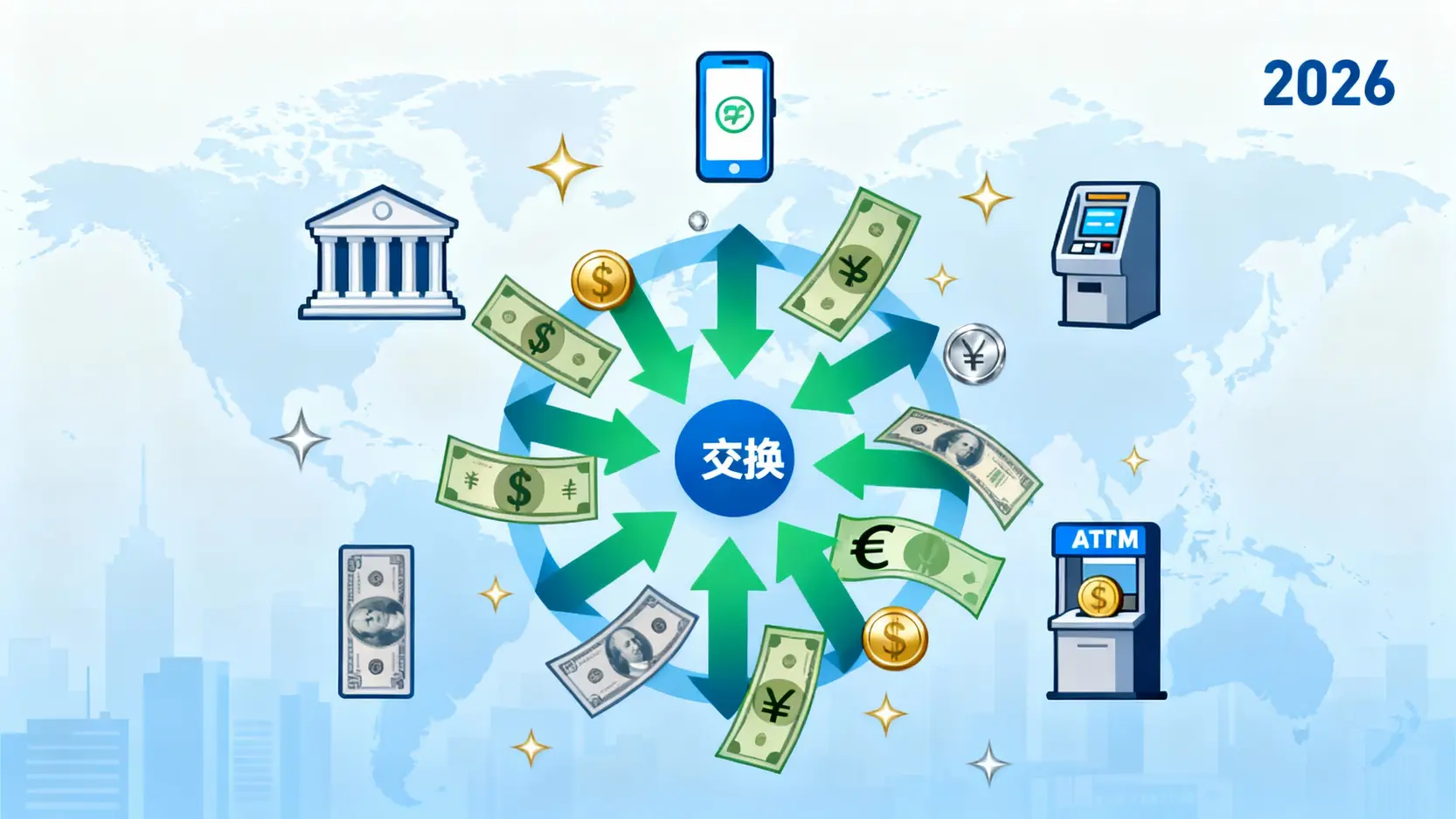
2026 Latest! Complete Guide to Exchanging Foreign Currency in Taiwan: Five Main Channels, Procedures, and Key Considerations Explained in One Go
Planning an overseas trip or needing foreign currency, but always wondering “where should I exchange foreign currency” to get the best value and convenience? Taiwan offers multiple foreign currency exchange channels, from traditional bank exchange to emerging online services, each with its own advantages and disadvantages. This article provides an in-depth analysis of how to exchange foreign currency, key precautions when exchanging foreign currency, and the latest and most comprehensive 2026 exchange guide, helping you easily understand each channel and exchange currency smartly without losing out!
Where to Exchange Foreign Currency? Comparison of Five Common Currency Exchange Channels in Taiwan
In Taiwan, you have many convenient options for exchanging foreign currency. Understanding the features, strengths, and weaknesses of each channel can help you choose the most suitable exchange method based on your personal needs.
Bank Currency Exchange: A Safe and Convenient Traditional Choice and Its Process
Exchanging currency at a bank counter is the most familiar option for most people. With its high level of security and regulatory oversight, it remains a preferred choice. Almost all commercial banks in Taiwan offer foreign currency exchange services, such as Bank of Taiwan, Mega International Commercial Bank, and CTBC Bank. Banks provide a wide range of major currencies, and the transaction process is transparent.
- High level of security. Transactions are strictly regulated, reducing concerns about counterfeit notes or fraud.
- Wide range of currencies. A comprehensive selection of currencies is available to meet the needs of most destinations.
- Professional consultation. Bank staff can provide guidance and answer exchange-related questions.
- Suitable for large amounts. Counter services offer higher security for large-value exchanges.
- Limited business hours: You must visit during bank operating hours.
- Exchange rates may not be optimal: Over-the-counter spot rates are often less favorable than online exchange rates.
- Possible waiting time: You may need to queue during peak hours.
- Exchange process: Bring valid identification documents (for local citizens an ID card and for foreign nationals a residence permit or passport), fill out the “foreign exchange form”, state the currency and amount you wish to exchange, and complete the transaction at the counter.
Online Currency Exchange: A Digital Channel With Preferential Rates and Simple Operation
With the development of digital finance, online currency exchange has become increasingly popular. Many banks offer exchange services through online banking or mobile banking apps, allowing you to complete exchanges from home.
- Advantages:
- More favorable exchange rates: Online exchange usually offers better spot rates than over-the-counter transactions and “may include special online promotional rates”.
- 24-hour convenience: You can operate anytime, without being restricted by bank business hours.
- Time-saving and efficient: No need to queue, greatly reducing time spent.
- Disadvantages:
- Requires an account with the bank: You must be an existing customer to use online services.
- Cash withdrawal limitations: After exchanging, you still need to visit a bank branch or foreign currency ATM to withdraw physical cash.
- Possible service fees: Some banks charge fees when withdrawing foreign currency cash.
- How to operate: Log in to your online banking or mobile banking app, enter the foreign exchange section, select the currency and amount you wish to exchange, confirm the rate, and complete the transaction. Some banks also provide “exchange rate alert” features.
Foreign Currency ATMs: 24-Hour Access for Small and Urgent Needs
Foreign currency ATMs provide another convenient exchange channel, especially suitable for travelers who need small amounts of cash. These ATMs are commonly located at airports, high-speed rail stations, MRT stations, or specific bank branches.
- 24-hour service: Available anytime for urgent needs.
- Fast and convenient: Simple operation without queuing.
- No need to fill out exchange forms: Reduces paperwork.
- Disadvantages:
- Limited currency options: Mainly offer major currencies such as USD, JPY, EUR, and HKD.
- Less favorable rates: Often apply higher cash exchange rates or additional fees.
- Withdrawal limits: Subject to per-transaction or daily limits
- Usage reminder: Always confirm the fees and exchange rate before withdrawing, and check whether the ATM provides the currency you need.
Airport Currency Exchange: Convenient but Expensive, Best for Emergencies
For travelers pressed for time or who forgot to exchange currency in advance, airport bank counters or exchange booths offer a last-resort solution. However, convenience usually comes at a higher cost.
- Advantages:
- Extremely convenient: You can exchange currency immediately before departure or upon arrival, avoiding trips into the city.
- Emergency solution: Ideal for urgent cash needs.
- Fast processing. Transactions are usually completed quickly.
- Disadvantages:
- Worst exchange rates: Airport rates are typically the least favorable among all channels and may include high service fees.
- Crowds: You may need to wait during peak travel seasons.
- Recommendation: Unless it is an emergency, large amounts should not be exchanged at the airport. Exchange a small amount for immediate needs, and use city banks or online services for larger exchanges.
Private Money Changers: High Flexibility but Higher Risk, Careful Evaluation Required
In some areas, private money changers may exist, attracting specific customers by claiming to offer “better exchange rates than banks”. However, this channel involves relatively high risk, and special attention should be paid under foreign currency exchange precautions.
- Advantages:
- Exchange rates may be more competitive: For certain currencies, the rates may be better than those offered by banks.
- Flexibility: Transaction hours may be more flexible.
- Disadvantages:
- Legal risks: Unauthorized currency exchange activities may violate regulations.
- Security concerns: Lack of supervision increases the risk of counterfeit notes, fraud, or even robbery.
- Lack of protection: In the event of a dispute, consumer rights are difficult to safeguard.
- Strong recommendation: To protect your assets, always choose legitimate and regulated financial institutions for currency exchange.
How to Exchange Foreign Currency at the Best Value? Master the Process and Money-Saving Tips
To exchange foreign currency in the smartest way, it is not enough to know where to exchange, but also when and how to do it. Careful planning ensures that every dollar you spend is worthwhile.
Preparation Before Exchanging: Confirm Needs, Compare Rates, and Prepare Documents
Thorough preparation is the first step to successful currency exchange. Before deciding which exchange channel to use, make sure to do the following:
- Confirm your foreign currency needs: Determine which currency you need, the approximate amount, and whether you require physical cash. In some countries, credit cards are widely accepted, so cash demand may be lower.
- Compare Exchange Rates Across Banks: Exchange rates offered by different banks can vary at different times. Using the “posted exchange rates” on bank websites or exchange rate comparison apps is key to finding the best rate. Pay special attention to the difference between the “spot rate” and the “cash rate”, as cash rates are usually less favorable.
- Prepare the Required Documents: Whether you exchange currency at a branch counter or withdraw cash after an online exchange, you must provide valid identification documents, such as an ID card, passport, or residence permit.
- Pay Attention to Fees: Some banks may charge a handling fee when you withdraw foreign currency cash, especially after an online exchange. Be sure to ask in advance to avoid additional costs.
By mastering these basics, you will be able to make the choice that best suits you among the many foreign currency exchange options in Taiwan.
Foreign Currency Exchange Precautions: Avoid Fees and Potential Risks
Currency exchange may seem simple, but hidden fees and risks can quietly drain your wallet. Understanding these foreign currency exchange precautions ensures a smooth and secure exchange process.
Exchange Rate Inquiry and Negotiation Tips: Find the Best Time to Exchange
Exchange rate fluctuations are a key factor affecting exchange costs. Learning to observe exchange rate trends and mastering a few techniques can effectively reduce your exchange costs.
- Long-Term Observation of Exchange Rate Trends: Plan ahead and use exchange rate charts provided by bank websites or financial apps to observe historical highs and lows of your target currency.
- Set Rate Alerts: Many bank apps offer exchange rate alert features. When the rate reaches your expected level, the app will automatically notify you so you can seize the best opportunity.
- Phased Exchange Strategy: Avoid exchanging all your funds at a single point in time. Adopting a “phased exchange” approach (similar to dollar-cost averaging in investing) can spread exchange rate fluctuation risk and lower the average exchange cost.
- Negotiate for Large Exchanges: If you need to exchange a large amount of foreign currency, you can sometimes try negotiating with a relationship manager or teller at the bank counter to obtain a more favorable rate or fee reduction. This usually applies to larger transactions, and not all banks offer this option.
At the same time, pay attention to the liquidity and characteristics of different currencies. For example, demand for the Japanese yen may increase before and after peak travel seasons, leading to more pronounced exchange rate fluctuations.
Avoid Hidden Costs and Financial Risks
In addition to the exchange rate itself, there are other hidden costs and potential risks to watch out for:
- Fee Traps: In addition to possible fees included in over-the-counter cash exchanges, withdrawing cash after an online exchange or using a debit card overseas to withdraw foreign currency may also incur extra charges. Always confirm all related fees with the bank before exchanging.
- Cash Rate and Spot Rate Differences: Cash rates are usually worse than spot rates. If you do not urgently need physical cash, you may consider exchanging at the spot rate online and depositing the funds into a foreign currency account, then withdrawing when needed.
- Counterfeit Currency Risk: Choosing banks or regulated, licensed exchange institutions is the most effective way to avoid receiving counterfeit notes. Never risk using unofficial channels for a small exchange rate advantage.
- Transaction Limits: Banks impose daily or per-transaction limits on online exchanges and ATM foreign currency withdrawals. If you have large exchange needs, plan ahead and proceed in multiple transactions, or choose to handle the exchange at a branch counter.
- Personal Information Security: When conducting online exchanges, always operate in a secure network environment and ensure you are accessing the official bank website or app to avoid personal data leaks or phishing scams.
To safeguard your assets, it is recommended that you make good use of information provided by government financial institutions, such as foreign exchange information from the Central Bank of the Republic of China, to obtain the most authoritative guidance.
Frequently Asked Questions About Foreign Currency Exchange
Q: What documents are required to exchange foreign currency?
A: In Taiwan, whether exchanging at a branch counter or withdrawing after an online exchange, local citizens are generally required to present a national ID card. Foreign nationals must provide a passport or residence permit. If the exchange amount is relatively large, some banks may require a second form of identification (such as a driver’s license or health insurance card) or ask you to sign relevant documents. It is recommended to confirm with the bank in advance.
Q: Where can I withdraw money after exchanging currency online?
A: After an online exchange, you can withdraw physical cash at designated branch counters of the bank, or use the bank’s foreign currency ATMs. Some banks also offer withdrawal services at airport branches. Please note that some banks charge a fee for foreign currency cash withdrawals, and foreign currency ATMs may have limitations on available currencies and withdrawal limits.
Q: Where is the best place for small-amount exchanges?
A: For small exchanges, considering convenience and exchange rates, it is recommended to prioritize:
- Online exchange: Exchange rates are usually more favorable, allowing you to operate from home and then withdraw at the bank.
- Foreign currency ATMs: Available 24 hours a day and suitable for urgent small cash needs, but exchange rates may be slightly worse.
Although airport exchange services are convenient, exchange rates are usually the worst and are not recommended for small exchanges. Private exchange shops also carry higher risks and should be avoided.
Q: How can I determine the best time to exchange currency?
A: Determining the best exchange timing requires continuous attention to international financial news, economic data of the target country (such as interest rate decisions, inflation rates, and unemployment rates) as well as global geopolitical events. Use exchange rate charts provided by banks to observe relative highs and lows. In addition, you may consider a “phased exchange” strategy, spreading exchanges over multiple transactions to average costs and reduce risks caused by exchange rate fluctuations, rather than attempting to predict the absolute lowest point.
Q: Are there limits on exchange amounts?
A: Yes, currency exchange activities in Taiwan are subject to amount limits. Over-the-counter exchanges at banks are generally more flexible, but single large transactions (such as amounts equivalent to NT$500,000 or more) may require declaration forms and disclosure of the transaction purpose. Online exchanges and foreign currency ATMs have stricter daily or per-transaction limits, typically ranging from the equivalent of NT$100,000 to NT$500,000 per day, depending on individual bank policies. If you have large exchange needs, be sure to confirm and plan with the bank in advance.
Conclusion
Through the detailed introduction in this article, we believe you now have a comprehensive understanding of the available channels for exchanging foreign currency in Taiwan, the process of how to exchange foreign currency, and the key precautions to be aware of when exchanging foreign currency. Whether you choose bank exchange services, online exchange, or other channels, mastering this essential information will help ensure a smooth and cost-effective exchange experience. Start planning your exchange strategy now to make your funds more flexible!