2026 Forex Scam Alert: 5 Margin Trading Traps

Updated: 2026/05/25  |  CashbackIsland

forex-scam-guide-2026

[2026 Forex Margin Trading Pitfall Avoidance Guide] Experts Reveal the 5 Major Scam Tactics to Protect Your Hard-Earned Money!

Want to generate passive income through forex margin trading, but worried about scam brokers, malicious slippage, or even withdrawal problems? The market is flooded with mixed information and exaggerated advertising, making it difficult to know where to start. This latest 2026 Forex Margin Trading Pitfall Avoidance Guide is designed to solve that problem from the ground up by systematically breaking down common scam broker tactics while providing a complete set of screening standards and checklists to ensure your funds remain safe and your trading journey starts on solid ground. 


The First Line of Defense: The “Truth-Revealing Mirror” of Regulatory Licenses

Before depositing any funds, verifying a broker’s regulatory license is an absolutely essential step and arguably the most important one. This license functions like a “truth-revealing mirror”, instantly filtering out the vast majority of scam brokers in the market. However, not all licenses carry the same “level of credibility”, and understanding the differences is a core skill for protecting your capital.


Strong Regulation vs. Weak Regulation: The Difference Between FCA, ASIC, and Offshore Island Licenses

Not all regulatory authorities possess the same level of credibility. Broadly speaking, they can be divided into two categories:

  • Tier-1 Regulators: These regulators are known for strict approval standards, ongoing supervision, and strong investor protection frameworks. Representative authorities include:
    • Financial Conduct Authority (FCA): Widely recognized as one of the strictest regulators globally, imposing extremely high standards for broker capital requirements, client fund segregation, and trading transparency.
    • Australian Securities and Investments Commission (ASIC): Another top-tier regulator with strict rules regarding leverage ratios and client fund protection.
    • Other regulators such as Swiss Financial Market Supervisory Authority (FINMA) and National Futures Association(NFA) also fall into this category.
  • Offshore Regulators: These authorities are usually located in tax havens or small island jurisdictions such as Seychelles (FSA), Vanuatu (VFSC), and the Cayman Islands (CIMA). Their regulatory requirements are generally far more relaxed, licensing thresholds are lower, and investor protection mechanisms are significantly weaker. Many scam brokers or controversial platforms often rely solely on these licenses to appear legitimate.

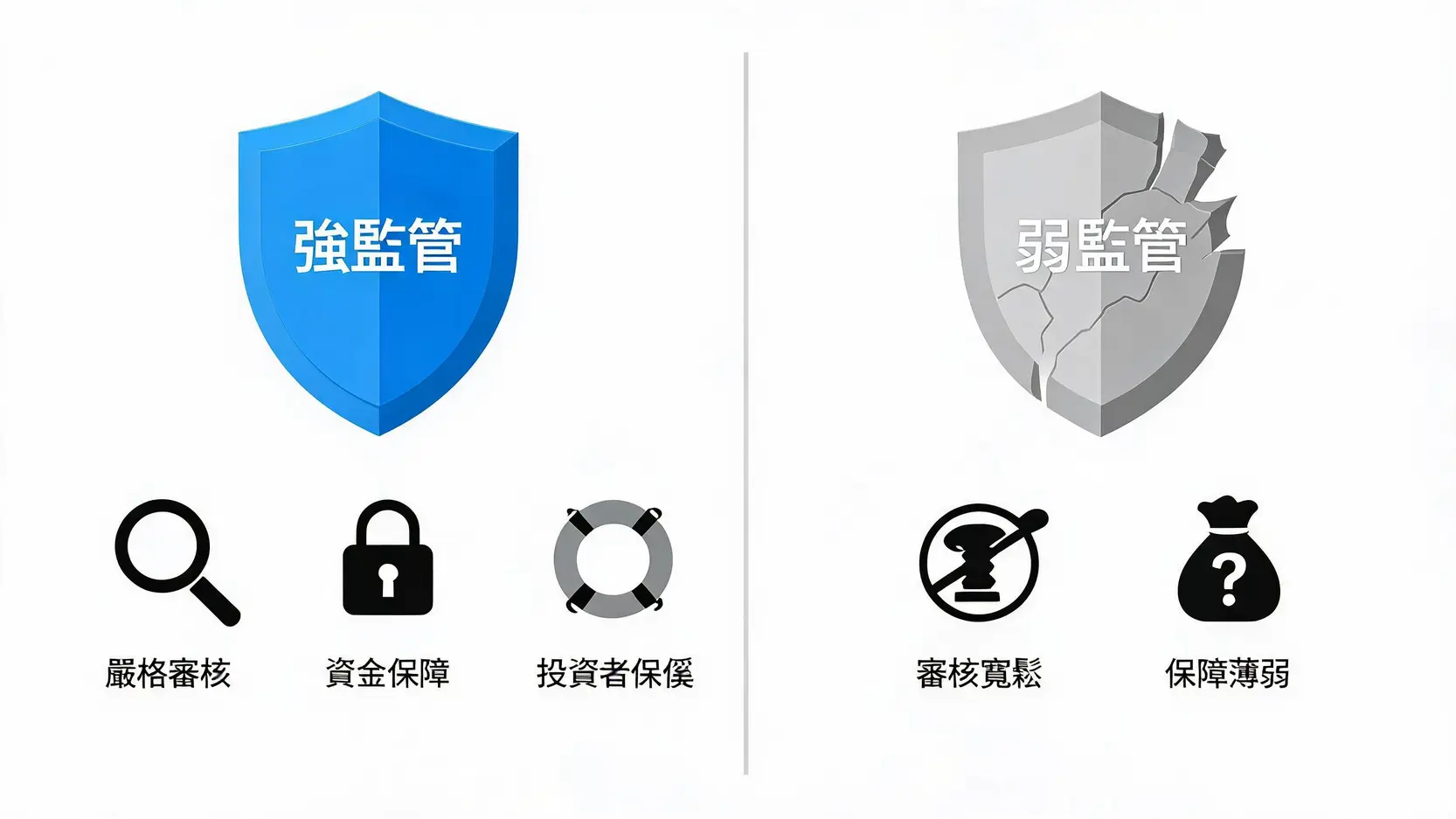
一張對比圖,顯示強監管(如 FCA)與弱監管(離岸島國)牌照在外匯平台安全性上的差異。

Top-tier regulatory licenses form the first line of defense for fund security.

Core Principle: Always prioritize brokers holding top-tier regulatory licenses. If a broker only holds offshore licenses, or worse, no license at all, you should eliminate it immediately regardless of how attractive the trading conditions appear.


How to Personally Verify a Broker’s Regulatory Status?

Never blindly trust customer service representatives or claims made on broker websites. Personally verifying regulatory information is the safest approach. The process is very straightforward:

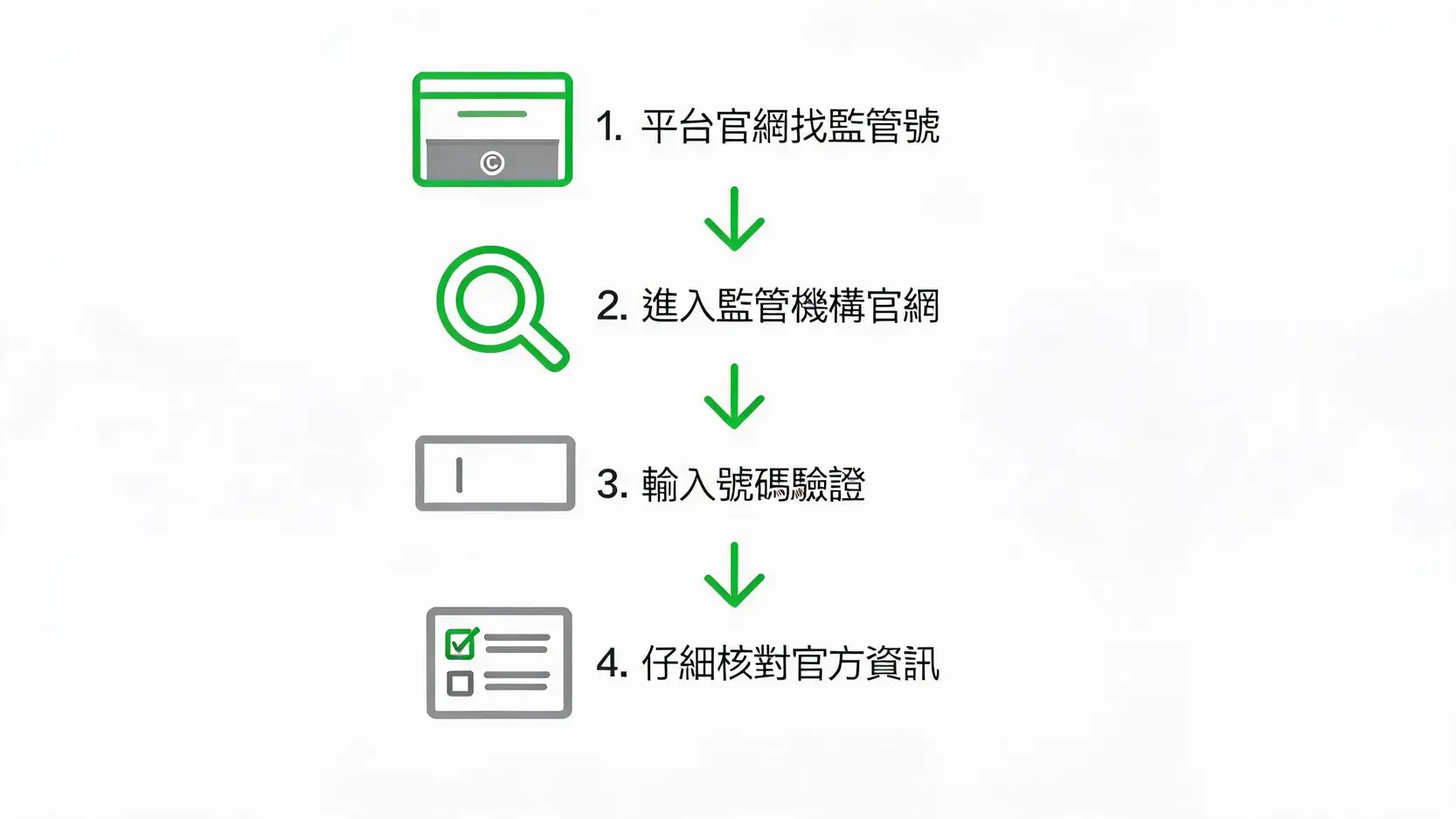
  1. Find the Regulatory Number: The broker’s regulatory authority and registration number are usually displayed in the website footer or the “About Us” section (For example, FCA No. 123456).
  2. Visit the Official Regulatory Database: Use search engines to locate the regulator’s official registration lookup page. For example, FCA licenses can be checked directly through the FCA Financial Services Register.
  3. Enter the Number or Company Name for Verification: Input the broker’s regulatory number or full company name into the search system.
  4. Verify the Detailed Information: Search results will display the company’s registration status, permitted business activities, official website, and contact information. Carefully confirm that the official website shown by the regulator exactly matches the website you are currently using. This is one of the most critical steps in avoiding cloned broker scams.

一張流程圖,展示如何查詢和驗證外匯平台監管牌照的四個步驟。

Personally verifying regulatory information is the best way to avoid cloned broker scams.


Scam Warning: How to Identify Cloned Firms and Fake Regulators

As investors become more cautious, scam operations continuously evolve. Pay close attention to the following advanced scam tactics:

  • Cloned Firms: Scam groups steal the complete information of legitimate regulated companies (including names, license numbers, and addresses) while replacing the official website with their own phishing site. This is exactly why “verifying the official website URL” is so important.
  • Fake Regulatory Authorities: Some scam brokers create professional-looking fake regulatory websites and list themselves as regulated entities. If you encounter an unfamiliar regulator, first verify whether the regulator itself is legitimate and internationally recognized.
  • Mismatched Business Scope: Some brokers possess licenses that only authorize “consulting” or “marketing” activities rather than actual forex margin trading services. Always review the Permitted Activities section within regulatory databases.


The Hidden Secrets of Trading Costs: Spreads, Swap Fees, and Hidden Charges

After confirming platform safety, the next major consideration is trading cost. Many brokers attract clients using slogans such as “zero commissions” or “ultra-low spreads”, but hidden details often reveal the real costs. A complete forex broker evaluation must assess all potential fees. 

Fixed Spreads vs. Floating Spreads: Which Is Better for You?

Spreads represent the difference between bid and ask prices and are your most direct trading cost. There are two main types:

Type Advantages

Disadvantages

Suitable For
Floating Spreads Spreads are extremely low during calm market conditions, making trading costs highly competitive. Spreads can widen instantly during major data releases or high market volatility, making costs difficult to control. Intraday traders and algorithmic traders.
Fixed Spreads Costs remain fixed, making them easier to calculate and plan, without being affected by market volatility. Usually higher than the average level of floating spreads. Beginner traders, news traders, and medium-to-long-term traders.


Beware of the “Low Spread” Trap: Expensive Swap Fees and Commissions

Do not be deceived by superficially “low spreads”. Some brokers shift trading costs onto clients through other methods:

  • High Commissions: Brokers promoting “ECN” or “Raw Spread” accounts usually offer extremely low spreads (sometimes close to zero) but charge fixed commissions per trade. You must calculate “spread + commission” together in order to determine the true total trading cost.
  • Swap Fees: If you hold positions overnight, the broker will either charge or pay swap fees based on the interest rate differential between the currency pairs being traded. For long-term traders, this can become a significant expense. Some scam brokers intentionally set unreasonable swap fees to gradually erode client profits.
  • Other Hidden Fees: These may include deposit fees, withdrawal fees, or account inactivity charges. Always carefully review the broker’s fee schedule before opening an account.


Slippage During Major Data Releases: How to Evaluate Platform Stability

Slippage refers to the difference between your expected execution price and the actual executed price of your order. During major economic releases such as Non-Farm Payrolls or interest rate decisions, markets become highly volatile and slippage becomes especially common.

Although all brokers may experience some degree of slippage, high-quality brokers maintain stable servers and strong liquidity provider networks, helping keep slippage within reasonable levels. You should remain highly cautious of:

  • Malicious Slippage: Your profitable trades consistently slip against you, while losing trades execute with perfect precision.
  • Frequent Disconnections: Trading platforms suddenly disconnect or become inaccessible during critical market moments, causing missed opportunities or preventing you from closing positions.

These issues reflect poor infrastructure stability or even deliberate manipulation, making them major warning signs when evaluating brokers.


Deposits and Withdrawals: Speed, Methods, and Common Problems

The true quality of a broker is often revealed during the withdrawal process. The ability to smoothly and quickly withdraw profits into your own account is the ultimate “trust test” for platform credibility. Many forex margin trading scam complaints revolve around withdrawal issues.


Comparison of Mainstream Deposit and Withdrawal Methods: Bank Transfers, Credit Cards, and E-Wallets

Different payment methods vary in terms of speed, fees, and convenience:

Method Speed

Fees

Advantages and Disadvantages
International Bank Transfer Relatively Slow (2-5 Business Days) Relatively High (Including Intermediary Bank Fees) Suitable for large deposits and withdrawals, with the most compliant process.
Credit Card / Debit Card Deposits Are Instant, Withdrawals Are Slower Platforms Usually Cover the Fees, but Overseas Transaction Charges Should Be Noted Convenient and fast, but withdrawals are usually limited to refunding the principal amount only.
E-Wallets (Such as Skrill, Neteller) Fastest (Usually Within 24 Hours) Moderate (The Wallet Itself Charges Fees) Fast withdrawal speed, but requires managing an additional wallet account.


Analysis of the “Vantage Withdrawal Problems” Rumors: Why Do Withdrawal Failures Occur?

From time to time, the market circulates rumors such as “Vantage refusing withdrawals” or stories about certain brokers being unable to process withdrawals. Aside from the extremely rare cases involving malicious scam brokers, most withdrawal failures are actually caused by the following reasons, which also apply to legitimate platforms:

  • Incomplete KYC Documentation: Failure to submit complete identity verification and proof of address documents is one of the most common reasons for withdrawal rejections.
  • Mismatched Deposit and Withdrawal Methods: To comply with Anti-Money Laundering (AML) regulations, most brokers require withdrawals to be processed through the same method used for deposits, and the withdrawal account holder’s name must exactly match the trading account name.
  • Using Third-Party Accounts for Deposits: Depositing funds using someone else’s credit card or bank account is strictly prohibited. This is considered a third-party deposit and will directly result in frozen withdrawal procedures.
  • Bonus Program Restrictions: If you participated in broker bonus campaigns, the platform usually requires completion of specific trading volume requirements before bonus-related funds become withdrawable. Attempting withdrawals before meeting these requirements may result in the bonus portion being removed.


Pitfall Avoidance Checklist: 4 Things You Must Confirm Before Your First Withdrawal

  1. Complete Account Verification: Ensure your identity documents (such as ID cards or passports), along with proof of address documents (from the past three months) have all been uploaded and approved.
  2. Verify Withdrawal Information: Carefully check that your bank account details, SWIFT codes, e-wallet addresses, and all other information are completely accurate.
  3. Follow the Same Deposit and Withdrawal Principle: Plan your withdrawal routes carefully and keep them consistent with your original deposit method whenever possible.
  4. Conduct Small Withdrawal Tests: Before making large withdrawals, first test the complete withdrawal process using a small amount (such as US$100) to evaluate processing smoothness and transfer speed.


[Unique Feature] Exclusive! 2026 Forex Broker “Fund Security” Rating Model

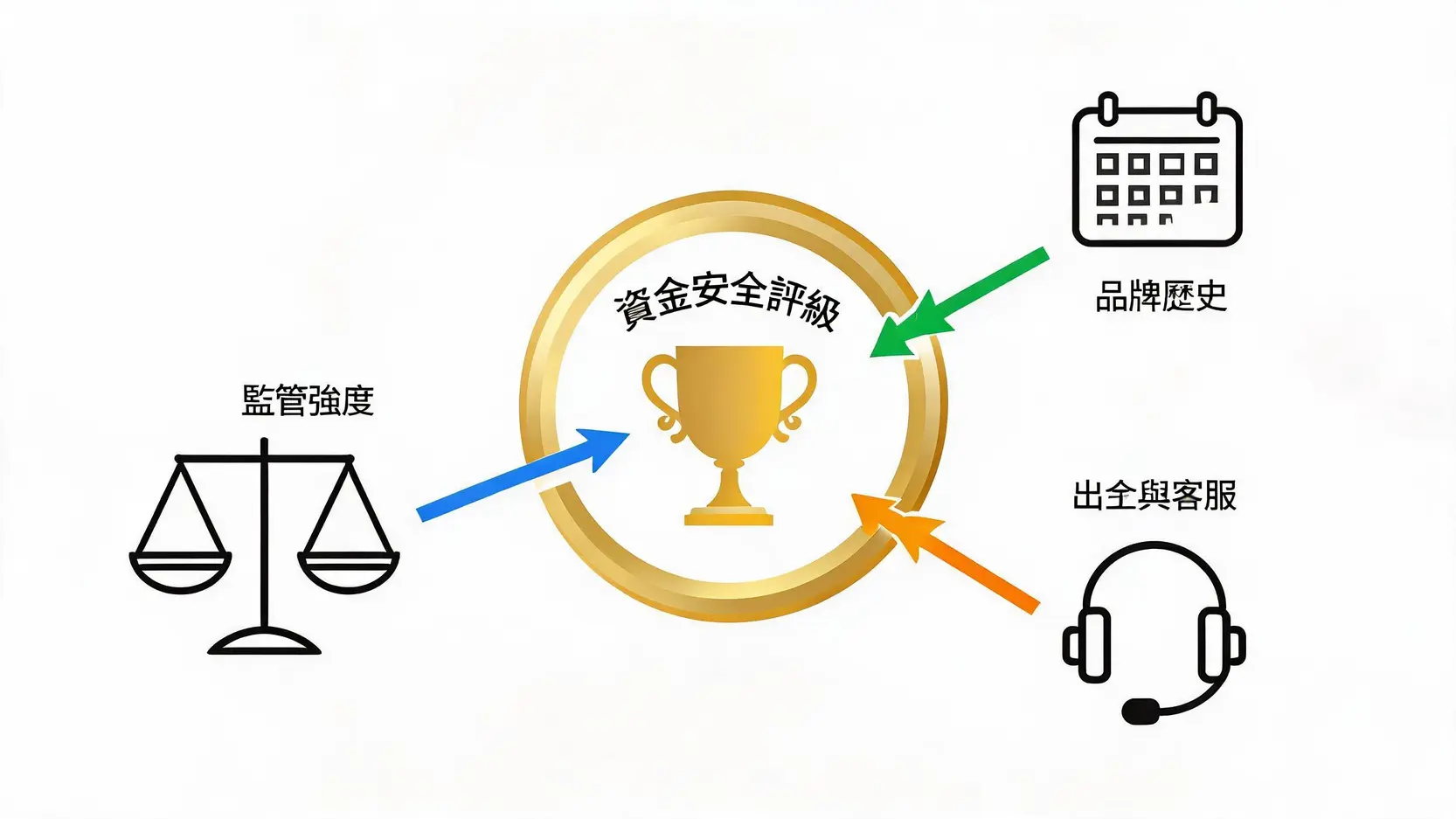
一張示意圖,展示外匯平台資金安全評級模型的三個核心維度:監管強度、品牌歷史和運營效率。

Comprehensively evaluating three major dimensions to score broker fund security.

To help investors systematically evaluate the fund security level of trading platforms, we created a comprehensive rating model. You can score brokers according to the following three core dimensions.


Rating Dimension 1: Regulatory Strength and Client Fund Segregation

  • (5 Points) Holds top-tier regulatory licenses such as FCA or ASIC while strictly segregating client funds within third-party trust banks.
  • (3 Points) Holds second-tier European licenses (such as CySEC) while implementing client fund segregation.
  • (1 Point) Holds only weak offshore regulatory licenses.
  • (0 Points) Holds no valid regulatory licenses whatsoever.


Rating Dimension 2: Brand History and Market Reputation

  • (5 Points) Established for more than 10 years, maintains physical offices in major global financial centers, and has very few major negative market incidents.
  • (3 Points) Established for 5-10 years, possesses moderate brand recognition, but occasionally faces customer complaints or disputes.
  • (1 Point) Established not long (less than 5 years), has low brand recognition, or receives frequent negative reviews regarding slippage or withdrawals on forums and social media.
  • (0 Points) Possesses extremely poor online reputation and has been warned against by multiple media outlets or regulators.


Rating Dimension 3: Withdrawal Efficiency and Customer Service Response (Including Real Testing References)

  • (5 Points) Offers multiple mainstream withdrawal channels, with small withdrawals arriving within 1-2 business days during actual testing, while online customer service or account managers provide immediate and professional Chinese-language support.
  • (3 Points) Offers fewer withdrawal channels, with actual withdrawals taking 3-5 business days, while customer service response speed is acceptable but problem-solving ability remains average.
  • (1 Point) Withdrawal procedures are complicated, review times are lengthy (often exceeding one week) while customer service responses are slow or irrelevant.
  • (0 Points) Continuously delays or rejects withdrawal requests using various excuses, while customer support becomes unreachable.

Rating Summary: Add together the scores from all three dimensions. Higher total scores indicate stronger platform fund security. A trustworthy broker should generally score above 12 points. The core purpose of this guide is teaching you how to apply this model before beginning your forex trading journey

FAQ

Q: Can I Participate in Forex Broker “Bonus Promotions”?

A: Yes, but you should remain cautious. Bonuses are common broker marketing tools and usually fall into “account opening bonuses” or “deposit bonuses”. Before participating, carefully read all campaign terms, especially the “withdrawal requirements”. Brokers typically require extremely high trading volumes (sometimes dozens of times the bonus amount) before bonus funds become withdrawable cash. For beginners, this often encourages excessive and irrational trading. Treat bonuses merely as supplementary trading capital rather than blindly placing trades just to meet withdrawal requirements.

Q: Are MT4 and MT5 Developed by Brokers Themselves? Can They Be Fake?

A: MetaTrader 4 and MetaTrader 5 were developed by the Russian software company MetaQuotes and are globally standardized trading platforms. Brokers merely lease licenses from the company. Therefore, the software itself is neutral. However, scam brokers may use pirated or manipulated MT4/MT5 servers to artificially manipulate prices or interfere with trade execution behind the scenes. One simple way to verify authenticity is that legitimate MT4/MT5 applications can be downloaded directly from the Apple App Store or Google Play Store, whereas pirated versions usually require downloading APK or installation files from suspicious links.

Q: If I Truly Encounter a Scam Broker, Is There Any Chance of Recovering My Funds?

A: It is extremely difficult, but there are still possible channels. If the broker holds strong regulatory licenses (such as FCA or ASIC), you may file complaints with corresponding financial dispute resolution organizations, such as the UK Financial Ombudsman Service (FOS) or the Australian Financial Complaints Authority (AFCA). These organizations possess authority to investigate brokers and issue compensation rulings. However, if the broker is unregulated or only holds weak offshore licenses, the chances of recovering funds through legal action become extremely small because their registration jurisdictions and servers are usually located overseas, making investigations highly difficult.

Q: Why Is High Leverage a Double-Edged Sword?

A: High leverage allows you to control positions worth dozens or even hundreds of times more than your margin deposit, meaning your potential profits become amplified. However, your potential losses are amplified by exactly the same multiple. For example, under 100x leverage, if the market moves just 1% against your position, your entire capital may be wiped out. Excessive leverage is one of the main reasons beginners rapidly experience liquidation. Therefore, leverage should always be viewed as a risk management tool rather than a shortcut for quick profits. Beginners are generally advised to use leverage no higher than 50x during the initial stages.


Conclusion

Choosing a safe, compliant, and reliable forex margin trading platform is the foundation of successful trading, and its importance exceeds any trading strategy or technical skill. By following the regulatory verification methods, cost analysis principles, deposit and withdrawal testing procedures, and fund security rating models introduced in this Forex Margin Trading Pitfall Avoidance Guide, you can effectively filter out more than 90% of poor-quality or scam brokers in the market. Always remember that financial trading begins with risk management, and the very first step of risk management is carefully selecting the platform you choose to work with.

If you liked this article, please share it!

Related Articles

  • How to Buy Bitcoin in 2026: A Beginner’s Guide
    How to Get Started with Bitcoin? The Complete 2026 Bitcoin Buying Guide for Beginners After watching Bitcoin repeatedly reach new highs in recent years and successfully pass spot ETF reviews in the US and Hong Kong in 2024, officially entering mainstream financial markets, many investors have turned their attention to...
    2026 年 7 月 20 日
  • Gold V-Shaped Rebound: Bottom Signal or Bull Trap?
    Is Gold’s V-Shaped Rebound a Bottom-Fishing Signal? A Complete Guide to Trading Strategies Amid “$100 Price Swings” What Is a Gold V-Shaped Rebound? More Than Just a Technical Pattern The gold market has recently experienced sharp rises and falls, with prices frequently displaying dramatic “gold V-shaped rebounds”. Single-day “$100 price...
    2026 年 7 月 20 日
  • 2026 PPI Guide: PPI vs CPI and Stock Market Impact
    What Is PPI Data? 2026 Latest Analysis: Understand the Differences from CPI and How It Affects Stock Market Trends With market information constantly changing, do you always hold your breath while waiting for CPI data to be released? But did you know that a more forward-looking inflation indicator, PPI data...
    2026 年 7 月 20 日
返回顶部