Cardano (ADA) Outlook 2026: Future Value & Ecosystem

Updated: 2026/03/10  |  CashbackIsland

ada-coin-future-outlook-2026

ADA Outlook 2026: An In Depth Analysis of Cardano’s Future Value and Five Key Ecosystem Potentials

As a flagship project in the cryptocurrency market, Cardano (ADA) has long been a focal point of discussion among investors regarding both its price movement and long term outlook. Many people feel confused by the relatively slow pace of Cardano ecosystem development, yet still hold strong expectations for its academically driven technology. So what is the real future potential of ADA? This article provides a comprehensive analysis of ADA’s outlook, exploring the opportunities and challenges within the Cardano ecosystem while offering a balanced evaluation of its long term value to help you make more informed investment decisions in 2026. 


Revisiting Cardano (ADA): Why Is It Called the “Ethereum Killer”?

To evaluate the future value of ADA, it is essential to start with its foundation, the Cardano blockchain itself. Cardano positions itself as a third generation blockchain designed to address the limitations faced by first generation systems such as Bitcoin and second generation platforms like Ethereum, particularly in scalability, interoperability, and sustainability. Its distinctive development philosophy and rigorous technological framework are the main reasons it has been labeled the “Ethereum killer”.


Core Technology of Cardano: Layered Architecture and the Ouroboros Consensus Mechanism

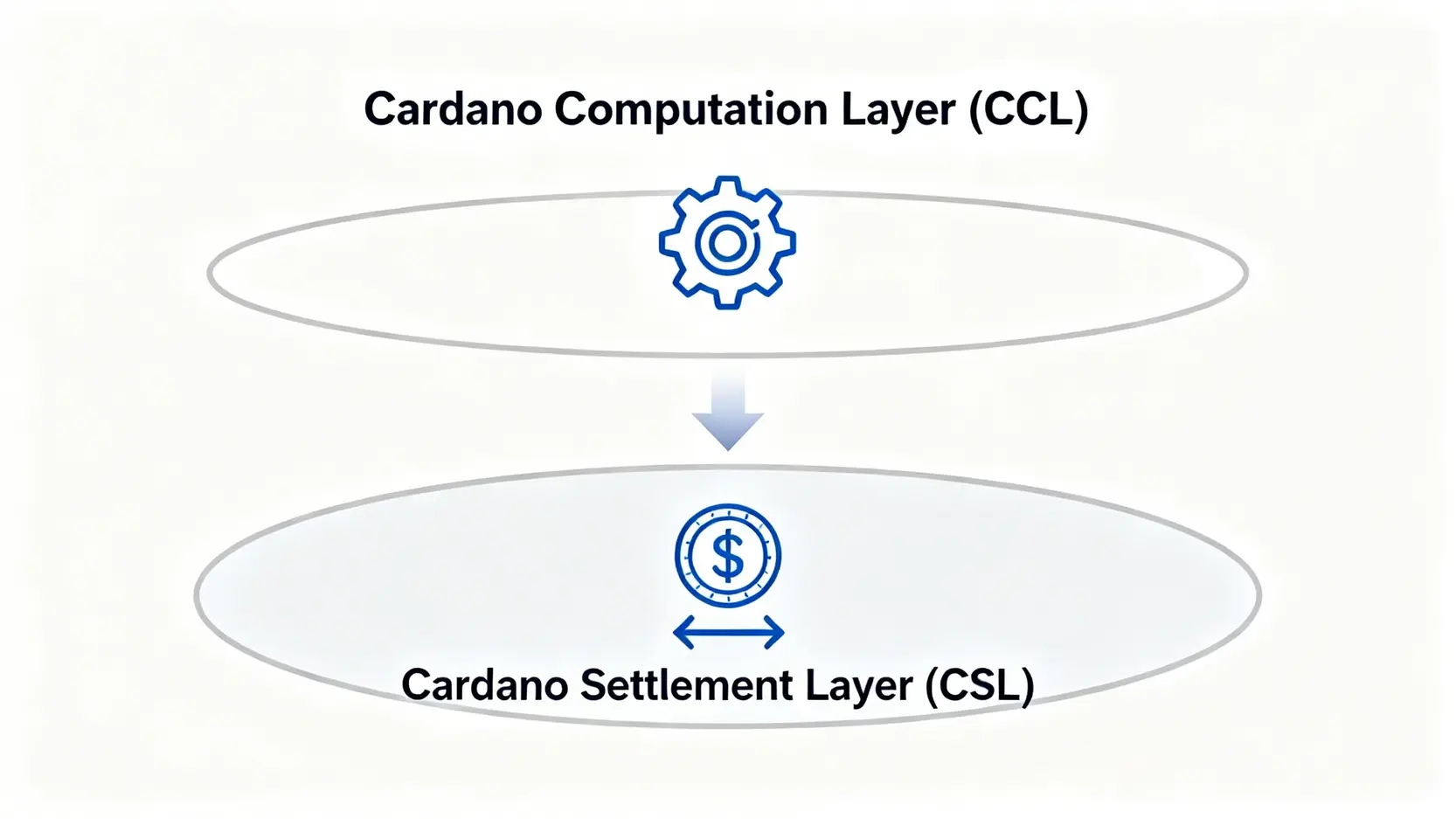
One of Cardano’s most distinctive features is its two layer architecture, which sets it apart from many other blockchains.

  • Cardano Settlement Layer (CSL): This is the value ledger layer responsible for processing ADA transactions and transfers. It functions similarly to Bitcoin’s ledger, ensuring security and simplicity in transactions.
  • Cardano Computation Layer (CCL): This is the smart contract layer designed to execute the complex logic behind decentralized applications (DApps). It provides stronger programmability and flexibility for future applications.

Cardano雙層架構示意圖,顯示上方為處理智能合約的計算層,下方為處理交易的結算層。

Cardano’s two layer architecture separates computation from settlement, improving both system flexibility and scalability.

This layered design effectively distributes network workload. When one layer is upgraded, it does not affect the stability of the other, greatly improving system maintainability and upgrade flexibility. In terms of consensus, Cardano uses its proprietary Ouroboros protocol, the first Proof of Stake mechanism that has undergone academic peer review. Compared with Bitcoin’s Proof of Work system, PoS significantly reduces energy consumption while offering mathematically proven security, forming the foundation of Cardano’s efficiency, sustainability, and security.


The Core Utility of ADA: Beyond Transactions to Governance and Staking

ADA is not merely a transaction token within the Cardano ecosystem. It carries deeper functional roles that are central to evaluating its long term value.

  1. Transactions and Payments: As the native token of the network, ADA is used to pay transaction fees and facilitate value transfers across applications within the ecosystem.
  2. Network Staking: ADA holders can delegate their tokens to validation pools to participate in block verification. This helps maintain network security while allowing holders to earn staking rewards, providing a passive income opportunity for long term investors.
  3. Community Governance: As Cardano enters the Voltaire governance era, ADA will serve as the voting token for on chain governance. Holders will be able to vote on major protocol upgrades and treasury fund allocations, enabling true decentralized governance.


Recommended Reading

What Is ADA? Understanding the Five Key Potentials and Investment Risks of Cardano

2026 Hong Kong Metaverse Cryptocurrency Investment Guide: From Beginner Basics to In Depth Analysis of Selected Tokens


Cardano Ecosystem Analysis: The Core Foundation of ADA’s Future Value

The ultimate value of any blockchain depends on the strength of its ecosystem. Although Cardano has often been criticized for its slow ecosystem growth, its on-chain applications have gradually begun to flourish in recent years. A detailed ecosystem analysis is essential for evaluating its future outlook. 

DeFi Sector: Leading DEX and Lending Platforms

Decentralized finance is one of the key indicators used to measure the vitality of a blockchain ecosystem. While Cardano’s DeFi sector started later than others, several core projects have already emerged.

  • Decentralized Exchanges: Platforms such as Minswap, WingRiders, and SundaeSwap serve as major DEX hubs on Cardano, offering liquidity mining, token swaps, and other essential trading functions.
  • Lending Platforms: Projects such as Liqwid Finance and Aada Finance allow users to borrow assets by collateralizing other assets, expanding the range of financial tools available within the ecosystem.
  • Lending Platforms: Projects such as Liqwid Finance and Aada Finance allow users to borrow assets by collateralizing other assets, expanding the range of financial tools available within the ecosystem.

Tracking Cardano’s total value locked (TVL) remains one of the most direct ways to measure the health of its DeFi ecosystem. Although it still trails behind giants like Ethereum, its steady growth indicates rising confidence among developers and users.


NFTs and Blockchain Gaming: Emerging Projects Within the Cardano Ecosystem

With relatively low transaction fees and advantages in metadata handling, Cardano has also established a presence in the NFT sector. JPG.store is currently the most prominent NFT marketplace on Cardano, hosting a large volume of digital art and collectibles trading. Several notable NFT projects, such as Clay Nation and Boss Cat Rocket Club, have already built active communities. In the GameFi space, Cardano remains in an early exploration stage, with projects like Cornucopias and Cardano Warriors under development, potentially bringing more users and activity to the ecosystem in the future.


Technology Roadmap: The Impact of the Voltaire Governance Era on ADA’s Outlook

Cardano’s development roadmap is divided into five major eras: Byron (foundation), Shelley (decentralization), Goguen (smart contracts), Basho (scalability), and finally Voltaire (governance). Currently, Cardano is moving toward the Voltaire era, which represents the final stage in achieving full decentralized governance. At this stage, the network will introduce a decentralized treasury system and voting mechanism, allowing ADA holders to collectively decide on protocol upgrades and funding allocations. This milestone represents a practical implementation of decentralized governance ideals and will significantly strengthen community cohesion and long term sustainability, providing a positive outlook for ADA’s future.

Cardano五個發展時代的路線圖,從Byron(基礎)到Voltaire(治理)。

Cardano’s five development phases demonstrate a clear roadmap from foundational infrastructure to fully decentralized governance.


ADA Outlook Analysis: Five Key Potentials and Challenges

Based on both technological and ecosystem analysis, ADA’s prospects for 2026 and beyond can be evaluated through the following potential opportunities and challenges.


Potential 1: Academically Driven Development Model and High Security

Cardano insists that all core protocols must undergo strict academic peer review. This “slow but meticulous” development philosophy ensures strong stability and security at the blockchain’s foundational level. For risk averse or institutional investors, this verifiable security model is particularly attractive.


Potential 2: Continuously Growing Developer Community and On Chain Activity

According to Electric Capital’s developer report, Cardano consistently ranks among the most active blockchain developer communities. Continuous development activity is the source of ecosystem innovation. At the same time, the steady increase in active addresses and transaction volume on the network demonstrates that its user base continues to expand.


Challenge 1: Relatively Slow Ecosystem Application Growth

This remains one of the most common criticisms directed at Cardano. Compared with the explosive ecosystem expansion seen on competitors such as Solana, the growth in Cardano’s DApp numbers and user adoption has been more gradual. Whether Cardano can eventually produce a “killer application” capable of attracting a large influx of users will be a key challenge it must overcome.


Challenge 2: Intense Competition From Other Public Blockchains

Competition in the public blockchain sector is extremely intense. Ethereum has addressed scalability through its powerful Layer2 ecosystem. Solana has attracted large numbers of DeFi and NFT projects with its high performance infrastructure. Avalanche and BNB Chain also hold their own competitive advantages. Cardano must find a clear market positioning and differentiated value proposition in order to stand out in this competitive environment.


Expert Opinions: Market Forecasts for ADA Prices Between 2026 and 2030

Market analysts remain divided on the future value of ADA. Optimists believe that with the arrival of the Voltaire governance era and the continued maturation of its ecosystem, Cardano’s value may be rediscovered. In the next bullish market cycle, the price of ADA could potentially challenge or even surpass its previous all time high. Some analytical platforms predict that ADA could reach between $5 and $10 by 2030. However, more conservative analysts believe the pace of ecosystem development remains the greatest concern. If Cardano fails to stand out among competing blockchains, its price could remain in a prolonged consolidation phase. Investors should recognize that all price predictions carry a high degree of uncertainty and should be treated as reference points only.

Conclusion

Overall, the future outlook for ADA presents both significant opportunities and meaningful challenges. Cardano’s academically driven development approach has established an exceptionally strong technical foundation for the blockchain. Ecosystem analysis shows that although development has progressed cautiously, sectors such as DeFi and NFTs are gradually expanding and accumulating momentum.  Looking forward, the full implementation of the Voltaire governance era will be a critical milestone. It will empower the community with real decision making authority and unlock the full potential of ADA. At the same time, investors must acknowledge the intense competition from other high performance blockchains and the crucial test of whether Cardano’s ecosystem can achieve explosive growth. If Cardano succeeds in overcoming these challenges and its ecosystem eventually matches the strength of its technological reputation, the long term value potential of ADA could be substantial.

FAQ

Q: What is the all time high price of ADA?

A: According to historical data, the all time high price (ATH) of Cardano (ADA) occurred on September 2, 2021, when it reached approximately $3.10.

Q: What is the biggest difference between Cardano and Ethereum?

A: The main difference lies in their core philosophy and technological architecture. Cardano follows an academically peer reviewed development approach with a slower but more rigorous process, utilizing a Proof of Stake consensus mechanism and layered architecture. Ethereum follows a “build fast and iterate” philosophy, resulting in a larger and more mature ecosystem. Ethereum has also transitioned to Proof of Stake, while its Layer2 ecosystem currently serves as its primary scalability solution.

Q: Is investing in ADA risky?

A: Like any cryptocurrency investment, ADA carries significant risk. Key risks include overall market volatility in the cryptocurrency sector, intense competition from other public blockchains that could erode its market share, and the possibility that ecosystem development may fail to meet expectations or attract sufficient users and capital. Investors should carefully assess their own risk tolerance before investing.

Q: How can ADA be staked?

A: Staking ADA is relatively straightforward. You can store ADA in official wallets (such as Yoroi or Daedalus) or in supported third party wallets. Within the wallet interface, you can browse available staking pools, select a reputable and stable pool, and delegate your tokens for staking. Your tokens remain in your wallet and are not locked.

Q: Who founded Cardano?

A: The primary founder of Cardano is Charles Hoskinson. He is also one of the co founders of Ethereum. After leaving the Ethereum project, he founded the blockchain engineering company IOHK in 2015 and launched the Cardano project. His background and experience have brought significant attention to the Cardano ecosystem.

编者
Evan Lin

Evan Lin

我是Evan Lin,从大学时期开始接触外汇交易,至今已有多年实战经验,熟悉技术分析与EA策略,热衷于研究市场脉动与风险管控,喜欢分享实战经验和交易技巧,和大家一起学习、一起进步!

If you liked this article, please share it!

Related Articles

  • Order Flow Analysis Tools: Track Institutional Activity
    In-Depth Review of Intelligent Order Flow Detection Tools: Understanding Institutional Activity and Identifying Real Market Buying and Selling Pressure What Is Order Flow, and Why Is It a “Leading Indicator” for Price Prediction? Candlestick charts and technical indicators can be misleading, but the real-money "Order Flow" within the market cannot....
    2026 年 6 月 4 日
  • Social Sentiment Indicators: Predicting Stock Trends
    Social Sentiment Quantitative Indicators: Mining PTT and Dcard Discussions to Predict Stock Prices What Are Social Sentiment Quantitative Indicators, and Why Are They Becoming Increasingly Important? In an era of information overload, financial markets are no longer driven solely by cold financial statements and macroeconomic data. The "Shipping King" phenomenon...
    2026 年 6 月 4 日
  • Taiwan FSC Futures Broker Verification Guide
    Avoid Fraudulent Platforms! A Visual Guide to Taiwan FSC Licensed Futures Merchant Verification and Scam Prevention In recent years, driven by heightened volatility in global financial markets and the impact of monetary easing policies worldwide, more investors have begun seeking diversified investment instruments. However, underground futures operators and overseas fraudulent...
    2026 年 6 月 4 日
返回顶部